Air travel has quietly undergone a structural shift over the past two decades. While flashy innovations in business class suites and ultra-luxurious first-class cabins tend to dominate headlines, the real strategic battleground lies somewhere in between. Premium economy, once a niche experiment, has evolved into one of the most calculated and profitable decisions airlines can make. It is not just a compromise between comfort and cost—it is a finely tuned product shaped by economics, psychology, and changing passenger expectations.
What makes this cabin class so compelling is not just what it offers travelers, but how precisely it aligns with airline revenue strategies. Beneath the surface, premium economy represents a careful balancing act between space efficiency, pricing power, and demand stability, all of which are critical in an industry where margins are notoriously thin.
The origins of premium economy trace back to the early 1990s, when EVA Air introduced its “Evergreen Class”, planting the seeds for what would become a global standard. At the time, it was a bold attempt to bridge the uncomfortable gap between economy and business class. Today, that gap has widened dramatically, and premium economy has become less of an experiment and more of a necessity.
The Economics of Space: Why Premium Economy Maximizes Revenue
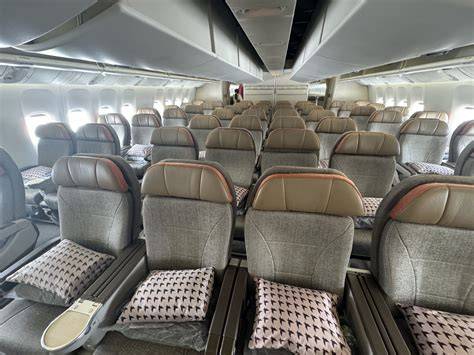
Airlines operate under a simple but unforgiving constraint: every square meter of cabin space must justify its existence. Premium economy thrives because it delivers one of the highest returns per unit of space without the heavy spatial cost of business class.
Consider a Boeing 787-8 Dreamliner configuration. The same cabin area can accommodate approximately:
- 20 business class seats in a 1-2-1 layout
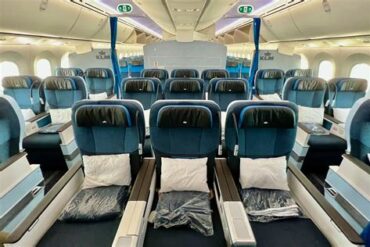
- 44 premium economy seats in a 2-3-2 layout
- 63 economy seats in a 3-3-3 layout
At first glance, business class appears the obvious winner due to its high ticket prices. However, the math tells a more nuanced story. Business seats consume more than double the space of premium economy seats, which significantly limits how many can be installed.
Premium economy, by contrast, strikes a precise balance. Airlines can charge two to three times the price of economy, while only allocating about 40–50% more space per passenger. This creates a powerful yield advantage—one that often surpasses even business class when measured per square foot.
For airlines, this is not just optimization—it is strategic monetization of physical constraints.
Demand Dynamics: The Sweet Spot Travelers Actually Want
Passenger behavior plays an equally decisive role. While business class offers unmatched comfort, it is also highly sensitive to pricing. Demand fluctuates sharply depending on economic conditions, corporate travel budgets, and seasonal trends.
Premium economy behaves differently. It sits in a zone where aspiration meets affordability, attracting travelers who are willing to pay more—but not excessively so. This includes:
- Leisure travelers upgrading for long-haul comfort
- Small business owners traveling without corporate backing
- Frequent flyers seeking value rather than luxury
Research into pricing elasticity reveals a crucial insight: premium economy demand is relatively inelastic. In simple terms, modest price increases do not significantly deter buyers. Business class, on the other hand, experiences sharper drops in demand when prices rise.
This makes premium economy a lower-risk, higher-consistency revenue stream, which is exactly what airlines need in an unpredictable market.
The Expanding Gap Between Economy and Business Class
To understand why premium economy has surged, it helps to look at what has happened to the cabins around it.
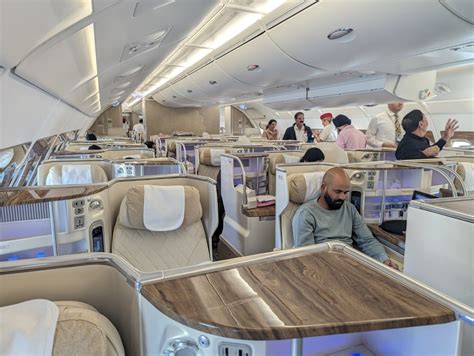
Economy class has become increasingly dense, with tighter seat pitches and reduced personal space. At the same time, business class has transformed into something closer to a private luxury suite, often featuring:
- Fully flat beds
- Sliding privacy doors
- Direct aisle access
- Fine dining experiences
This evolution has created a polarized cabin landscape. The leap from economy to business is no longer incremental—it is dramatic. For many travelers, that leap feels excessive, both in terms of cost and features.
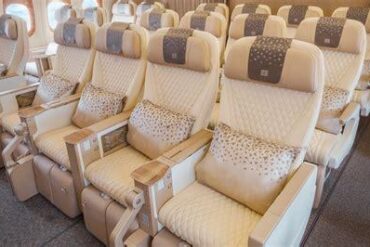
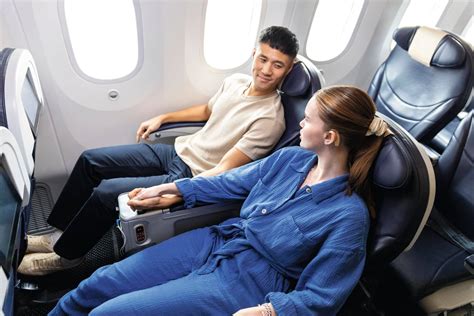
Premium economy fills this widening gap with precision. It offers tangible comfort upgrades—extra legroom, wider seats, better recline—without venturing into unnecessary luxury. It answers a simple question: What if you just want a better seat, not a private room in the sky?
Airline Strategy: A “Money-Generating Machine”
Airlines themselves have become increasingly candid about the value of premium economy. Lufthansa famously described it as a “money-generating machine”, highlighting its superior revenue performance per square meter.
American Airlines has echoed similar sentiments, noting that premium economy often represents the most profitable use of space on widebody aircraft. This is not hyperbole—it reflects a structural advantage built into the cabin’s design.
What is particularly striking is how rapidly airlines have adopted this model. In 2017, only 42 airlines offered premium economy. By 2022, that number had surged to 63, and the trend continues upward.
This widespread adoption signals more than popularity—it indicates industry consensus. Airlines are not experimenting anymore; they are standardizing.
Psychological Pricing: The Art of the Middle Option
Premium economy does not just work because of physical comfort—it also excels due to behavioral economics.
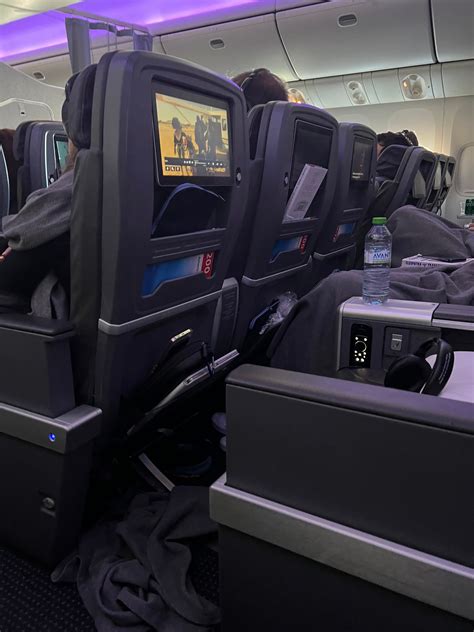
When presented with three options—economy, premium economy, and business class—passengers rarely evaluate them in isolation. Instead, they compare relative value. A $3,500 premium economy ticket may seem expensive next to a $900 economy fare. But when placed beside a $7,000 business class seat, it suddenly feels reasonable.
This phenomenon is known as anchoring, and airlines use it deliberately. Premium economy becomes the “smart choice,” positioned between discomfort and indulgence.
Another subtle factor is the timing of purchase decisions. Travelers who initially book economy may later upgrade, especially during check-in. By that point, the psychological “pain” of the original purchase has faded, making an upgrade feel less burdensome.
Premium economy is perfectly designed for this moment—it is accessible, justifiable, and immediately rewarding.
Operational Flexibility and Risk Management
Beyond revenue and psychology, premium economy offers something airlines value just as much: flexibility.
Business class cabins require significant investment, from complex seat mechanisms to enhanced service levels. They also depend heavily on high-paying passengers, particularly corporate travelers. During economic downturns or shifts in travel patterns, this demand can weaken quickly.
Premium economy mitigates this risk. Its seats are simpler, its service model is less resource-intensive, and its customer base is broader. This allows airlines to:
- Maintain higher load factors (fuller cabins)
- Adjust pricing more dynamically
- Reduce dependency on corporate travel
In essence, premium economy acts as a buffer against volatility, smoothing out revenue fluctuations in a notoriously cyclical industry.
Why Airlines Don’t Just Replace Business Class Entirely
Given its advantages, it might seem logical for airlines to expand premium economy at the expense of business class. Yet this rarely happens—and for good reason.
Business class still plays a critical role as a high-margin flagship product. It attracts premium customers, enhances brand perception, and anchors the pricing structure of the entire aircraft.
Without business class, premium economy would lose part of its appeal. Its value is partly defined by what it is not. The presence of a more luxurious option above it reinforces its position as a balanced, rational choice.
This interdependence is key. Premium economy does not replace business class—it relies on it.
The Future: Increasing Segmentation and Smarter Cabins
Looking ahead, the trajectory is clear. Airlines are moving toward greater segmentation, refining cabin offerings to match increasingly diverse passenger preferences.
Premium economy will likely continue to evolve, with improvements in seat design, in-flight entertainment, and dining. At the same time, airlines may experiment with even more nuanced tiers, creating micro-classes within the cabin hierarchy.
What remains constant is the underlying principle: maximize value per passenger while optimizing space. Premium economy embodies this principle better than any other cabin class.
It is not merely a compromise—it is a strategic centerpiece. Quietly, efficiently, and consistently, it delivers exactly what both airlines and passengers need: more comfort, smarter pricing, and sustainable profitability.
And in an industry where every inch and every dollar matters, that is not just a win—it is a masterstroke.