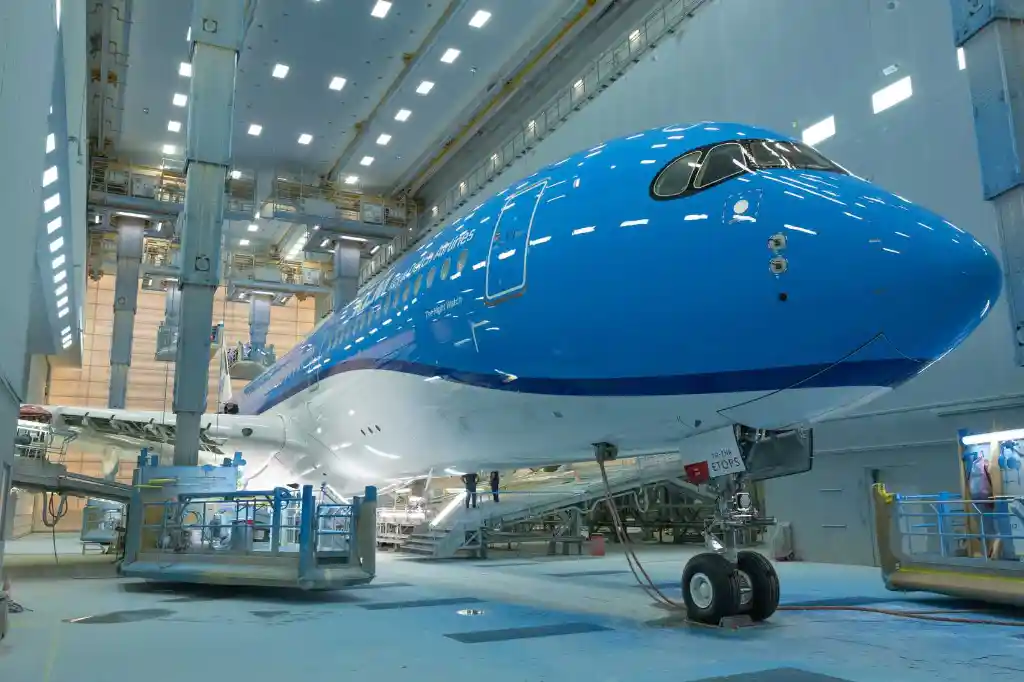
KLM’s long-awaited Airbus A350 fleet is set to usher in a new chapter for the Dutch flag carrier, but the aircraft’s highly anticipated entry into service will arrive with an unexpected limitation. When the first Airbus A350s begin commercial operations, passengers will find that the aircraft’s premium World Business Class cabin remains sealed off due to unresolved certification requirements affecting the new seats.
The situation represents a rare setback for one of Europe’s most important fleet modernization programs. While the new widebody jets will still operate scheduled passenger services, KLM will temporarily be unable to offer its flagship business class product aboard the first aircraft delivered, forcing the airline to rely on alternative premium seating arrangements until regulatory approvals are finalized.
KLM’s Airbus A350 Marks the Beginning of a New Era
The arrival of the Airbus A350 is one of the most significant developments in KLM’s recent history. Designed to gradually replace aging Airbus A330s and portions of the airline’s Boeing 777 fleet, the next-generation widebody is central to a broader €7 billion fleet renewal strategy aimed at improving efficiency, sustainability, and passenger comfort.
KLM has invested heavily in modernizing its long-haul operation, and the A350 sits at the heart of that transformation. The aircraft offers lower fuel consumption, reduced emissions, quieter cabin environments, and improved operating economics compared with many legacy widebody aircraft currently serving the airline’s network.
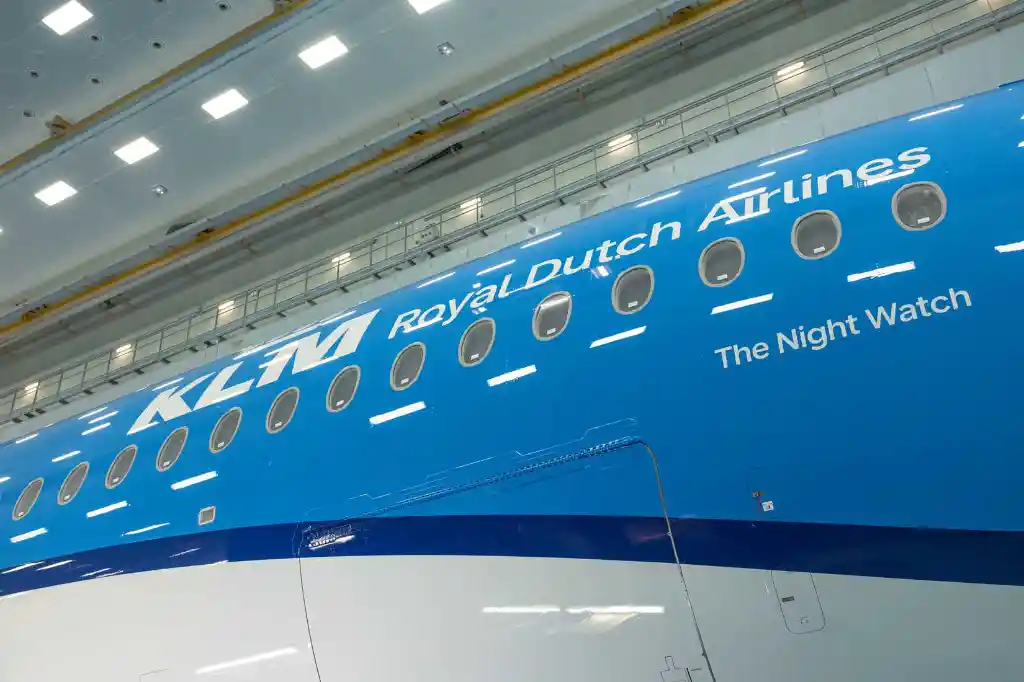
The first aircraft will carry a distinctly Dutch identity. Named after “The Night Watch,” the world-famous masterpiece created by Rembrandt, the inaugural jet introduces a new naming tradition that will see future A350s receive the names of iconic Dutch artworks. The initiative reinforces KLM’s longstanding practice of connecting its fleet with elements of national culture and heritage.
The debut route for the aircraft will connect the Netherlands with Toronto Pearson International Airport, continuing a historical pattern in which KLM introduces major new aircraft types on high-profile North American services before expanding them across its wider international network.
After years of anticipation, the A350’s commercial launch is intended to showcase the future of KLM’s long-haul experience. However, certification complications have altered those plans.
Why KLM’s Business Class Cabin Will Remain Closed
The challenge stems from a revised interpretation of regulatory requirements by aviation authorities overseeing the certification process for the aircraft’s new World Business Class seats.
According to KLM, certification of the premium seats has not yet been completed, preventing the airline from making the cabin available to passengers when the first two A350 aircraft enter service. The issue affects all 34 business class seats installed on the aircraft.
Rather than partially opening the cabin or implementing temporary seating solutions, KLM has elected to block access entirely until the required approvals are secured. The airline states that the seat manufacturer is actively working through the recertification process and is seeking to make the seats available as quickly as possible.
For passengers who would normally book business class, the delay creates a temporary gap in the premium offering aboard the new aircraft. While the rest of the cabin will operate normally, the flagship product intended to headline the A350 launch will remain unavailable.
The situation highlights the increasingly complex relationship between modern cabin innovation and aviation regulation. As airline seats evolve into sophisticated private suites equipped with advanced technology, certification processes have become significantly more demanding.
Premium Comfort Becomes the Temporary Alternative
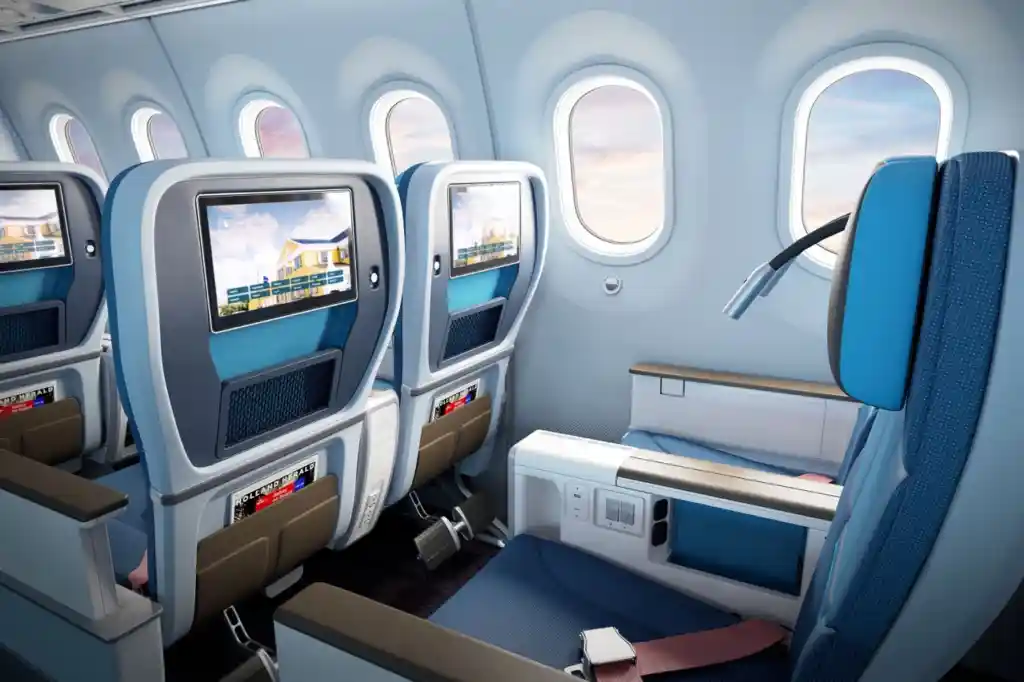
To mitigate the impact of the delay, KLM plans to emphasize its Premium Comfort cabin during the initial A350 operations.
Passengers traveling in the highest available class on the affected flights will receive a product that offers additional legroom, enhanced comfort features, and upgraded dining services compared with standard economy seating. While Premium Comfort does not provide the privacy, lie-flat functionality, or exclusivity associated with World Business Class, it represents the best available option until certification is completed.
For KLM, the decision carries a financial cost. Business class cabins typically generate a disproportionately large share of long-haul airline revenue. Blocking dozens of premium seats on every flight means sacrificing significant earnings during the early stages of the aircraft’s deployment.
Yet the airline appears determined to prioritize regulatory compliance over operational convenience, avoiding potential complications that could arise from introducing an incompletely certified product into commercial service.
KLM Is Not Alone in Facing Certification Challenges
KLM’s predicament is part of a broader trend affecting airlines around the world as increasingly ambitious premium cabin products encounter regulatory hurdles.
Several major carriers have experienced similar delays while introducing new seat designs. As airlines compete to offer greater privacy, larger personal spaces, and advanced technological features, certification authorities must evaluate increasingly complex products before approving them for revenue service.
Delta Air Lines encountered comparable difficulties with premium-heavy Airbus A321neo aircraft equipped with lie-flat business suites. Certification complications related to safety and structural requirements prevented immediate deployment of the intended premium seats.
Rather than blocking the cabin, Delta adopted a different strategy by temporarily installing already-certified first-class recliner seats. This allowed the airline to continue operating the aircraft while awaiting full approval for the intended premium product.
Meanwhile, Germany’s Lufthansa faced its own challenges with Boeing 787-9 Dreamliners equipped with the airline’s highly publicized Allegris business class suites. Certification delays restricted how many premium seats could be sold despite aircraft deliveries continuing.
These examples demonstrate that certification bottlenecks have become an increasingly common feature of modern fleet introductions.
The Growing Complexity of Airline Premium Cabins
The aviation industry’s post-pandemic recovery has accelerated what many analysts describe as a global “premiumization” race. Airlines have discovered that premium travelers are often willing to pay significantly more for comfort, privacy, and exclusivity, prompting carriers to invest heavily in next-generation cabin products.
Today’s premium seats bear little resemblance to the traditional business class recliners of previous decades. Modern suites incorporate sliding privacy doors, integrated entertainment systems, wireless charging, customizable lighting, advanced storage solutions, and sophisticated seat mechanisms.
Each innovation introduces additional engineering and safety considerations. Regulators such as the Federal Aviation Administration and the European Union Aviation Safety Agency must ensure that these products remain safe under extreme conditions, including emergency evacuations and crash scenarios involving forces of up to 16G.
As seat designs become more technologically advanced, certification timelines have expanded. Regulators are increasingly challenged to evaluate products that combine lightweight materials, moving partitions, electronic systems, and complex structural components.
What the Delay Means for KLM’s Future Fleet Strategy
Despite the temporary setback, KLM’s Airbus A350 program remains one of the airline’s most important long-term investments. The carrier continues to move forward with a comprehensive fleet renewal effort that includes Airbus A350 passenger aircraft, A350F cargo variants, Airbus A321neo narrowbody jets, and Embraer E195-E2 aircraft for KLM Cityhopper operations.
Once certification is completed, the A350 is expected to become the flagship of KLM’s intercontinental network. The aircraft’s superior efficiency, passenger comfort, and operational flexibility will play a critical role in the airline’s competitiveness across North America, Asia, Africa, and other long-haul markets.
For now, however, the debut of KLM’s newest widebody will arrive with an unusual sight: a brand-new flagship aircraft carrying passengers across the Atlantic while its most prestigious cabin remains temporarily closed. The delay underscores a growing reality in modern aviation—building a luxurious premium experience is no longer the greatest challenge; obtaining approval to fly it can be just as demanding.