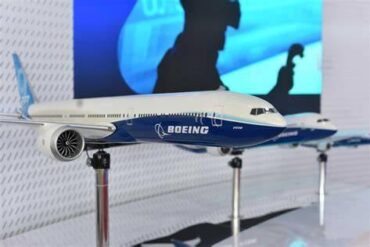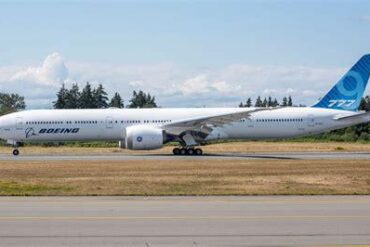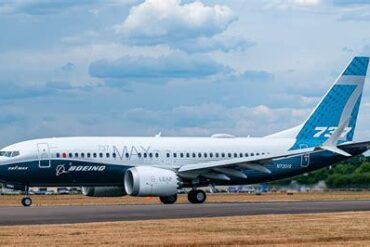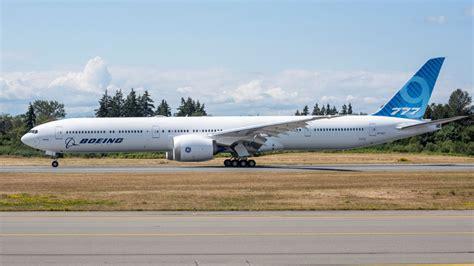
The long-awaited arrival of the Boeing 777X, once envisioned as the future flagship of long-haul aviation, is now firmly pinned to 2027, marking a full seven years behind its original schedule. Boeing has formally reiterated this timeline in its Q1 2026 earnings release, signaling renewed confidence after a turbulent development cycle defined by technical hurdles, regulatory scrutiny, and mounting financial pressure. For an aircraft program once expected to redefine widebody travel seamlessly, the road to entry into service has instead become one of the most expensive and closely watched sagas in modern aerospace history.
At the center of this story lies the 777-9, the largest variant in the 777X family and the aircraft slated to lead the program into commercial operations. Launch customer Lufthansa is now expected to take delivery in mid-2027, bringing long-awaited closure to years of shifting timelines. Other major carriers, including Emirates, Qatar Airways, and Cathay Pacific, are aligning their fleet strategies around the same horizon, cautiously optimistic that Boeing will finally deliver on its promises.
The significance of this milestone extends far beyond a simple delivery date. It reflects Boeing’s effort to regain credibility after a series of setbacks that have reshaped its engineering, certification, and production processes. With roughly $15 billion in program charges already absorbed, the 777X must now transition from a financial burden into a long-term revenue generator—an outcome that depends heavily on execution over the next 18 months.
Boeing Reaffirms 2027 Delivery Timeline Amid Mounting Stakes
Boeing’s latest update leaves little room for ambiguity: the company is committed to delivering the first 777-9 in 2027. This confirmation follows incremental progress in certification, including approval from the Federal Aviation Administration (FAA) to proceed into the Type Inspection Authorization (TIA) Phase 4A, a crucial stage in the flight testing campaign.
This phase marks a transition into deeper validation of the aircraft’s systems under real-world conditions. Multiple test aircraft are now actively flying, with several logging dozens of flights per month, signaling a tangible acceleration in activity. Observers tracking flight data have noted a steady uptick in sortie frequency, suggesting that Boeing is pushing aggressively to close out certification gaps.
Yet, even with this progress, the path ahead remains complex. Beyond Phase 4A, the program must still navigate Phase 4B and Phase 5, followed by extensive operational testing, including ETOPS certification requirements. These steps are not merely procedural—they represent the final proving ground for an aircraft designed to operate ultra-long-haul routes with maximum efficiency and reliability.
A $15 Billion Price Tag and the Economics of Recovery
The financial dimension of the 777X program is as striking as its technical journey. Boeing has already recorded approximately $15 billion in charges, a figure that underscores the scale of the delays and redesign efforts required to bring the aircraft to certification.
To put that into perspective, analysts estimate that Boeing may need to sell around 300 units of the 777-9 just to offset these overruns, assuming typical profit margins. While the order book remains strong—anchored by major Gulf carriers—the margin for error has narrowed significantly. Every delay, modification, or production inefficiency now carries amplified financial consequences.
The top customers for the 777X reflect a mix of global aviation powerhouses:
- Emirates: 270 orders
- Qatar Airways: 124 orders
- Cathay Pacific: 35 orders
- Lufthansa: 27 orders
- British Airways: 24 orders
These commitments provide Boeing with a foundation for recovery, but they also raise expectations. Airlines are not just purchasing aircraft—they are betting on performance, reliability, and timely delivery in an increasingly competitive long-haul market.
Certification Progress Signals Momentum—But Not Completion
The advancement into TIA Phase 4A represents a meaningful turning point, but it does not equate to imminent certification. The 777X still faces a structured sequence of validation steps designed to ensure compliance with stringent safety and operational standards.
Flight testing now focuses on verifying system integration, performance under varied conditions, and resilience across extended operations. The involvement of multiple test aircraft allows Boeing to run parallel evaluations, accelerating data collection while maintaining redundancy.
However, certification in today’s regulatory environment is fundamentally different from a decade ago. Increased oversight means that every anomaly, however minor, must be thoroughly investigated and resolved. This dynamic has extended timelines but also ensures a higher level of scrutiny—something Boeing cannot afford to underestimate given past challenges.
Stored Aircraft and the Risk of Early Production Builds
An often-overlooked aspect of the 777X story lies in the inventory of early-built aircraft. During the program’s initial optimism, Boeing assembled up to 26 aircraft between 2018 and 2022, anticipating a smoother certification process. Of these, five are dedicated to flight testing, while the remainder are currently stored at Paine Field, awaiting updates.
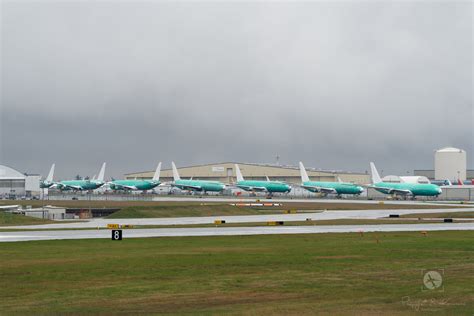
This inventory presents both an opportunity and a risk. On one hand, having completed airframes could accelerate deliveries once certification is achieved. On the other, these aircraft were built before final design stabilization, meaning they may require extensive rework, including structural modifications, system upgrades, and cabin reconfigurations.
The aviation industry has seen this scenario before. Early production units of the Boeing 787 Dreamliner, often referred to as the “terrible teens,” required costly retrofits and, in some cases, were never fully brought up to operational standards. Boeing now faces the challenge of ensuring that its early 777X builds do not repeat that history.
Airline Expectations and the Transition to a New Era
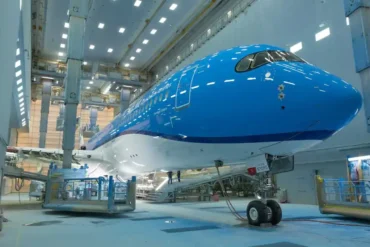
For airlines, the arrival of the 777X represents more than fleet expansion—it signals a generational shift. Aircraft like the Airbus A340-600 and older Boeing 747-400s are nearing retirement, and the 777-9 is poised to replace them with greater efficiency, range, and passenger comfort.
Lufthansa, in particular, stands at the forefront of this transition. Its role as launch customer places it in a unique position to shape early operational feedback while also bearing the risks associated with introducing a new aircraft type. Training programs, maintenance planning, and route integration are already underway, reflecting cautious but tangible preparation.
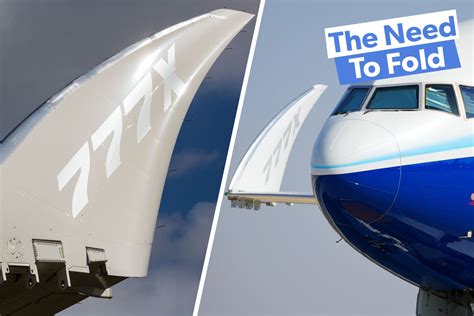
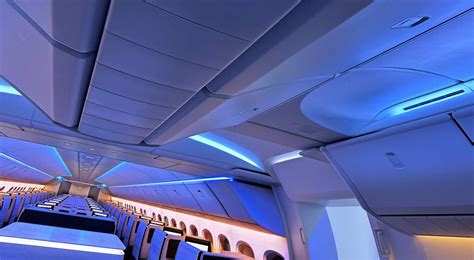
For passengers and aviation enthusiasts, the 777X brings a mix of anticipation and nostalgia. Its advanced features—such as folding wingtips, improved fuel efficiency, and redesigned cabins—promise a new standard for long-haul travel. At the same time, its entry into service will accelerate the retirement of iconic four-engine jets that have defined intercontinental travel for decades.
The Final Stretch Toward 2027 Entry Into Service
After years of uncertainty, the trajectory of the Boeing 777X is finally stabilizing. Certification is progressing, airline timelines are aligning, and Boeing’s messaging has shifted from cautious optimism to firm commitment. Yet, the final phase of any aircraft program is often the most demanding, requiring precision, discipline, and resilience.
The 777X is no longer a distant concept—it is an aircraft on the brink of reality, carrying with it the weight of expectations from airlines, regulators, and the broader aviation industry. Whether Boeing can deliver on its 2027 promise will ultimately define not just the success of this program, but also its ability to execute future innovations in an increasingly complex aerospace landscape.
For now, the countdown continues, and the world watches as one of aviation’s most ambitious projects approaches its long-delayed debut.