Air travel has undergone a profound transformation over the past two decades. What was once an industry defined by clear class distinctions—economy, business, and first—has evolved into a more nuanced marketplace shaped by shifting passenger expectations, changing corporate travel policies, and the relentless pursuit of revenue efficiency by airlines. In this evolving landscape, premium economy has emerged as one of the most strategically important cabin products in global aviation.
By 2026, the expansion of premium economy cabins is no longer a niche trend but a defining feature of airline growth strategies. Major carriers across North America, Europe, the Middle East, and Asia are investing billions of dollars retrofitting aircraft, redesigning cabins, and introducing entirely new seating concepts centered around premium economy. The result is a rapidly growing segment that bridges the gap between cramped economy seating and the luxury of business class.
Airlines are not expanding premium economy simply because passengers like it. They are doing so because the economics, operational realities, and passenger demand all converge to make premium economy extraordinarily profitable. From aircraft deliveries to evolving traveler behavior, several powerful forces are pushing this cabin class forward.
Understanding these forces reveals why premium economy is becoming one of the most important growth engines for airlines in 2026 and beyond.
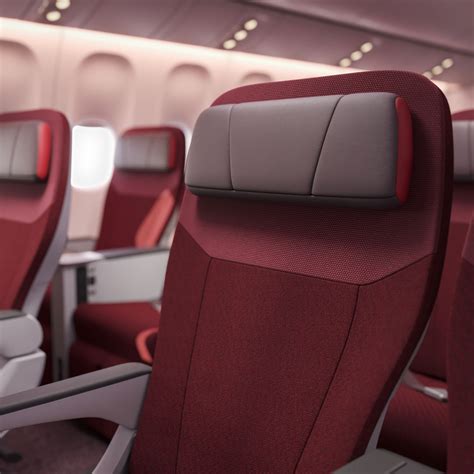
Aircraft Deliveries Are Enabling More Premium Economy Cabins
One of the most fundamental reasons premium economy continues expanding is the steady flow of new aircraft deliveries entering airline fleets. Aircraft manufacturers Airbus and Boeing are ramping up production after years of pandemic disruption and supply chain constraints.
In 2025, Airbus delivered 793 commercial aircraft, and the company plans to increase that number to roughly 870 aircraft in 2026. Boeing also closed 2025 with 600 deliveries and intends to exceed 650 aircraft deliveries in 2026. While many of these aircraft are narrowbody models such as the Airbus A320 family and Boeing 737, the widebody deliveries play a particularly important role in premium economy growth.
Widebody aircraft—including the Boeing 787 Dreamliner, Airbus A350, and Boeing 777—are where premium economy cabins truly thrive. These aircraft are specifically designed for long-haul travel, where passengers are willing to pay for additional comfort during flights lasting eight to fifteen hours.
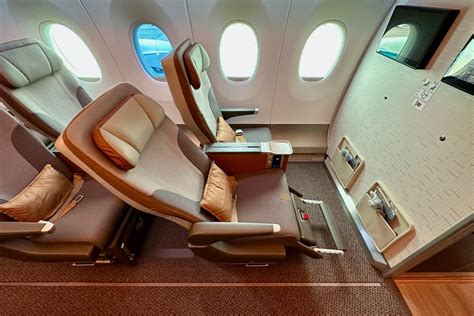
Boeing plans to ramp up deliveries of the 787 Dreamliner to between 84 and 96 aircraft in 2026, while Airbus aims to increase A350 production to approximately nine aircraft per month. Nearly every newly delivered widebody aircraft now includes a premium economy cabin as part of its standard configuration.
This shift marks a significant change from earlier decades when premium economy was optional or experimental. Today, it has become an expected cabin tier in modern long-haul aircraft design.
At the same time, airlines are retrofitting older aircraft to incorporate premium economy seating. Carriers with large fleets of Boeing 777s, Airbus A330s, and early-model Dreamliners are redesigning cabins to accommodate this high-demand seating category. These retrofit programs ensure that even legacy aircraft remain competitive in a market where premium economy is increasingly expected by passengers.
Premium Economy Generates Exceptional Revenue Per Cabin Space
Airlines carefully analyze how much revenue each square foot of cabin space generates. By this measure, premium economy has proven to be one of the most efficient revenue generators in aviation.
Lufthansa famously described premium economy as a “money-generating machine.” Internal airline data shows that premium economy seating can generate approximately 33% more revenue per square foot than traditional economy class.
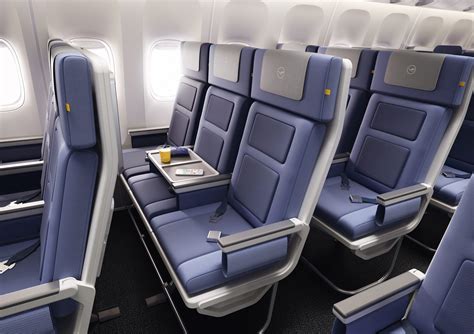
The financial advantage comes from a clever balance between seat density and ticket pricing. Premium economy seats take up more space than economy seats but far less than the fully reclining seats found in business class cabins. This allows airlines to install a significant number of premium economy seats without sacrificing too much capacity.
Ticket pricing further amplifies this advantage. Premium economy fares often cost two to three times the price of economy tickets, yet the cabin still occupies a relatively modest footprint within the aircraft.
Even more surprising is that in some cases premium economy can generate slightly more revenue per square foot than business class, largely because business seats require far more space and complex mechanical systems.
For airlines operating long-haul flights, this economic reality makes premium economy a logical expansion target. The cabin offers strong profitability without the high costs associated with luxury seating products.
Changing Passenger Attitudes Toward Luxury Travel
Passenger expectations have changed dramatically since the golden age of aviation. During the mid-20th century, air travel was considered glamorous, exclusive, and expensive. First class symbolized prestige, and travelers often dressed formally for flights.
Today, air travel is far more accessible. Budget airlines have democratized flying, allowing millions of people to travel frequently at relatively low cost. As a result, the symbolic value of luxury cabins has shifted.
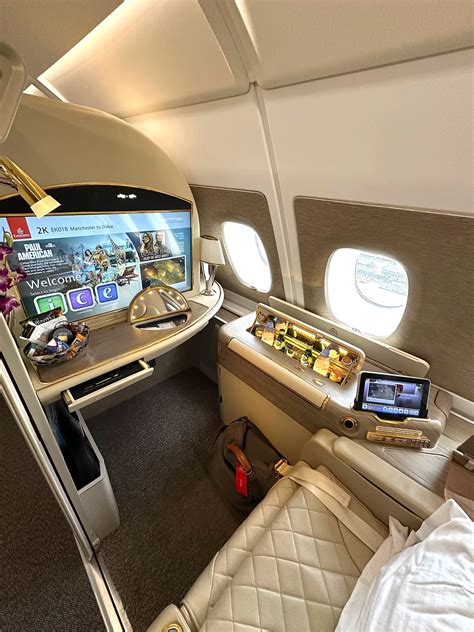
First class has been the biggest casualty of this cultural transformation. Many airlines have eliminated first class entirely because demand has declined significantly outside a handful of premium markets.
American Airlines became the final major US carrier to remove first class from its international fleet. Even in Europe, airlines such as British Airways and Lufthansa maintain only limited first-class cabins on select aircraft.
Today, approximately half of all first-class seats worldwide are offered by Emirates, largely on its Boeing 777 and Airbus A380 fleets.
As first class disappears, airlines are reallocating cabin space toward products that appeal to a wider audience. Premium economy fits perfectly into this strategy because it delivers comfort without the excessive cost associated with ultra-luxury cabins.
The result is a market where premium economy replaces first class as the aspirational upgrade for many travelers.
Premium Economy Occupies the Perfect Middle Ground
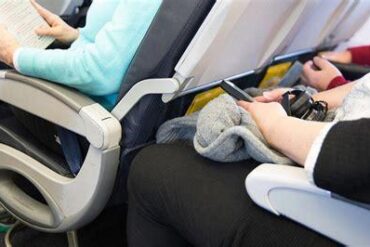
For many travelers, premium economy represents the ideal compromise between affordability and comfort. Economy class, especially on long-haul flights, has become increasingly cramped over time as airlines optimize seating density.
Aircraft such as the Boeing 777 were originally designed for nine-abreast seating in economy, providing relatively generous space for passengers. However, most airlines now configure these aircraft with ten seats per row, squeezing an additional passenger into each row.
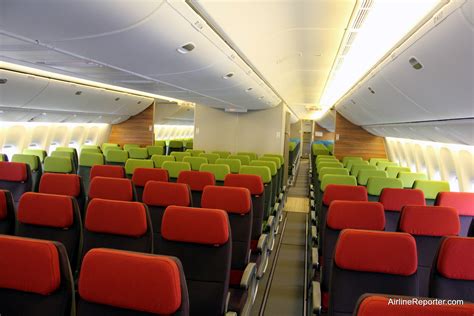
The same pattern appears across multiple aircraft types. Early Boeing 787 Dreamliners were sometimes configured with eight seats per row, but nearly all airlines now operate them with nine-abreast seating. Even the spacious Airbus A350, which offers four extra inches of interior cabin width, is now occasionally configured with ten seats across in economy.
These tighter layouts have made long-haul flights less comfortable for many travelers. Premium economy fills the gap by offering significantly improved seating without the price jump associated with business class.
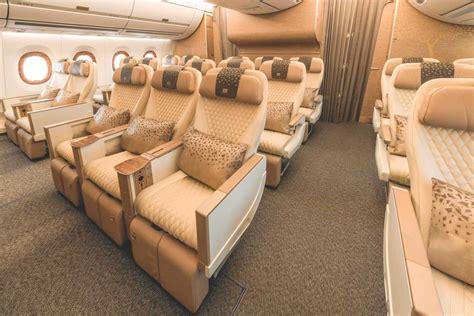
Seat pitch in premium economy typically ranges from 38 to 42 inches, compared with roughly 30 to 32 inches in economy class. This additional space dramatically improves comfort during long flights.
Passengers who cannot justify business class fares but refuse to endure cramped economy seating often find premium economy to be the perfect solution.
The Comfort Upgrade Is Immediately Noticeable
Premium economy delivers a clearly superior experience compared with standard economy seating. The differences are noticeable the moment passengers step into the cabin.
Seats in premium economy are typically 18.5 to 20 inches wide, providing more shoulder room than economy seats. Airlines also space seats further apart, often configuring widebody aircraft with eight seats per row instead of the denser nine or ten seats found in economy cabins.
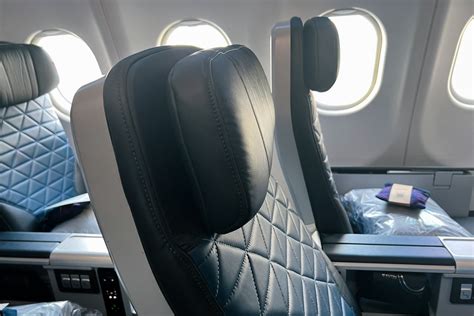
Beyond the seats themselves, premium economy passengers receive several additional benefits designed to improve the travel experience. These enhancements often include:
- Greater seat recline and adjustable leg rests
- Six-way adjustable headrests
- Dedicated footrests for improved comfort
- Enhanced meal service and upgraded dining options
- Priority check-in and boarding privileges
- Additional baggage allowances
Many airlines also place premium economy cabins toward the front section of the aircraft, ahead of the engines. This location often results in a quieter cabin environment, which contributes to a more restful flight.
Delta Air Lines highlights this experience through its Delta Premium Select product, which includes expedited airport services through Sky Priority, faster baggage handling, and earlier boarding privileges.
For passengers traveling across oceans or continents, these features significantly improve comfort and reduce travel fatigue.
Airlines Are Still Expanding and Retrofitting Premium Economy
Even though premium economy has existed for decades, many airlines are still in the process of introducing or expanding the cabin in 2026. Large retrofit programs are currently underway across multiple global carriers.
Emirates provides one of the most dramatic examples. The airline is investing $5 billion in an ambitious fleet retrofit program that will refurbish 219 aircraft, including 110 Airbus A380s and 109 Boeing 777s.
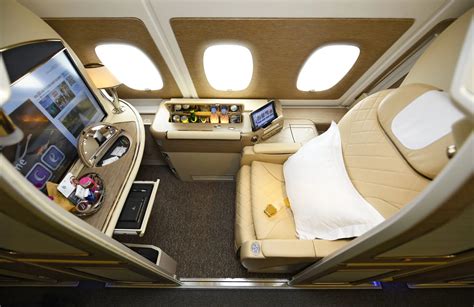
These upgrades introduce premium economy seating to aircraft that previously offered only economy and business class. The retrofit program also includes new interiors, upgraded inflight entertainment systems, and refreshed cabin layouts.
Other airlines are reintroducing premium economy after previously abandoning it. Turkish Airlines plans to relaunch its premium economy cabin in 2026 on long-haul routes, reversing a decision made more than a decade ago when the airline eliminated its earlier Comfort Class product.
Meanwhile, several airlines are introducing premium economy for the first time. TAP Air Portugal will launch its Economy Prime cabin in 2026 across Airbus A330 and A321LR aircraft, while Hawaiian Airlines is preparing to install premium economy seating on its A330-200 fleet.
These developments demonstrate that the premium economy rollout is far from complete. Instead, the cabin is still expanding globally as airlines upgrade fleets and modernize interiors.
Corporate Travel Is Driving Demand for Premium Economy
Corporate travel policies have undergone major changes since the COVID-19 pandemic. Many companies tightened travel budgets and reevaluated the necessity of expensive business-class tickets.
As a result, premium economy has emerged as the preferred compromise for corporate travel departments.
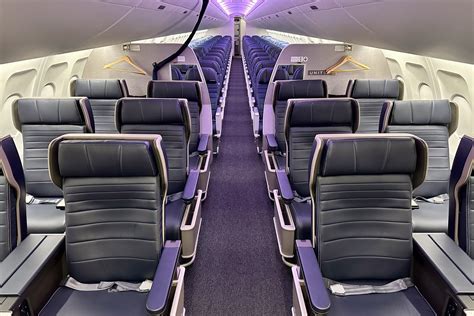
Premium economy tickets typically cost 40–60% of the price of a business-class seat, making them far more affordable for companies managing large travel budgets. At the same time, the cabin provides enough comfort for employees traveling on long-haul routes.
For corporate travelers flying overnight or across multiple time zones, arriving rested remains important for productivity. Premium economy offers a reasonable balance between comfort and cost efficiency.
Major US carriers such as Delta Air Lines, United Airlines, and American Airlines have all reported strong growth in demand for premium seating. These airlines consistently emphasize that premium cabins—including premium economy—are now the primary drivers of airline profitability.
American Airlines, for example, forecast stronger profits in 2026 partly because of rising demand for premium seats and recovering corporate travel.
This shift reflects a broader transformation in business travel. Instead of automatically booking business class, many companies now view premium economy as the practical standard for long-haul corporate flights.
Premium Economy Is Becoming the Future of Airline Cabins
The rapid growth of premium economy reflects deeper structural changes in aviation. Airlines must balance profitability, passenger comfort, and aircraft efficiency while competing in an industry with thin margins.
Premium economy satisfies all three objectives simultaneously.
For airlines, the cabin delivers excellent revenue density and strong demand. For passengers, it offers a tangible comfort upgrade without the financial burden of business class. For corporate travel managers, it represents a cost-effective compromise that still keeps employees comfortable on long journeys.
As aircraft deliveries increase and retrofit programs continue, premium economy will likely become a standard cabin feature on most long-haul aircraft by the end of the decade.
In many ways, premium economy represents the modern evolution of airline cabins. It reflects how travel has changed—less about prestige and more about practical comfort, smart spending, and balanced luxury.
The steady expansion of premium economy in 2026 is not simply a temporary trend. It is a clear signal that the airline industry has discovered the perfect middle ground between affordability and comfort, and both passengers and airlines are embracing it.