The surge in Poland’s defense modernization efforts has positioned the country as a crucial player in Europe’s drone warfare ecosystem. With the launch of the Polish Drone Force in 2025, Warsaw has signaled its intent to become a drone powerhouse — a move that has attracted the attention of American defense-tech heavyweight Anduril Industries. Now, the California-based company is exploring plans to establish a local footprint in Poland, aiming to cement its position in one of Europe’s fastest-growing defense markets.

Poland’s Military Modernization Push Fuels Industry Growth
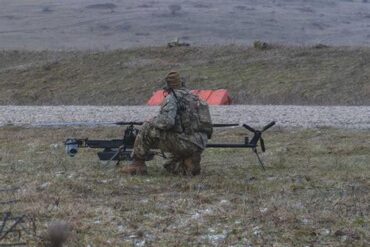
Since Russia’s full-scale invasion of Ukraine in 2022, Poland has accelerated a massive transformation of its armed forces. The government has not only boosted defense spending but also embraced emerging autonomous technologies as a cornerstone of its security strategy. Central to this effort is the Polish Drone Force initiative, expected to deploy unmanned aerial systems (UAS) and other unmanned assets at scale.
The Ministry of National Defence (MON) has already signed landmark contracts that underscore its ambitions:
- In May 2025, Poland inked a framework deal with WB Group, a domestic defense technology leader, for the delivery of 10,000 Warmate loitering munitions by 2035.
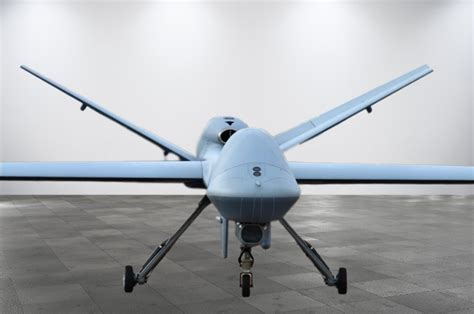
- In December 2024, a $310 million agreement was signed with General Atomics for MQ-9B Sky Guardian drones, scheduled for deployment by early 2027.
These acquisitions represent a seismic shift in Poland’s tactical doctrine, reflecting an operational emphasis on autonomy, ISR (intelligence, surveillance, and reconnaissance), and precision strike capabilities.
Anduril’s Portfolio Aligns with Polish Priorities
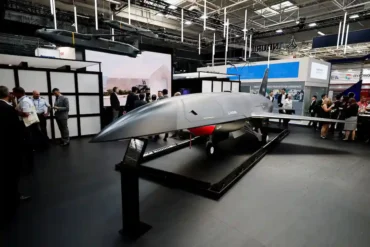
Anduril Industries brings to the table a diverse portfolio of cutting-edge autonomous systems, many of which align directly with the requirements of Poland’s new drone doctrine. Notable among these are:
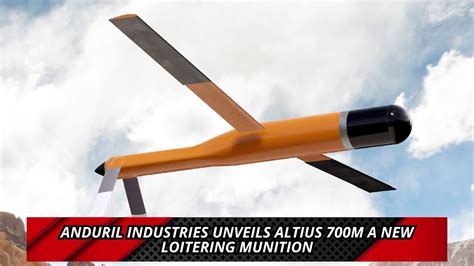
- Altius: A modular multi-mission loitering munition, capable of ISR and strike missions.
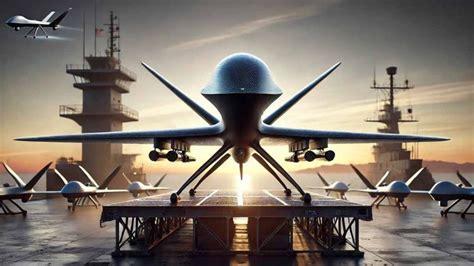
- Barracuda: A family of autonomous air vehicles tailored for combat and reconnaissance roles.
- Copperhead: A line of autonomous underwater vehicles (AUVs) for maritime surveillance and defense.
All these platforms are powered by Lattice, Anduril’s proprietary AI-driven operating system. Lattice provides a real-time, open architecture that enables full autonomy, fusing sensor data, mission execution, and battlefield coordination across assets.
According to CEO Brian Schimpf, Poland represents an ideal partner due to its “decisiveness in advancing new programs” and “incredible local talent and manufacturing capability.” During a press briefing in Warsaw on June 9, 2025, Schimpf confirmed the company is evaluating several collaboration models, including joint ventures, tech transfers, and potential domestic production.
Strategic Benefits of a Local Production Hub
Establishing a production presence in Poland would mark a major strategic win for both sides. For Anduril, it offers proximity to frontline NATO states, lower logistics costs, and access to Poland’s growing defense R&D ecosystem. For Warsaw, it provides:
- Access to advanced AI-driven drone technologies
- Domestic job creation and skills development
- Resilience through local manufacturing autonomy
- Deeper integration with Western defense supply chains
This model would mirror successful transatlantic defense partnerships, such as those seen between Lockheed Martin and PZL Mielec, or Raytheon and PIT-RADWAR.
The Geopolitical Calculus: NATO and Eastern Flank Security
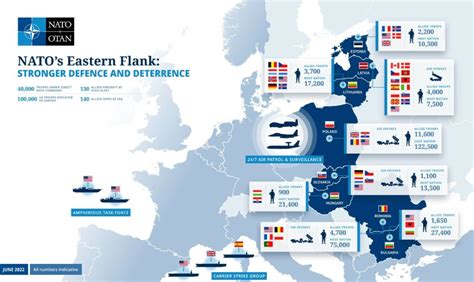
Poland’s geographical location — bordering Ukraine, Belarus, and the Russian exclave of Kaliningrad — elevates the urgency for self-reliant, scalable, and adaptive defense systems. Drones, particularly those with autonomous strike capabilities, are viewed as force multipliers capable of defending key assets and deterring hostile incursions.
By potentially anchoring its European production in Poland, Anduril would reinforce NATO’s eastern flank and help bolster a distributed defense architecture in the region. This aligns with U.S. strategic interests, where military-industrial cooperation in Central and Eastern Europe is increasingly prioritized.
Local Synergies: Tapping Poland’s Tech and Defense Base
Poland is no longer just a consumer of Western defense systems — it’s rapidly becoming a production and innovation partner. Defense-tech firms like WB Group, PGZ, and Flytronic have developed capabilities in ISR, EW (electronic warfare), loitering munitions, and C4ISR integration.
This creates a fertile environment for Anduril to build joint capabilities with local suppliers, universities, and defense labs. Beyond manufacturing, partnerships may include software development, system integration, and field testing, tapping into Poland’s large pool of STEM talent and engineering graduates.
Such collaboration could also accelerate the adaptation of Anduril platforms to NATO interoperability standards and unique operational demands on the Eastern European front.
Challenges and Considerations Ahead
Despite the mutual benefits, Anduril’s expansion into Poland will face several hurdles:
- Regulatory complexity in arms export licensing, particularly with dual-use AI technologies
- Intellectual property safeguards for proprietary platforms like Lattice
- Balancing U.S. security interests with local autonomy in manufacturing and deployment
Moreover, integration into the NATO logistics and battlefield communications infrastructure will require extensive testing, certification, and coordination.
Market Timing: A Race Against Competitors
Anduril is not alone in eyeing Poland’s burgeoning drone market. Other global defense players — including Elbit Systems, BAE Systems, and Turkish drone manufacturer Baykar — have already made inroads, showcasing platforms during MSPO and other regional defense expos.
What sets Anduril apart is its software-first philosophy, allowing it to deliver autonomy and battlefield coordination far beyond the capabilities of traditional drone systems. However, the company must move swiftly to convert intent into presence, as contracts and procurement cycles are moving quickly in Warsaw.
Future Outlook: Poland as a Drone Tech Gateway for Europe
Poland is poised to become more than just a buyer of drones — it’s on track to be a regional drone superpower. With a combination of strategic investment, public-private partnerships, and geopolitical urgency, the Polish Drone Force may evolve into a European testbed for autonomous warfare.
Anduril’s potential footprint in the country offers more than economic upside. It represents a strategic alignment of defense innovation, regional deterrence, and transatlantic cooperation. If executed with agility and mutual trust, the move could set a precedent for AI-driven, sovereign defense ecosystems across NATO’s eastern frontier.