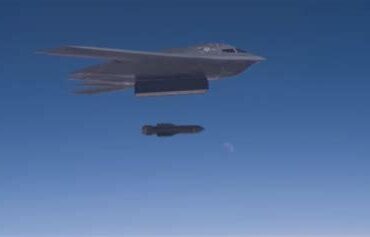
The United States has intensified its strategic air campaign against Iran’s missile infrastructure, deploying B-2 Spirit stealth bombers in a long-range strike mission that targeted hardened underground launch facilities. During Operation Epic Fury, American bombers dropped dozens of 2,000-pound bunker-buster munitions designed to penetrate reinforced concrete and detonate inside buried structures, striking what U.S. Central Command described as critical nodes within Iran’s ballistic missile network.
The operation marks a significant escalation in the effort to disrupt Tehran’s ability to launch long-range missiles. Rather than focusing solely on intercepting incoming projectiles or targeting mobile launch vehicles, the United States is now striking the core infrastructure that sustains Iran’s missile forces—the underground complexes often referred to as the country’s “missile cities.”
Military officials say these deeply buried facilities provide Iran with the ability to store, prepare, and rapidly deploy ballistic missiles from protected tunnels carved into mountainous terrain. By targeting these hardened installations, U.S. planners aim to undermine the operational backbone of Iran’s missile strategy and limit its capacity for sustained strike operations across the Middle East.
The B-2 Spirit: America’s Deep-Strike Stealth Platform
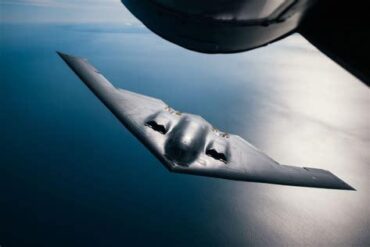
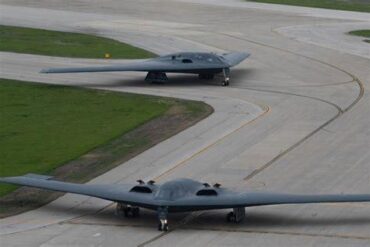
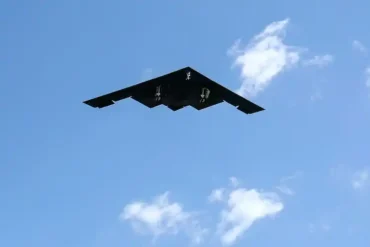
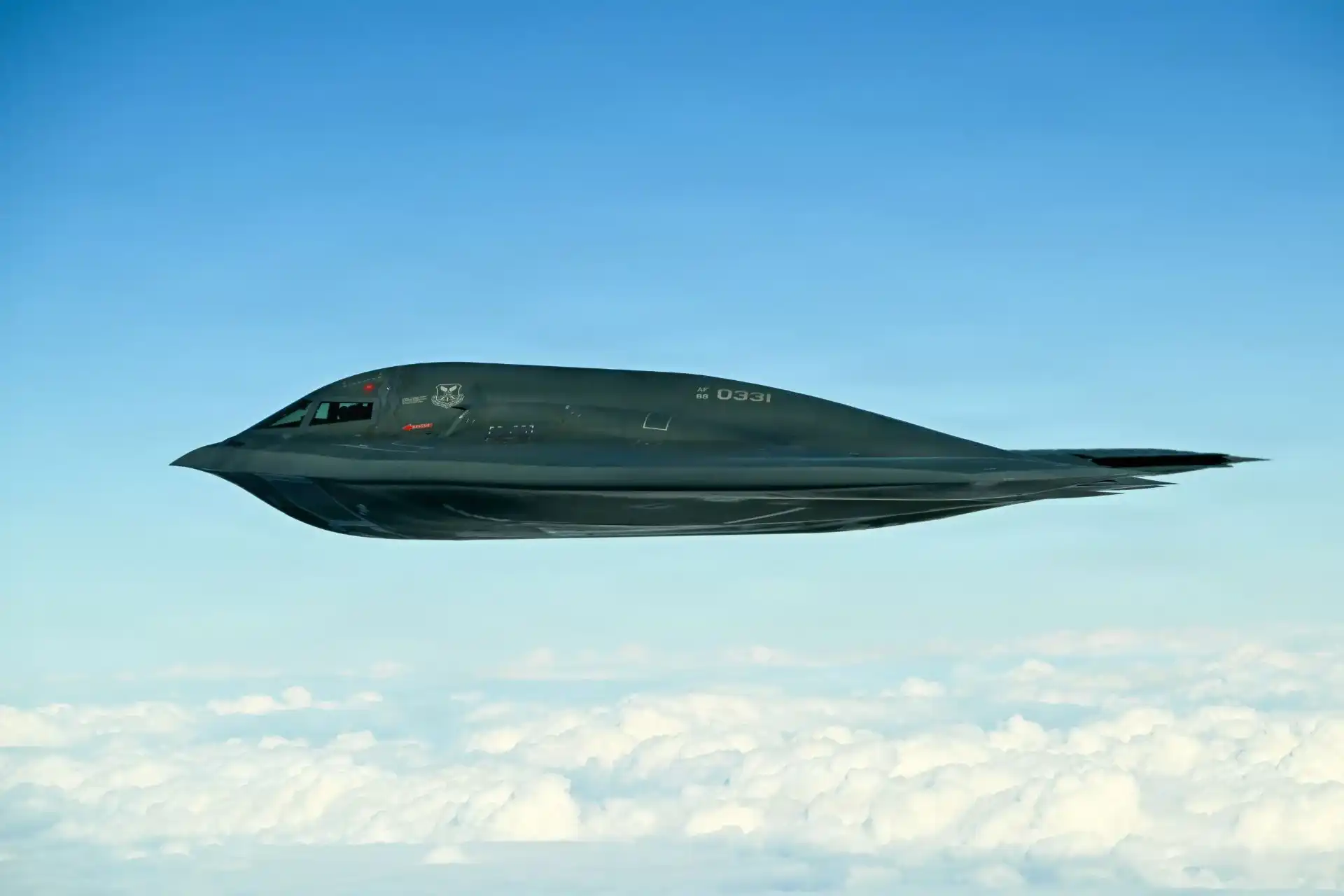
At the center of the operation is the Northrop Grumman B-2 Spirit, one of the most advanced strategic bombers ever built. Designed during the Cold War to penetrate heavily defended Soviet airspace, the aircraft remains uniquely suited for modern missions against high-value targets protected by sophisticated air defenses.
The B-2’s distinctive flying-wing configuration dramatically reduces its radar cross-section, allowing the aircraft to slip through radar coverage that would easily detect conventional bombers. Radar-absorbent materials further dampen reflections, while careful shaping of the airframe minimizes thermal and acoustic signatures. In practical terms, the aircraft becomes extraordinarily difficult for air defense networks to track or intercept.
Range is another defining advantage. The bomber can fly roughly 6,000 nautical miles without refueling, but with multiple aerial refueling operations it can reach virtually any point on the planet. For Operation Epic Fury, at least four aircraft reportedly departed from the continental United States and conducted several mid-air refuelings before approaching their targets.
The B-2’s internal weapons bays allow it to carry more than 18 tons of ordnance, all concealed within the fuselage to preserve its stealth profile. That payload enables a single aircraft to strike multiple hardened targets in one sortie—an essential capability when attacking complex underground networks spread across rugged terrain.
Precision Weapons Built to Destroy Hardened Targets
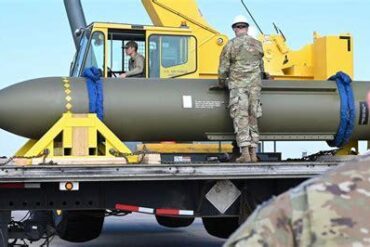
Although U.S. Central Command did not publicly confirm the exact munition used in the strikes, officials indicated that the bombers released 2,000-pound penetrating bombs. Defense analysts widely believe these were GBU-31 Joint Direct Attack Munitions (JDAMs) fitted with the BLU-109 penetrator warhead.
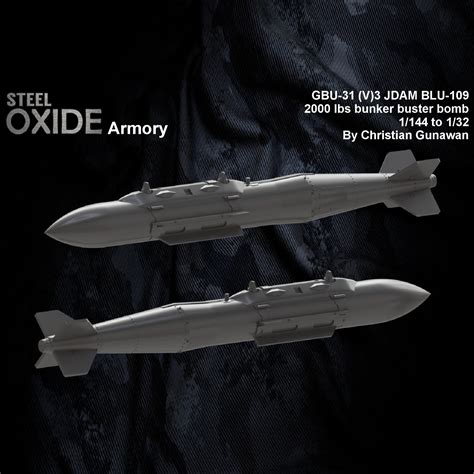
JDAM technology transforms conventional bombs into precision-guided weapons by attaching a GPS-guided navigation kit and inertial guidance system. Once released, the weapon adjusts its trajectory using satellite navigation to strike targets with an accuracy measured in only a few meters.
The BLU-109 warhead is specifically engineered for hardened targets. Encased in thick steel, the bomb is capable of punching through several meters of reinforced concrete before detonating. Instead of exploding on the surface, the munition penetrates deep into bunkers, tunnel entrances, or underground structures, delivering its destructive force precisely where the target is most vulnerable.
Against facilities buried beneath mountains or shielded by concrete bunkers, such penetrator weapons are among the few tools capable of causing meaningful damage.
Iran’s “Missile Cities” and the Underground Launch Network
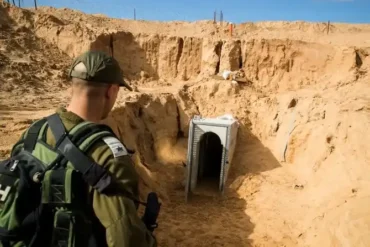
Iran has spent decades constructing a vast network of underground missile installations designed to preserve its strategic deterrent. These complexes—often called “missile cities”—are carved into mountains or hidden within elaborate tunnel systems connected to external launch pads.
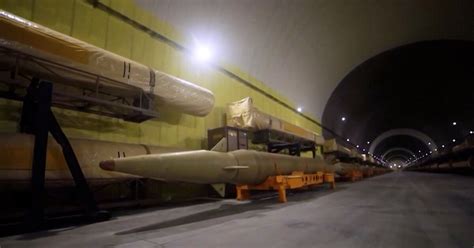
Operated primarily by the Islamic Revolutionary Guard Corps Aerospace Force, the facilities serve multiple functions. Inside the tunnels, missiles are stored, fueled, and prepared for launch. Transporter-Erector-Launcher vehicles (TELs) move the missiles from cavern storage areas to launch positions outside the mountain.
Once at the launch point, the TEL raises the missile to a vertical orientation and begins the firing sequence. The design allows crews to keep their missiles protected underground until the final moments before launch, significantly reducing their vulnerability to preemptive strikes.
Open-source intelligence and satellite imagery have identified several major hubs within this network, including installations near Khorramabad, Tabriz, and Kermanshah. These locations host extensive storage areas, command facilities, and launch infrastructure tied to Iran’s ballistic missile arsenal.
Iran possesses one of the largest and most diverse missile inventories in the Middle East, with systems ranging from short-range battlefield rockets to medium-range ballistic missiles capable of reaching targets across the region.
Why Underground Launch Facilities Are Difficult to Destroy
Underground missile complexes represent one of the most challenging military targets in modern warfare. The facilities are not simply hidden beneath concrete; they are protected through a layered combination of terrain, engineering, and operational concealment.
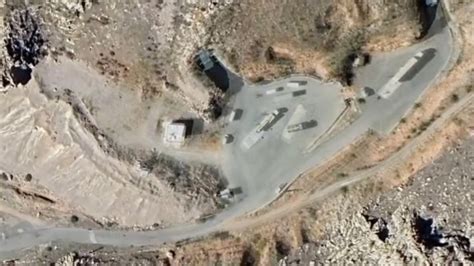
Tunnel entrances are often reinforced with thick blast doors, while interior chambers can be located hundreds of meters inside mountains. Ventilation shafts, access roads, and logistical corridors are carefully dispersed to complicate targeting.
Even when a bunker itself remains intact, however, its support infrastructure can be vulnerable. Ventilation systems, power supplies, communications nodes, and tunnel access points represent critical weak spots. Precision strikes against these components can cripple the facility’s ability to launch missiles even if the main storage chambers survive.
That logic appears central to the strategy behind Operation Epic Fury. By targeting key structural elements, the United States seeks to disrupt the operational rhythm of Iran’s missile forces, slowing or preventing launch cycles.
Operation Epic Fury and the Strategic Shift in U.S. Campaign
Recent military reporting suggests the air campaign has evolved beyond reactive missile defense. Earlier phases focused heavily on intercepting Iranian drones and ballistic missiles aimed at U.S. bases and regional allies. The current strategy shifts toward degrading the industrial and logistical foundation that supports those attacks.
B-2 strikes against hardened facilities illustrate that shift clearly. Stealth bombers allow the United States to attack the most heavily protected elements of Iran’s military infrastructure without exposing large strike packages to dense air defense networks.
Officials report that since late February, the number of Iranian missile and drone attacks has declined compared with earlier phases of the conflict. Nevertheless, Tehran has attempted retaliatory strikes against U.S. positions and partner states including Kuwait, Qatar, Saudi Arabia, and Bahrain.
In response, Washington and regional partners have expanded air defense and missile defense deployments to protect military installations and energy infrastructure.
Strategic Implications for the Regional Balance
The destruction—or even partial degradation—of Iran’s underground missile infrastructure carries strategic implications that extend beyond a single operation. Ballistic missiles form a central pillar of Tehran’s deterrence strategy, particularly in scenarios where conventional airpower might be outmatched by technologically superior adversaries.
Targeting the infrastructure that supports those missiles sends a signal that no element of the network is beyond reach. If underground facilities can be penetrated by stealth bombers and bunker-buster munitions, the assumption of sanctuary inside mountain complexes becomes less certain.
At the same time, hardened installations are rarely eliminated in a single strike. Many are built with redundancy and extensive tunnel networks, meaning operations like Epic Fury may aim more at persistent degradation than immediate destruction.
The broader message emerging from the strikes is strategic endurance. By demonstrating the ability to conduct intercontinental stealth bombing missions against fortified targets, the United States reinforces its capacity to hold deeply buried military infrastructure at risk anywhere in the region.
In the shadowy contest between missile forces and the systems designed to neutralize them, the underground battlefield has become just as important as the skies above it. The B-2’s arrival in that contest suggests the fight for strategic advantage is now moving directly into the mountains where Iran’s missile arsenal sleeps.