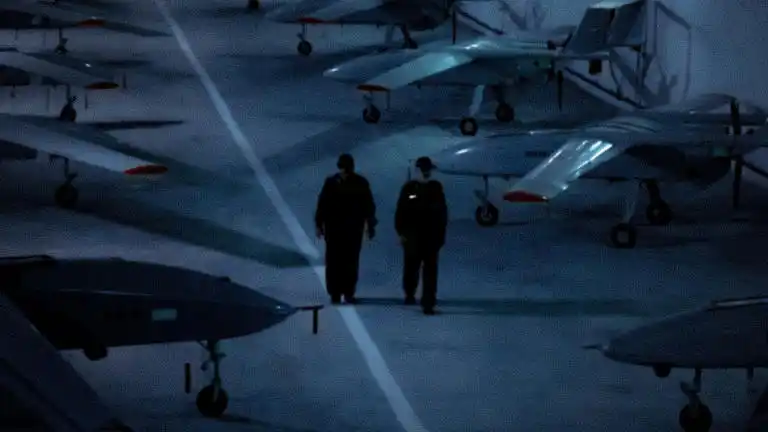
Iran’s Islamic Revolutionary Guard Corps (IRGC) has publicly revealed a new underground drone base, intensifying concerns about the Islamic Republic’s growing military prowess and strategic deterrence in the region. This subterranean complex, unveiled through an official state television broadcast, marks a significant step in Iran’s defense strategy—one focused on survivability, stealth, and escalation dominance in the face of mounting external threats.
Hidden deep within Iran’s mountainous terrain, the drone base showcases next-generation unmanned aerial systems (UAS) capable of long-range missions, persistent surveillance, and potential offensive operations targeting both regional adversaries and U.S. assets in the Persian Gulf.
Strategic Depth: Iran’s Shift to Underground Military Architecture
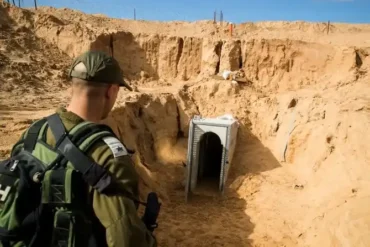
The decision to embed military infrastructure underground stems from a calculated strategy of asymmetric defense. Iran has long acknowledged its vulnerability to air and missile strikes from superior Western or Israeli forces. In response, the IRGC has expanded a web of fortified underground bases that offer protection from precision strikes, satellite detection, and aerial surveillance.
These installations are not merely bunkers but interconnected command centers, drone launch silos, and missile platforms integrated within Iran’s broader military doctrine. The newly revealed facility continues this trend and reflects an investment in long-term deterrence and resilience. It aligns with Iran’s broader strategy of “forward defense,” seeking to complicate enemy calculations by obscuring the full extent of its retaliatory capabilities.
Cutting-Edge Capabilities: A Glimpse Inside the Drone Arsenal
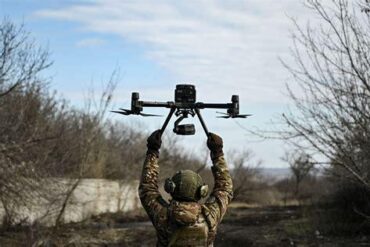
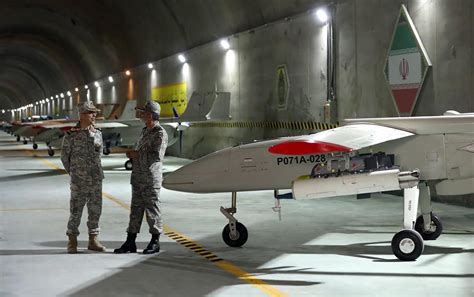
Footage aired during the unveiling ceremony depicted an array of advanced UAVs—some camouflaged for low radar observability, others engineered for endurance and reconnaissance. Notably, several systems appeared to incorporate stealth shaping, modular payload bays, and infrared suppression features. These capabilities suggest a deliberate design focus on penetrating defended airspace and tracking naval vessels, particularly U.S. aircraft carriers and destroyers operating in the Gulf.
General Hossein Salami, commander of the IRGC, emphasized the potency of Iran’s aerial arsenal during the event, stating, “What the Iranian people witness today represents only a fraction of the IRGC Navy’s substantial drone capabilities.” His words underscored the unrevealed scale of Iran’s drone network and hinted at further technological layers still concealed from public view.
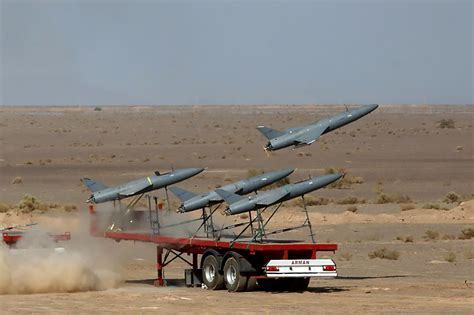
Iran’s growing drone expertise is not new. Over the last decade, it has evolved from importing technology to producing indigenous UAVs capable of long-range surveillance, precision strikes, and even kamikaze-style missions. With this underground facility, Iran signals it can mass-produce, store, and deploy these systems even under heavy bombardment.
Integration with Missile Systems and Electronic Warfare
What distinguishes this drone base from earlier IRGC facilities is its integration with ballistic and cruise missile platforms. The base is not a standalone site—it is a node within a broader command-and-control ecosystem linking UAV operations with electronic warfare, radar jamming units, and anti-ship missile batteries.
This multi-domain integration enhances Iran’s ability to execute “swarm saturation” tactics, where drones overwhelm a ship or base’s defenses, paving the way for precision missile strikes. The synergy between UAVs and missile systems also offers greater flexibility for Iran to respond to crises, especially in contested maritime zones like the Strait of Hormuz.
Heightened Tensions with Israel and the United States
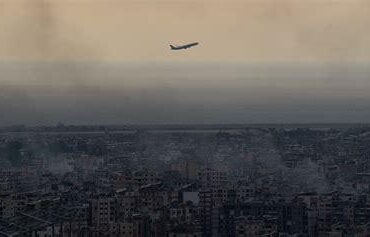
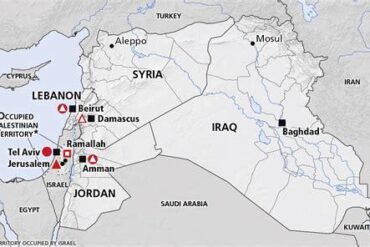
The unveiling comes at a time of escalating confrontation with Israel and the United States. Just days before, Israeli Defense Minister Israel Katz issued a stern warning, referencing Israel’s past strikes in Beirut, Gaza, and Damascus, and suggesting Tehran could be next. Iran’s retaliatory posture was made unmistakably clear by General Salami, who declared that Iran would “open the gates of hell” in response to any foreign aggression.
This rhetorical exchange occurs amid increased Israeli activity aimed at degrading Iranian influence across the region. The collapse of Bashar Al Assad’s regime—once a critical Iranian ally—and the military setbacks suffered by Hezbollah in Lebanon have left Tehran more isolated and vulnerable. The underground base is a signal to both allies and adversaries: Iran remains capable of orchestrating strategic defense and counterattacks.
Nuclear Negotiations Cast a Shadow
The drone base’s revelation also coincides with renewed nuclear diplomacy. Iran and the U.S. are scheduled for a fourth round of talks in Oman, aimed at resuscitating a nuclear accord abandoned by former President Donald Trump in 2018. These discussions, while framed diplomatically, unfold under the cloud of military brinkmanship.
President Trump has threatened military action if a new deal is not forged—comments that directly conflict with Iran’s current military posturing. The drone base, then, is more than a military announcement; it is a geopolitical chess move—meant to strengthen Iran’s bargaining position by reminding negotiators of the cost of failure.
A Tactical Hedge Against Sanctions and Isolation
Economic sanctions have battered Iran’s conventional defense procurement and technological imports. But Tehran has responded not by retreating but by pivoting toward self-sufficiency, particularly in drone and missile development. The underground base illustrates this shift. Every drone, launcher, and control system within it is designed with domestic parts or adapted through reverse engineering.
This is part of Iran’s “resistance economy” doctrine, where strategic autonomy is achieved through localized innovation. Moreover, by showcasing its underground capabilities, Iran is also sending a message to domestic audiences: the regime is not merely surviving sanctions but thriving beneath their weight.
Implications for Regional Security Architecture
From the UAE to Saudi Arabia and Qatar, Iran’s neighbors are watching these developments with growing anxiety. The underground drone base changes the regional security calculus. UAVs launched from secure subterranean locations pose a unique challenge to existing air defense systems like Israel’s Iron Dome or the U.S.-deployed Patriot batteries.
These systems are designed to track conventional trajectories or intercept launches from above-ground locations. An underground base, by contrast, allows for concealed launch cycles, delayed detection, and unpredictable attack vectors. This undermines the pre-emptive doctrines upon which many Gulf states have relied.
Deterrence or Escalation? A Delicate Balance
Iran insists that its drone capabilities are defensive in nature, intended to preserve national sovereignty and deter aggression. But its actions—revealing hidden bases, arming proxy militias, threatening retaliation—also risk provoking a preemptive strike or miscalculation.
Analysts debate whether this unveiling represents a form of strategic signaling or a prelude to escalation. By blending secrecy with visibility—Iran reveals the base, but not its exact location or full inventory—it walks a fine line between deterring foes and enticing confrontation. The opacity is part of the message.
What remains clear is that Iran’s military modernization is no longer confined to rhetoric. It is being etched into the mountainsides, embedded in hardened bunkers, and launched from steel runways carved deep underground.
Conclusion: A New Phase of Confrontation
The unveiling of Iran’s underground drone base is a landmark moment in the region’s evolving security dynamics. It confirms Iran’s strategic pivot toward survivable, autonomous warfare, blending low-cost drones with advanced missile systems and underground infrastructure.
As nuclear negotiations teeter, and regional rivalries sharpen, the IRGC’s new facility stands not just as a symbol of resilience but as a potential trigger. One capable of drawing the region into another devastating cycle of escalation.
Iran has built not only a base—but a message: We are ready, buried deep, and watching.