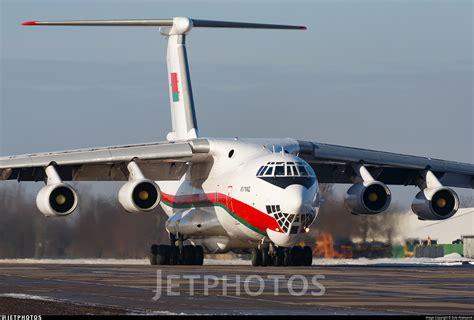
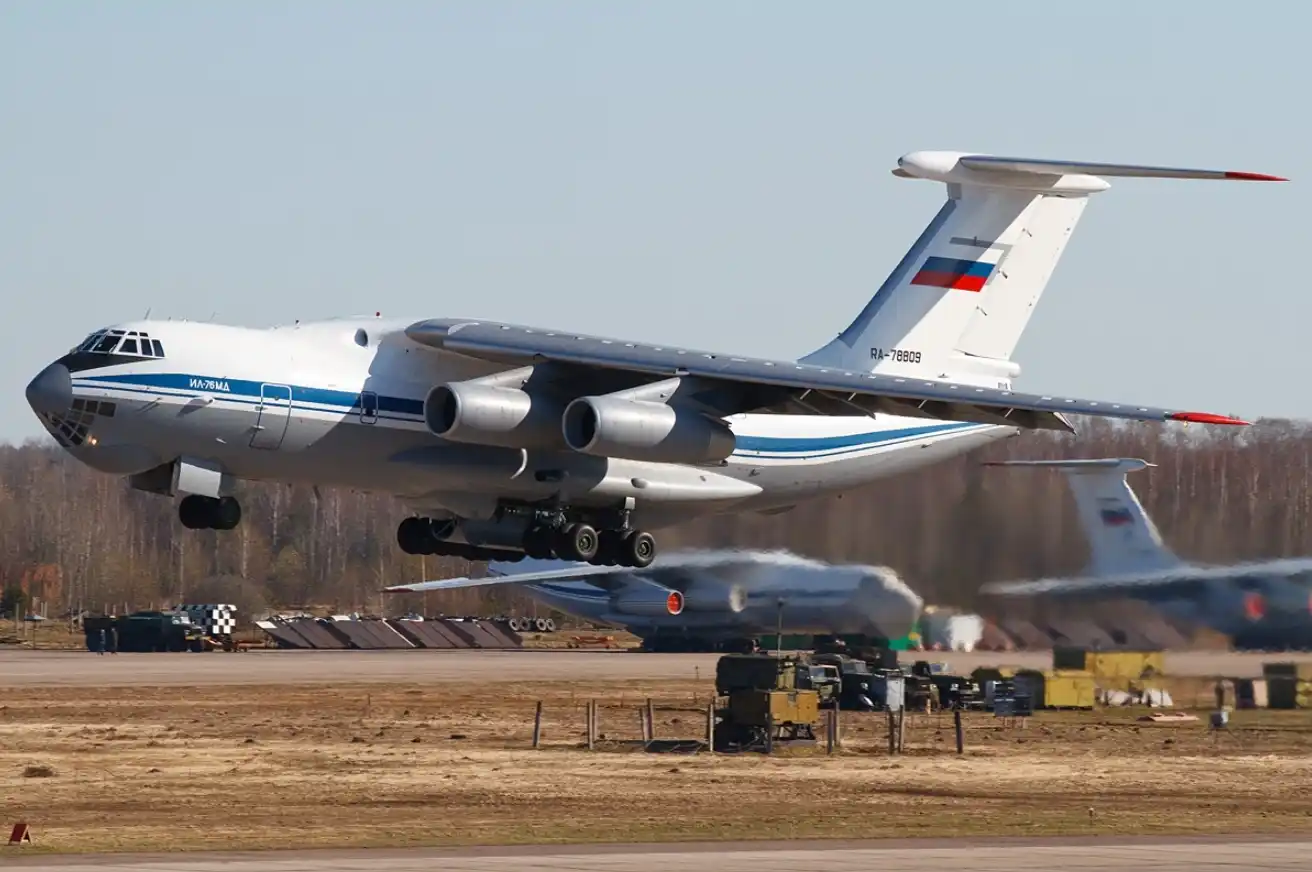
Russia has begun intensifying military logistics operations by delivering substantial military cargo to Belarus via Il-76 military transport aircraft. The flights, which have been consistently recorded by analysts from AviVector, are centered around the Machulishchy military air base, a strategic hub located near Minsk. This escalation in aerial military transport has sparked concerns and drawn the attention of international observers, particularly NATO, as the movement mirrors patterns seen prior to Russia’s 2022 invasion of Ukraine.
The Machulishchy air base has emerged as a critical asset in the Russian-Belarusian military alliance, capable of hosting large transport aircraft including the Il-76 and the colossal An-124-100 Ruslan. These aircraft are recognized for their capacity to carry heavy and oversized military equipment, reinforcing the notion that significant materiel is being staged in Belarus. According to AviVector’s tracking data, the frequency of these flights has markedly increased over the past weeks, suggesting a concerted buildup ahead of the Zapad-2025 joint military exercises, scheduled for September.
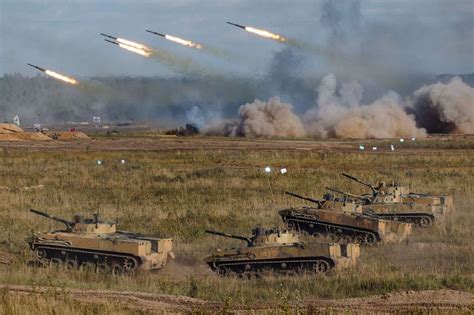
Analysts believe that the intensified logistical activity is directly tied to the preparations for Zapad-2025, a series of joint drills designed to enhance operational coordination between the Belarusian and Russian armed forces. These exercises are widely regarded as more than routine maneuvers. In 2021, similar drills served as a prelude to Russia’s massing of troops and hardware near Ukraine, culminating in the launch of the full-scale invasion in February 2022. The scale and scope of Zapad-2025 are expected to replicate, if not exceed, those earlier exercises, raising alarm bells among neighboring nations and military strategists.
The Belarusian Ministry of Defense, led by Viktor Khrenin, has sought to reassure the international community, stating that the exercises are defensive in nature. Khrenin emphasized that the operations aim to improve the combat readiness of both militaries and to strengthen bilateral defense cooperation. He reiterated that these activities pose no threat to surrounding countries. Nevertheless, the historical context and the massive movement of military cargo have prompted skepticism.
From a technical standpoint, the use of Il-76 aircraft for these operations underscores their importance within the Russian military aviation fleet. The Il-76, first introduced in the 1970s, is capable of transporting up to 50 tons of cargo and can operate from unpaved or partially prepared runways — features that make it ideal for rapid deployment and supply missions to forward bases like Machulishchy. The An-124-100, on the other hand, can lift nearly 120 tons, suitable for transporting large armored vehicles, missile systems, or other critical war materiel. The concentration of such airlift resources on Belarusian soil indicates a high level of preparation and logistical planning by the Russian military.
Internationally, NATO has been monitoring these developments with increasing unease. Mark Rutte, NATO’s Secretary General, acknowledged that while the alliance does not currently foresee a deliberate escalation by Moscow into new European conflicts, they remain vigilant. Rutte issued a stark warning, declaring that any aggression against NATO member states such as Poland would trigger a swift and overwhelming military response. His comments reflect a deepening anxiety across Europe as Russia’s military posture continues to harden along the alliance’s eastern flank.
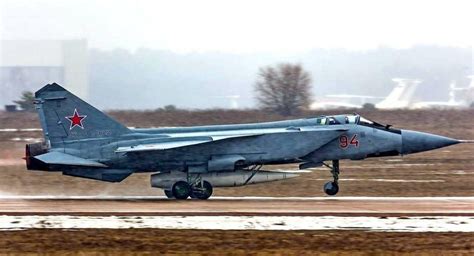
The Machulishchy air base has a storied history of serving as a platform for Russian operations. Since the onset of the Ukraine conflict, it has functioned as a temporary home for A-50 long-range radar detection aircraft, MiG-31 interceptors, and various other combat and support elements. Its strategic location and infrastructure make it a linchpin in Moscow’s efforts to project power westward. The recent cargo flights add a new dimension to its role, potentially transforming the base into a logistics hub for sustained military operations.
The broader implications of these deliveries extend beyond mere preparations for military drills. The consistent pattern of heavy-lift aviation activity is reminiscent of the months leading up to the 2022 invasion of Ukraine. It signals not only military readiness but also serves as a form of geopolitical messaging. By visibly reinforcing its footprint in Belarus, Russia appears intent on demonstrating both resolve and capability, a posture aimed at deterring adversaries and reassuring domestic audiences of the Kremlin’s strength.
In Minsk, the Belarusian government continues to frame these developments within the context of legitimate self-defense and alliance obligations. However, the proximity of these exercises and deployments to NATO borders cannot be overlooked. The parallels to 2022’s build-up and subsequent offensive operations remain too stark to dismiss. As a result, European security analysts are recalibrating their assessments, factoring in the possibility that Zapad-2025 could, intentionally or otherwise, escalate into a broader crisis.
Observers also note that the timing of the deliveries and the intensity of preparations coincide with other signs of Russian military recalibration. The ongoing conflict in Ukraine has stretched Russia’s resources, necessitating greater reliance on its partnership with Belarus. The logistical bridge provided by the Il-76 and An-124-100 flights exemplifies this reliance, allowing Moscow to maintain strategic depth and operational flexibility.
As the summer progresses, all eyes will be on Machulishchy and the skies above Belarus. The pattern of flights, the types of equipment delivered, and the operational tempo will offer critical clues about Russia’s intentions. NATO’s surveillance assets, alongside independent analysts like those at AviVector, will continue to dissect these movements in real-time, parsing signal from noise in the high-stakes game of military brinkmanship unfolding on Europe’s eastern edge.