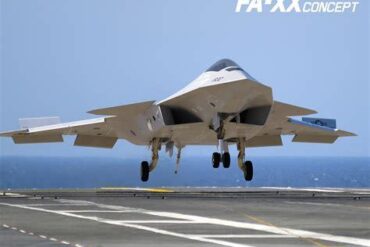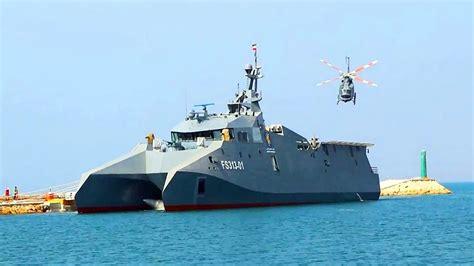
The era when U.S. carrier aircraft could roam contested skies with near-total freedom is fading fast. In the Middle East, and especially around Iran, the strategic weather is changing. Air defenses are thicker, smarter, and increasingly networked. Long gone is the assumption that a carrier air wing can simply surge toward the coast, launch Super Hornets, and expect manageable resistance. Senior U.S. Navy leadership is now saying the quiet part out loud: within a decade, current carrier fighters may struggle to survive against Iran’s evolving defenses. That warning sits at the heart of a renewed push for the Navy’s sixth-generation fighter, the F/A-XX, an aircraft designed not merely to fight, but to penetrate, disrupt, and dominate hostile airspace where “flying with impunity” is no longer guaranteed.
This shift in tone is not abstract theory. It is rooted in recent operations, visible force deployments, and a sober assessment of how quickly Iran and its partners are closing the technological gap. The message from the Navy is stark: without F/A-XX, the carrier strike group risks becoming a blunt instrument against a sharp, layered Iranian shield.
A Region Heating Up and a Clock Ticking
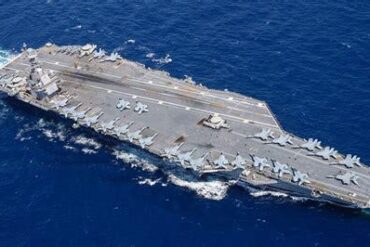
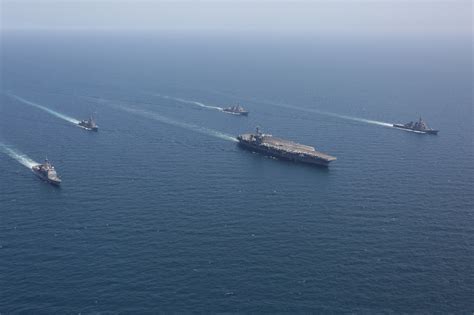
The U.S. military buildup across the Central Command theater has been impossible to miss. Carrier strike groups, long-range bombers, fifth-generation fighters, and electronic warfare aircraft have flowed steadily toward the region. The USS Abraham Lincoln and its embarked air wing have become symbols of American resolve, but also test cases for future conflict scenarios. When senior naval leaders speak about Iran ten years from now, they are not speculating idly. They are extrapolating from what they already see.
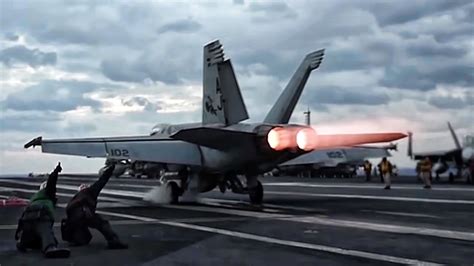
Iran’s air defenses today are no longer a patchwork of outdated systems. They are an integrated network, blending domestic technology with lessons absorbed—directly or indirectly—from Russian and Chinese designs. That trajectory matters. Carrier-based fighters like the F/A-18E/F Super Hornet were never built to penetrate dense, modern integrated air defense networks alone. They rely on support, standoff weapons, and electronic attack. As those defenses grow longer-ranged and more resilient, the margins shrink.
The End of “Fly With Impunity”
For decades, U.S. naval aviation benefited from a strategic asymmetry. Few adversaries could track, target, and reliably threaten carrier aircraft beyond their borders. That asymmetry is eroding. Iranian planners have invested heavily in surface-to-air missile systems designed to hold aircraft at risk far from key targets. Some of these systems advertise engagement ranges approaching 400 kilometers, paired with radars optimized to detect low-observable and low-flying threats.
The Navy’s concern is not that Super Hornets suddenly become obsolete overnight. The concern is cumulative vulnerability. Every new radar node, every improved missile seeker, every data link that fuses tracks across the battlespace increases the probability that a non-stealth aircraft will be detected, targeted, and forced to operate from less effective positions. When senior officers talk about the “fly with impunity” era ending, they are acknowledging that survivability margins are being consumed faster than legacy platforms can adapt.
Lessons from Operation Midnight Hammer
The June 2025 strikes against Iranian nuclear facilities provided a preview of this future. Those missions leaned heavily on stealth and layered protection. B-2 bombers did not fly alone. They were escorted by F-22 Raptors and supported by F-35s conducting suppression of enemy air defenses. The operation succeeded, but it also highlighted a dependency: penetrating modern defenses increasingly requires aircraft designed from the outset for stealth, sensor fusion, and electronic dominance.
Carrier aviation does not currently have an equivalent to the Air Force’s deep-penetration stealth bombers. The F-35C adds stealth to the carrier deck, but its range, payload, and electronic attack capabilities are constrained by design compromises. Navy leadership now openly argues that a follow-on platform must go further, combining stealth with command-and-control authority over unmanned systems and organic electronic warfare.
Iran’s Integrated Air Defense Network
Iran’s air defense architecture is the silent antagonist in this story. At its core lies an integrated air defense network designed to connect sensors, shooters, and command nodes across the country. Systems like the domestically produced Bavar-373, often compared to Russia’s S-300 family, represent a qualitative leap over earlier generations. With engagement altitudes reportedly reaching 27 kilometers and advanced tracking radars, these systems complicate traditional strike profiles.
For carrier aircraft, the geography matters. Launching from the sea compresses options. Fighters must fly predictable corridors to reach inland targets, making them more susceptible to long-range detection. Non-stealth aircraft face a grim trade-off: fly low and risk short-range systems, or fly high and light up long-range radars. Iran’s defenses are built to exploit that dilemma.
Why the Super Hornet Is Reaching Its Limits
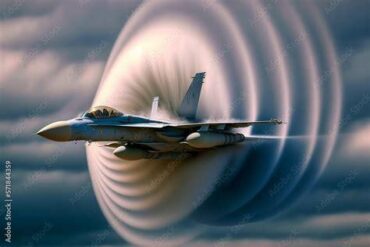
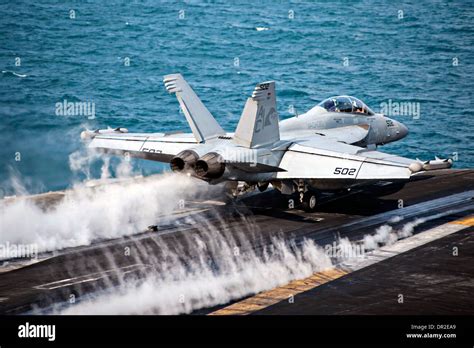
The F/A-18E/F Super Hornet has been a remarkably adaptable workhorse. It has absorbed new sensors, weapons, and electronic warfare upgrades over decades of service. Yet adaptability has limits. The airframe was designed in an era when stealth was desirable, not existential. Against an adversary with layered defenses, its survivability increasingly depends on escort jammers, standoff munitions, and permissive windows created by other assets.
The EA-18G Growler mitigates some of this risk, but even electronic attack aircraft face attrition in a future saturated with passive sensors and counter-EW techniques. Navy leadership has been blunt: Growlers will not last forever. The platform that replaces the Super Hornet must internalize electronic attack rather than bolt it on.
F/A-XX: More Than a Fighter
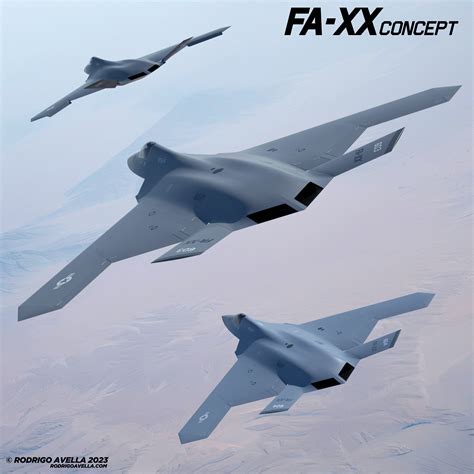
The F/A-XX concept is not simply a faster or stealthier jet. It is envisioned as the nerve center of the future carrier air wing. At its heart is a fusion of capabilities that current platforms distribute across multiple aircraft. Enhanced stealth reduces detection. Extended range pushes the carrier’s striking power deeper inland. Integrated electronic warfare allows the aircraft to shape the battlespace rather than merely survive it.
Perhaps most transformative is the ability to command Collaborative Combat Aircraft, unmanned “loyal wingmen” that can scout ahead, jam enemy sensors, or carry additional weapons. In this model, the manned aircraft becomes a quarterback, directing a swarm that complicates enemy targeting and overwhelms defenses through sheer complexity.
Penetration as a Design Philosophy
Penetration is the keyword that keeps resurfacing in Navy discussions. Penetration means more than slipping past radar. It means sustaining operations inside contested airspace long enough to achieve strategic effects. The F/A-XX is expected to combine low observability with advanced data links that tie together ships, aircraft, and unmanned systems into a single combat web.
That web matters in a fight with Iran. Air defenses do not operate in isolation. They are linked to coastal radars, naval units, and even proxy forces operating beyond Iran’s borders. A penetrating aircraft must see the whole picture and respond in real time, reallocating drones, retasking sensors, and coordinating strikes as conditions evolve.
Range: The Quiet Force Multiplier
Range rarely excites headlines, but it defines what a carrier air wing can actually do. Navy leaders have emphasized that F/A-XX is expected to offer roughly 25 percent greater range than the F-35C. That margin translates into flexibility. Carriers can stand farther offshore, reducing their exposure to anti-ship missiles, while still projecting power inland.
The MQ-25 unmanned tanker amplifies this advantage, enabling clandestine refueling that extends reach without advertising the carrier’s position. In a scenario where Iran fields long-range anti-ship weapons alongside air defenses, range becomes survivability by another name.
Electronic Warfare Built In, Not Bolted On
Electronic warfare has shifted from a niche specialty to a central pillar of air combat. Iran’s defenses rely on radar networks, communications links, and data fusion. Disrupting those systems can be as decisive as destroying them. The F/A-XX is envisioned to inherit and surpass the Growler’s electronic attack role, integrating jamming and cyber-electromagnetic effects directly into the fighter.
This integration matters because it collapses timelines. Instead of waiting for dedicated support aircraft to arrive, a penetrating fighter can sense, decide, and act in seconds. Against a reactive air defense network, speed is survival.
Iran’s Partners and the Multiplying Threat
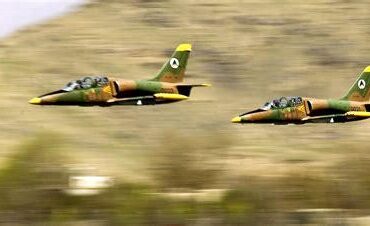
One of the Navy’s underlying concerns is that Iran does not innovate in isolation. Through formal and informal channels, it absorbs technology, tactics, and training influenced by China and Russia. Even non-state actors aligned with Iran have demonstrated alarming effectiveness, as seen in the downing of multiple MQ-9 Reaper drones by Houthi forces.
These incidents underscore a broader reality: advanced air defense capabilities are proliferating faster than traditional counters. An aircraft designed today must anticipate not just Iran’s current systems, but the systems Iran could field with external assistance a decade from now.
Budget Battles and Strategic Consequences
The F/A-XX program has not enjoyed a smooth path. Competing priorities, especially the Air Force’s own sixth-generation fighter, siphoned funding and attention. At one point, the Pentagon argued that pursuing two next-generation fighters risked under-delivery on both. Recent congressional action, however, suggests a reassessment. Lawmakers have revived funding at levels that signal renewed urgency, explicitly citing the Navy’s unique operational needs.
This matters because timelines are unforgiving. Designing, testing, and fielding a sixth-generation aircraft takes years. Every delay compresses the window during which current platforms must face increasingly capable defenses without a true successor.
The Carrier Air Wing of the Future
At stake is not just a single aircraft, but the relevance of the carrier air wing itself. Carriers remain unmatched in their ability to deliver massed airpower without relying on foreign bases. Yet that advantage erodes if their aircraft cannot penetrate defended airspace. Navy leadership has framed F/A-XX as the linchpin of a future air wing capable of delivering mass fires, sustained presence, and credible deterrence even against sophisticated adversaries like Iran.
The argument is ultimately strategic. Without F/A-XX, the Navy risks ceding the deepest strike missions to land-based assets, diluting the carrier’s role. With it, carriers remain central players in high-end conflict.
A Warning Disguised as a Requirement
When senior naval officers speak about Iran’s defenses ten years from now, they are issuing a warning as much as a requirement. The warning is that technological complacency invites strategic surprise. The requirement is a platform designed for a world where adversaries learn quickly, defenses adapt, and airspace is never permissive by default.
The F/A-XX is presented as the answer not because it promises invulnerability, but because it restores options. In a future confrontation with Iran, options will be the difference between deterrence that holds and deterrence that fails.