As we venture beyond Earth’s magnetic cradle into the harsh expanse of interplanetary space, radiation-hardened electronics become not merely an engineering requirement, but a mission-critical necessity. The journey to Mars exposes spacecraft to relentless cosmic radiation, solar proton events, and galactic cosmic rays, all of which can catastrophically degrade unprotected electronics. Despite this danger, a growing tension exists between the use of legacy rad-hard processors and more advanced, commercial off-the-shelf (COTS) systems hardened via fault-tolerant architectures.
Understanding the Threat: Mars and the Radiation Gauntlet
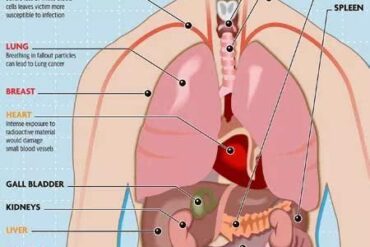
Mars lies far beyond the protective cocoon of Earth’s Van Allen radiation belts, with no significant magnetic field of its own. During a transit to the Red Planet, spacecraft must survive a cosmic onslaught of high-energy particles. Even on Earth, thousands of cosmic rays impact our bodies every second, mostly harmless due to atmospheric shielding. In deep space, however, these particles can cause single-event upsets (SEUs), bit flips, or total device failure if not mitigated.
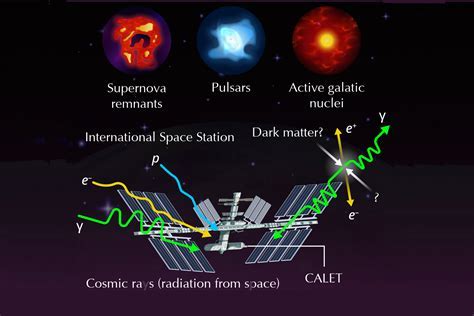
Modern missions must therefore balance between shielding, system-level redundancy, and radiation-hardened hardware to ensure uninterrupted operation. The challenge is especially critical for autonomous navigation, scientific computation, and long-term data integrity, where processor failure could result in total mission loss.
The RAD750 and Legacy Rad-Hard Processors: Safe but Stagnant
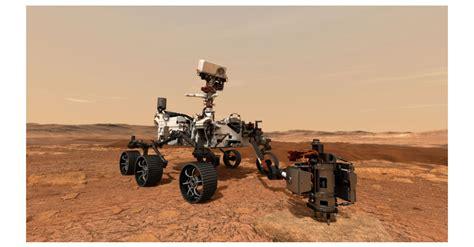
NASA’s choice of RAD750 processors for Mars rovers has been a conservative, but proven, approach. Derived from the PowerPC 750, the RAD750 offers robust protection against radiation-induced errors. Yet its architecture, dating to the 1990s, severely limits processing performance. Clocked around 200 MHz and costing upwards of $250,000 per unit when fully space-qualified, these chips are not built for modern AI-based autonomy, computer vision, or real-time learning algorithms.
In contrast, SpaceX and commercial space companies appear increasingly willing to sidestep such legacy hardware in favor of multi-channel COTS systems. These leverage redundancy and fault-tolerant software to compensate for lack of intrinsic radiation resistance.
Modern COTS with Redundancy: A Paradigm Shift
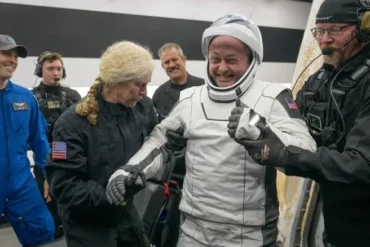
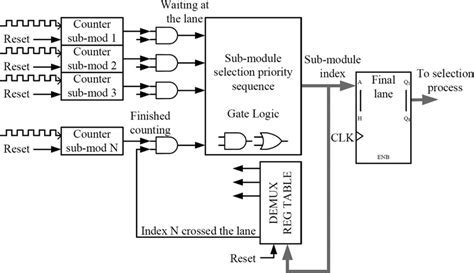
COTS processors, such as those used in SpaceX’s Dragon 2, achieve radiation resilience not through specialized materials, but through architectural redundancy. In Dragon 2, four groups of three computers vote on every operation, ensuring consensus even when transient faults occur. No two systems are likely to fail in the same way, and a single bit-flip becomes a correctable anomaly, not a catastrophic failure.
These processors run modern operating systems like Linux, allowing for rapid development, easier debugging, and integration with a wide ecosystem of tools. Even though these systems are not inherently radiation-hardened, they are supported by comprehensive EDAC (Error Detection And Correction) protocols at every level—from CPU caches to inter-device communication buses.
This approach is more scalable, cost-effective, and capable of handling the intensive computing loads demanded by deep neural networks and real-time image analysis, crucial for future Mars autonomy.
Shielding Techniques: Mass vs. Efficiency Trade-Offs
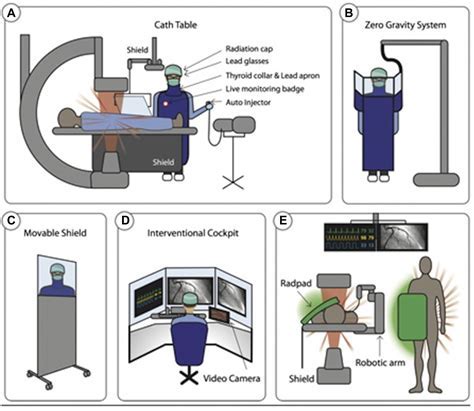
While processor-level mitigation remains the cornerstone of Mars electronics, shielding still plays a significant role. Traditional lead shielding is effective but imposes massive weight penalties—up to 20 cm thickness may be needed to replicate Earth-like protection. Worse, it can intensify secondary radiation effects like spallation neutrons, which increase the risk of internal component damage.
More advanced strategies include:
- Hydrogen-rich materials such as water, wax, or liquid hydrogen tanks to passively surround electronics.
- Orientation-based shielding, where electronics are mounted behind fuel tanks or kept on the anti-solar side of the spacecraft during high radiation phases.
These techniques offer superior protection per unit mass, particularly against charged particles, which form the bulk of space radiation threats.
FPGAs, GPUs, and the AI Challenge
As missions transition toward more autonomous operation, especially on Mars where light-speed delay renders real-time Earth intervention impractical, the need for AI acceleration hardware becomes critical. Here lies a difficult compromise:
- FPGAs (Field-Programmable Gate Arrays): Lower latency, more deterministic, often preferred for real-time guidance and control loops.
- GPUs (Graphics Processing Units): Required for advanced AI tasks like convolutional neural networks, but present challenges in power consumption, latency, and radiation vulnerability.
Currently, radiation-hardened GPUs are rare and underpowered compared to modern counterparts. Companies aiming for Mars missions must either develop in-house hardened versions or adopt software-level compensation techniques, such as checkpointing, forward error correction, and real-time reconfiguration to survive faults.

Why Not Just Build Better Rad-Hard Chips?
While creating advanced radiation-hardened silicon from scratch may seem ideal, the economic and logistical constraints are formidable. Space-grade fabrication requires exotic processes and lengthy qualification cycles. Custom rad-hard chips often cost hundreds of times more per unit and take years to validate.
By contrast, COTS chips can be selectively hardened at the die or package level, utilizing standard foundry processes and post-manufacture encapsulation techniques. Combined with EDAC firmware and voting software, this hybrid approach represents the best compromise for near-term Mars missions.
Software: The Unsung Shield
SpaceX’s hiring strategy hints at the depth of its software commitment. By onboarding developers from massively multiplayer online games (MMOs) and high-availability backend systems, the company ensures its software is written with fault detection, state synchronization, and failure arbitration in mind.
This is critical for missions relying on autonomous decision trees, real-time sensor fusion, and in-orbit updates. Software must not only detect faults but reroute around them, log incidents, and provide redundancy at the code and process level, not just in hardware.
Long-Term Strategy: Redundancy, Shielding, and Selective Hardening
In evaluating long-term radiation exposure—particularly from solar particle events and heavy-ion strikes—transient protection mechanisms are no longer enough. Prolonged exposure causes lattice degradation, total ionizing dose (TID) accumulation, and potential catastrophic latchup.
For such missions, we foresee a hybrid approach:
- Redundant COTS systems for handling frequent, low-impact faults.
- EDAC and resilient OS-level protocols for transient corrections.
- Strategic shielding (fuel, wax, water) for mass-efficient passive protection.
- Rad-hard enclosures or custom chips reserved for irreplaceable or life-critical components.
As mission duration and complexity increase, especially for Mars surface operations, this hybrid strategy offers the best pathway to balance performance, cost, and survivability.
Conclusion: Mars Electronics Will Be Smarter, Not Just Tougher
The age of bulky, sluggish, over-engineered radiation-hardened computers is waning. In its place, a new generation of adaptive, software-fortified, and redundantly shielded systems is emerging—capable not only of surviving Mars, but of thinking and reacting in real time. As SpaceX and others push toward Mars colonization, their choices in electronic design will reflect a philosophy not of brute force protection, but of intelligent resilience, merging the best of COTS innovation with mission-specific hardening.