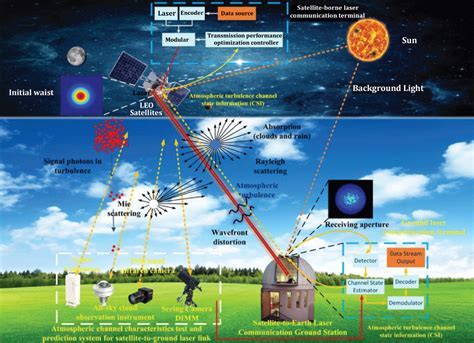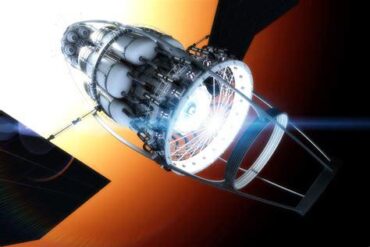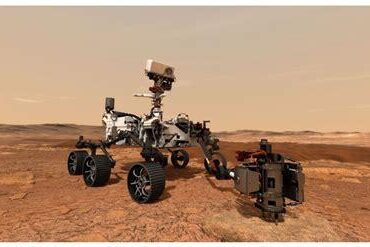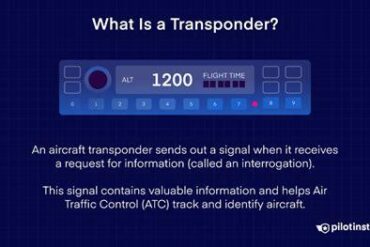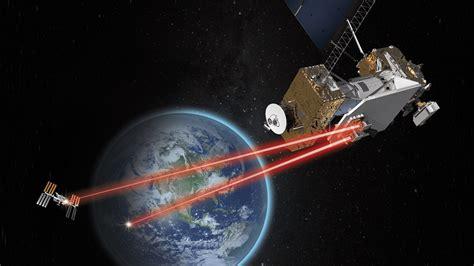
In the evolving landscape of space technology, laser communication systems have emerged as a transformative advancement, offering unprecedented data transmission speeds and bandwidth capabilities far beyond the constraints of traditional radio frequency systems. These free-space optical links, capable of spanning from Earth to the Moon and beyond, are redefining how we envision communication in both near-Earth and deep space missions.
Laser communication, often termed optical communication, leverages focused beams of light to transmit data through space. These beams offer an exceptionally high data rate, low latency, and enhanced security. Unlike radio waves, which disperse over distance, laser beams maintain tight focus, enabling high-throughput communication over vast interstellar ranges.
The journey from theoretical frameworks to functioning systems spans decades of experimental validations and technical refinement.
Early Experiments and Milestones: Charting the Path to Maturity
The historical arc of laser communications in space began modestly yet promisingly. In 1968, NASA’s Surveyor 7 mission became the earliest recorded incident where argon lasers from terrestrial observatories were detected by a spacecraft camera. These tests hinted at the latent potential of light-based data transmission through the vacuum of space.
By 1992, the Galileo probe—positioned 6 million kilometers from Earth—successfully detected two ground-based lasers, an early demonstration of deep-space optical acquisition. This was followed by Japan’s ETS-VI satellite achieving a 1 Mbit/s optical link with a Tokyo ground station in 1995, marking the transition from proof-of-concept to real-world application.
The 2000s saw an accelerated cadence of achievements. ESA’s Artemis satellite established a 50 Mbps laser link with SPOT 4 in 2001, spanning 40,000 km. In 2005, NASA’s MESSENGER spacecraft communicated with Earth via laser altimeter across 24 million kilometers. These results demonstrated optical communication’s feasibility for both Earth-orbiting and planetary missions.

Scaling Up: 2010s—Gigabit Speeds and Inter-Satellite Networking
The 2010s marked a phase of technological maturity, seeing laser systems operating at gigabit-class speeds across both atmospheric and inter-satellite channels. In 2013, NASA famously beamed a digital image of the Mona Lisa to the Lunar Reconnaissance Orbiter using error-corrected laser transmission.
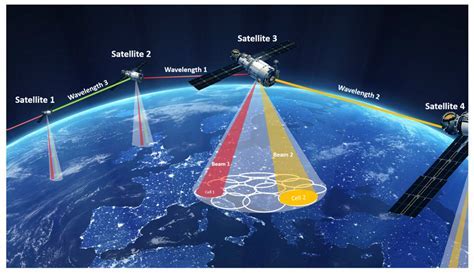
ESA’s European Data Relay System (EDRS) became operational in 2016, facilitating gigabit-speed links between Low Earth Orbit (LEO) and Geostationary Earth Orbit (GEO) satellites, using Tesat-Spacecom terminals. By May 2023, EDRS had logged over 1 million minutes and 50,000 inter-satellite links, validating its commercial viability.
Simultaneously, missions like OPALS on the ISS and SOCRATES microsatellite further proved robust laser downlinks from orbital platforms, while Japan’s Project Loon demonstrated terrestrial balloon-based lasers at 155 Mbit/s.
In 2020, the Japanese LUCAS GEO relay and JAXA/SOLISS onboard the ISS added further milestones, showcasing the global effort to standardize high-rate optical systems for varied orbital regimes.
21st Century Innovation: Ultra-High Speed and Interplanetary Reach
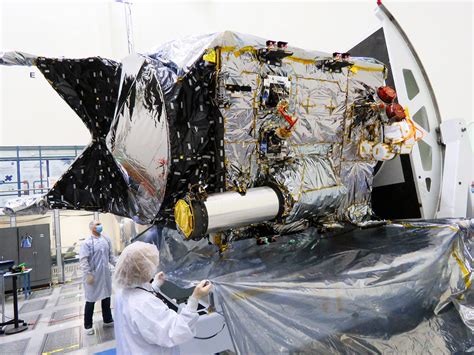
The 2020s ushered in an era of interplanetary laser communication capability. Notably, NASA’s Psyche mission in 2023 included the Deep Space Optical Communications (DSOC) experiment, which successfully demonstrated video transmission over 140 million miles in April 2024.
Similarly, the TeraByte InfraRed Delivery (TBIRD) CubeSat experiment in 2022 achieved an astonishing 100 Gbit/s downlink from LEO, redefining what’s possible in compact, lightweight spacecraft architectures.
Future-focused efforts are already on the launchpad. Japan’s HICALI payload on ETS-9 plans a 10 Gbit/s GEO-ground link, while CubeSOTA, launching in 2025, will aim to miniaturize optical terminals for small satellite constellations. The visionary LunaNet project by NASA and ESA will use laser-based optical infrastructure to create a lunar Internet, enabling persistent, high-throughput communications across the Moon’s surface.
Commercialization and Mega-Constellations: Expanding the Optical Frontier
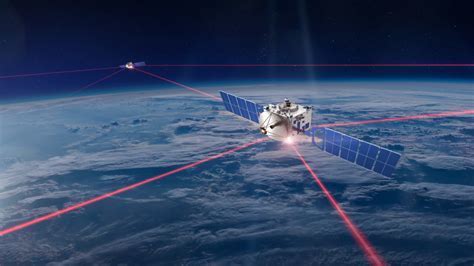
The commercial sector is capitalizing on laser communication’s scalability and efficiency. SpaceX’s Starlink network stands as a paragon, with over 1,000 satellites equipped with laser links, each supporting up to 100 Gbit/s, fostering global, low-latency broadband delivery.
Other projects include:
- Amazon Kuiper, targeting >10,000 optical terminals in its planned LEO constellation.
- DARPA Blackjack, a defense-oriented low-Earth system with Mynaric and SA Photonics terminals.
- Telesat LEO and OneWeb Gen Two, poised to bring broadband and secure links via laser-equipped telecom satellites.
- Laser Light Communications, aiming to build an optical MEO backbone capable of 100 Gbit/s throughput.
Startups such as BridgeComm, WarpHub InterSat, and Analytical Space focus on hybrid or niche applications, while Cloud Constellation seeks to offer secure, laser-linked satellite data storage.
Equipment Providers and Global Infrastructure Enablers
This expanding ecosystem is underpinned by a cadre of specialized suppliers. These include:
- Tesat-Spacecom: A leading manufacturer of space-qualified optical terminals.
- Mynaric and Skyloom: Developers of high-rate LEO terminals for commercial and defense platforms.
- Ball Aerospace, Honeywell, and Sony: Diversified providers investing in secure and scalable laser modules.
- Thales Alenia Space, Transcelestial, and Surrey Satellite Technology: Innovators in next-generation relay architecture.
International efforts also come from Hensoldt, LGS Innovations, and the Ecuadorian Space Agency, demonstrating a robust, distributed supply chain.
Securing the Signal: Quantum Optical Protection and Interference Detection
Laser communication isn’t just fast—it’s inherently secure. Innovations in quantum-secured laser channels have introduced novel ways to detect eavesdropping. One method uses an N-slit interferometer with indistinguishable photons to identify pattern collapse due to interception. This technique, validated over satellite-to-ground distances of 2,000 km and up to 10,000 km, was recognized as a major photonics milestone in 2015.
As the demand for space-based data transmission escalates—with applications in Earth observation, defense, interplanetary science, and broadband—laser communication systems stand poised to supplant RF systems in bandwidth-critical and long-range missions. Their precision, speed, and reliability mark them as the cornerstone of a new era in space communications.