Space propulsion systems represent the backbone of modern and future space exploration, facilitating everything from satellite positioning to ambitious interstellar missions. As our aspirations stretch beyond low Earth orbit to Mars, the outer planets, and even deep space, the efficiency, reliability, and innovation behind propulsion mechanisms become paramount. The evolution from chemical rockets to nuclear and electric systems marks a technological renaissance, driving us into a new era of space mobility.
The fundamental role of propulsion is to change a spacecraft’s velocity — a function dictated by Newton’s Third Law — but the means of achieving this have grown profoundly sophisticated. Today, we categorize propulsion into four main domains: chemical, electric, nuclear, and advanced theoretical concepts, each with distinct mechanics, advantages, and operational envelopes.
Chemical Propulsion Systems: The Launchpad of Space Travel
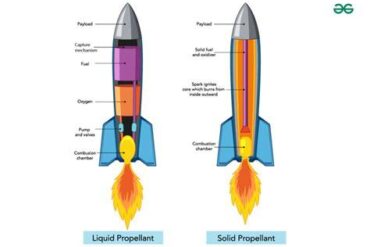
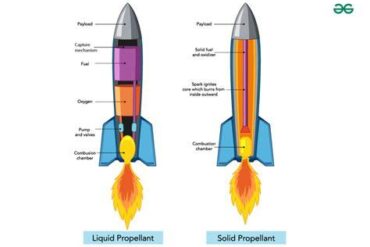
Chemical propulsion remains the dominant form of thrust for launch and high-thrust orbital maneuvers. By burning liquid or solid propellants, these systems release immense energy in a short time frame, producing the thrust necessary to escape Earth’s gravity.
Most spacecraft still use bipropellants such as monomethylhydrazine (MMH) and dinitrogen tetroxide (N₂O₄) or monopropellants like hydrazine. The specific impulse (Isp) — a measure of efficiency — ranges between 250 and 450 seconds, which suffices for Earth departure but falls short for prolonged missions. Despite their low Isp, chemical systems’ simplicity and proven reliability maintain their strategic importance.
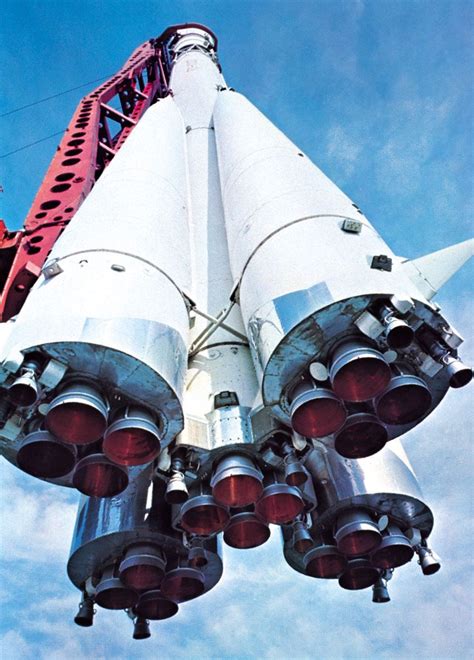
However, these systems are inherently inefficient for long-duration spaceflight. The massive fuel requirements for missions to Mars or the outer solar system necessitate alternative solutions with higher fuel efficiency and sustained thrust.
Electric Propulsion: The Efficient Engine of Deep Space
Electric propulsion (EP) systems offer revolutionary improvements in fuel economy, achieving significantly higher Isp values while consuming minimal propellant. Rather than burning fuel, EP systems use electrical energy — often from solar panels or nuclear sources — to ionize and accelerate particles.
Among the most prominent EP technologies are:
- Ion Thrusters: Using electrostatic forces to expel ionized xenon gas, ion thrusters can achieve Isp levels of 1,500 to 3,000 seconds, though with low thrust output.
- Hall-Effect Thrusters (HET): These combine electric and magnetic fields to accelerate plasma. Recent milestones include China’s 20-kilowatt HET, delivering 70% efficiency and 3,068-second Isp.
- Pulsed Plasma Thrusters: RocketStar’s FireStar64 leverages water vapor and boron fusion for enhanced thrust characteristics, offering versatility in station-keeping and trajectory correction.
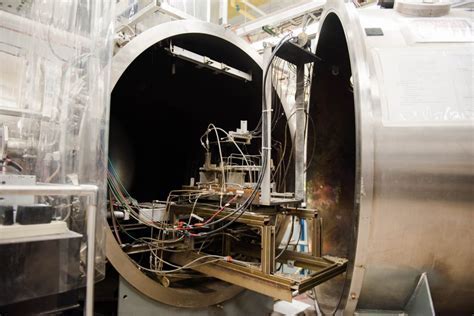
Electric propulsion excels in deep-space applications and satellite station-keeping due to its high specific impulse and extended operational life. Yet, its low-thrust nature limits its usefulness for launch and rapid orbital insertion tasks.
Nuclear Propulsion: Unlocking High-Power, Long-Distance Travel
As we aim for the outer planets and beyond, nuclear propulsion emerges as a compelling solution to the energy-density limitations of chemical and electric systems.
Nuclear Thermal Propulsion (NTP)
NTP systems use fission reactors to superheat hydrogen propellant, achieving specific impulses in the range of 850 to 900 seconds. NASA’s DRACO project is at the forefront, targeting an in-space demonstration by 2027. NTP offers twice the efficiency of chemical systems and significantly reduces Mars mission durations.
Nuclear Electric Propulsion (NEP)
NEP systems convert nuclear heat to electrical energy to drive ion or Hall thrusters. Proposed 30–40 kW NEP modules could carry payloads to Saturn in just 7 years, opening new horizons for scientific missions and interplanetary logistics.
Fusion Propulsion
Companies like Pulsar Fusion and Helicity Space are engineering compact fusion reactors that could one day propel spacecraft at unprecedented speeds. Fusion’s high energy density might cut Mars transit time to under two months, drastically enhancing mission viability.
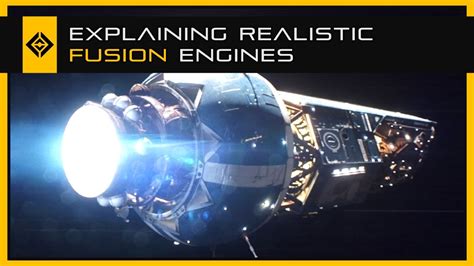
Despite its promise, fusion propulsion faces enormous engineering hurdles, notably in achieving net-positive energy and plasma confinement in compact spaceborne reactors.
Advanced and Theoretical Propulsion Concepts
Beyond current engineering frontiers lie propulsion methods that challenge known physics or remain in early conceptual stages, yet they hold the potential to revolutionize space exploration.
Solar Sails
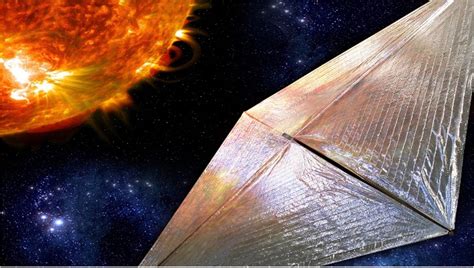
These ultra-thin, reflective sheets harness photon momentum from sunlight to propel spacecraft. While offering unlimited range without fuel, solar sails are constrained by extremely low thrust and require large surface areas for meaningful acceleration.
Antimatter Propulsion
Antimatter annihilation could produce thrust orders of magnitude greater than chemical or nuclear methods. However, production, storage, and containment of antimatter remain unsolved challenges.
Gravitational Wave Propulsion
Still speculative, this concept involves manipulating spacetime itself via high-frequency gravitational wave interactions. Though purely theoretical today, breakthroughs in quantum gravity might bring such propulsion closer to reality in the coming century.
Recent Innovations and Breakthroughs (2024–2025)
Several groundbreaking technologies have emerged in the last two years, accelerating the pace of propulsion advancement:
- NASA’s Pulsed Plasma Rocket (PPR) aims to reduce Mars mission durations to 2 months while increasing payload capacity by a factor of 10. It integrates nuclear and plasma systems into a compact, high-output engine.
- Radioisotope Film Thrusters, using thin radioactive films like thorium-228, could deliver velocity increments up to 150 km/s, especially effective for nano- and microsatellites.
- AMOSS (Atmospheric Mining in Outer Solar System) proposes extracting helium-3 and deuterium from Uranus and Neptune for use in fusion propulsion, tapping into the abundant resources of the gas giants.
These innovations suggest a multi-path future, where hybrid systems might dominate — combining electric, nuclear, and perhaps even solar or fusion elements into integrated propulsion architectures.
Challenges and Constraints on Propulsion Evolution
The journey toward next-gen propulsion is fraught with significant hurdles:
- Plasma confinement in fusion systems remains a formidable technical challenge.
- Hydrogen storage for NTP systems poses safety and thermal insulation problems over long durations.
- Radiation shielding for crewed nuclear missions is essential to mitigate health risks.
- Financial and institutional constraints hinder the commercialization and deployment of experimental systems.
- Human health risks, such as cosmic radiation exposure and bone loss from microgravity, continue to complicate long-term missions.
Despite these obstacles, collaboration between government agencies (e.g., NASA, ESA) and private innovators (e.g., Pulsar Fusion, RocketStar) is advancing solutions at an accelerating pace. The synergy of public funding and private entrepreneurship will be critical in translating theory into flight-ready technology.
Conclusion: Toward a Hybrid Propulsion Future
As our ambitions extend beyond planetary orbits to the outer solar system and eventually other stars, space propulsion systems must evolve beyond current limitations. While chemical propulsion will continue to play a foundational role in launch and early mission stages, the future lies in hybrid systems — integrating the efficiency of electric propulsion, the power of nuclear systems, and the theoretical promise of advanced propulsion concepts.
The next decade may very well see the first fusion-powered spacecraft, orbital helium-3 refineries, or even missions using solar sails to traverse the heliosphere. With continued innovation, bold investment, and international collaboration, the propulsion engines of tomorrow will transform our reach — not just into space, but across it.