Regional aviation has entered one of its most significant transition periods in decades. As airlines refine their networks around profitability, sustainability, and operational flexibility, aircraft with fewer than 100 seats have become increasingly valuable. While the world’s largest aerospace companies continue to focus on high-capacity narrowbody aircraft, a handful of specialist manufacturers remain dedicated to serving regional airlines that depend on smaller, more versatile fleets.
Instead of chasing maximum passenger capacity, these manufacturers are solving a different challenge: connecting smaller communities efficiently while keeping operating costs under control. Whether serving isolated islands, mountain airports, Arctic settlements, or developing regional markets, aircraft in the sub-100-seat category remain essential to global air transportation. Advances in propulsion technology, fuel efficiency, and airframe design have also made this segment more competitive than it has been in years.
Airlines today require aircraft capable of balancing low fuel burn, dependable dispatch reliability, comfortable passenger cabins, and enough range to support growing regional networks. That combination has created opportunities for manufacturers that understand the unique economics of short-haul flying.

Why The Sub-100-Seat Aircraft Market Matters More Than Ever
Large single-aisle aircraft dominate major airline headlines, but regional aviation quietly supports thousands of daily flights that larger aircraft simply cannot operate profitably. Many communities generate passenger demand that is too small for a 180-seat narrowbody yet remains vital for business travel, tourism, healthcare access, and cargo connectivity.
Operating economics play an equally important role. Airlines increasingly prefer higher frequencies using appropriately sized aircraft rather than filling larger jets with discounted fares. Smaller aircraft also provide greater scheduling flexibility, allowing carriers to adjust capacity without sacrificing network coverage.
Environmental pressures are accelerating this trend. Modern regional aircraft consume significantly less fuel than previous generations while producing fewer carbon emissions per trip. Several manufacturers are now pursuing hybrid-electric propulsion and sustainable aviation technologies that could fundamentally reshape short-haul aviation during the next decade.
Against this backdrop, five manufacturers continue competing aggressively for airline orders beneath the 100-seat threshold.
Heart Aerospace Is Reinventing Regional Flying Through Hybrid-Electric Innovation
Heart Aerospace represents the newest and perhaps most ambitious competitor in regional aviation. Rather than modernizing an existing aircraft, the company has developed the ES-30 from a completely clean-sheet design focused on sustainable short-haul transportation.
Unlike traditional regional aircraft, the ES-30 combines high-capacity lithium-ion batteries with twin generators powered by sustainable aviation fuel. This hybrid-electric architecture allows airlines to operate completely emission-free flights on shorter sectors while maintaining the flexibility to extend range when necessary.
The aircraft offers approximately 125 miles (200 kilometers) of fully electric capability before transitioning to hybrid operation, increasing total range to roughly 500 miles (800 kilometers). Those performance figures target precisely the kinds of regional routes where environmental improvements can have the greatest impact.
Heart Aerospace has also prioritized operational flexibility. The ES-30 features a specialized high-lift wing and integrated propulsion system designed for short runway performance, allowing operations at airports traditionally served by rugged turboprops. That capability opens opportunities for regional carriers operating in remote communities where infrastructure remains limited.
The company’s progress has attracted significant commercial attention. More than 250 firm orders have already been secured from airlines and leasing companies, demonstrating growing industry confidence that hybrid-electric aircraft may soon become commercially viable.
De Havilland Canada Continues To Prove That Reliability Never Goes Out Of Style
For decades, De Havilland Canada has built a reputation around aircraft capable of operating where many regional jets simply cannot. The Dash 8 family remains one of the aviation industry’s most respected turboprop platforms thanks to exceptional durability, excellent short-field performance, and dependable operations in challenging weather conditions.
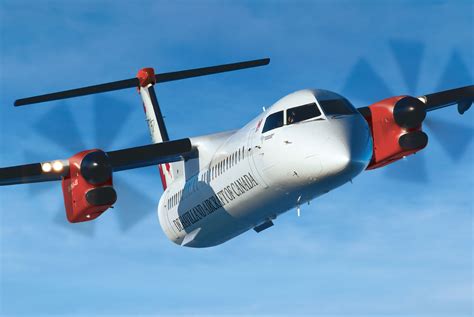
Rather than concentrating on new-production aircraft, the company has shifted considerable attention toward manufacturer-supported refurbishment programs. Modernized Dash 8-400 aircraft provide airlines with updated avionics, improved interiors, and renewed service lives while avoiding the expense of purchasing entirely new airframes.
The Dash 8’s strengths remain highly relevant in today’s market. Its robust landing gear allows operations from airports featuring shorter runways or less-developed infrastructure. High-wing construction reduces foreign object damage risks while improving access for maintenance crews operating in remote environments.
Recent deliveries illustrate the aircraft’s worldwide appeal. Operators across Central Asia, Australia, and South America continue introducing refurbished Dash 8 aircraft into their fleets, demonstrating sustained demand for reliable turboprop transportation despite growing competition from newer designs.
With seating capacities approaching 90 passengers, the Dash 8 continues offering airlines an attractive combination of capacity, operating economy, and proven reliability.
COMAC Is Expanding China’s Regional Aviation Ambitions
China’s Commercial Aircraft Corporation, better known as COMAC, has steadily transformed its regional jet program from an ambitious national project into a growing commercial success. The C909, previously marketed as the ARJ21, now serves hundreds of domestic routes while gradually expanding into international markets.
Originally developed to address the demanding operating conditions found throughout western China, the aircraft was engineered to handle mountainous terrain, high-altitude airports, and diverse climate conditions. Those design priorities have produced an aircraft capable of accommodating between 78 and 90 passengers while maintaining strong operational performance.
Powered by twin General Electric turbofan engines and incorporating a supercritical wing with a distinctive T-tail configuration, the aircraft delivers competitive regional jet performance across short- and medium-haul routes.
Development challenges delayed the program considerably, leading many observers to question whether COMAC could successfully establish itself against established Western manufacturers. Those concerns have gradually faded as production stabilized and fleet utilization increased. More than 37 million passengers have now flown aboard the aircraft across hundreds of routes.
International expansion is becoming increasingly important. Airlines in Indonesia and Laos already operate the regional jet, while additional leasing agreements throughout Southeast Asia signal growing acceptance beyond China’s domestic market.
ATR Continues Setting The Global Standard For Turboprop Efficiency
No manufacturer has shaped modern regional turboprop aviation more successfully than ATR. Its aircraft dominate countless island, mountain, Arctic, and remote regional routes where fuel efficiency outweighs the higher cruise speeds offered by regional jets.
The ATR 72-600 remains the company’s flagship product, serving approximately 200 airlines worldwide. Its ability to profitably operate thinner routes has made it indispensable for carriers seeking sustainable network expansion without excessive operating costs.
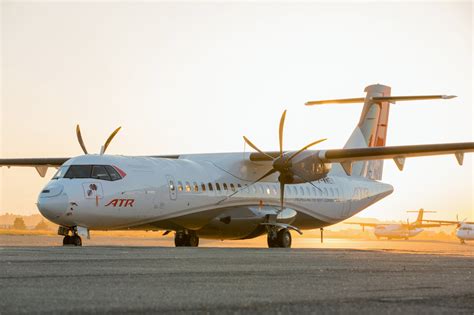
One of the aircraft’s greatest competitive advantages lies in its exceptional efficiency. Equipped with Pratt & Whitney PW127XT engines, the ATR consumes substantially less fuel than similarly sized regional jets, directly reducing airline operating expenses while lowering environmental impact.
Its operational flexibility extends beyond fuel savings. The aircraft regularly serves unpaved airstrips and airports with runways shorter than 4,000 feet, expanding commercial aviation into locations inaccessible to many competing aircraft.
Recent regulatory approvals have further strengthened ATR’s position. Additional certifications now permit expanded operations throughout Canada’s northern territories and Arctic regions, opening valuable new markets where dependable turboprop performance remains indispensable.
As environmental regulations tighten worldwide, ATR’s combination of low fuel consumption and significantly reduced carbon emissions ensures continued relevance for airlines balancing profitability with sustainability objectives.
Embraer Continues Leading Regional Jet Performance
Among all manufacturers competing below the 100-seat threshold, Embraer arguably offers the broadest portfolio and strongest production momentum. The Brazilian manufacturer has spent decades refining regional jet technology while continuously improving passenger comfort, operational efficiency, and airline economics.
Although the larger E195-E2 approaches mainline aircraft territory, the E170, E175, and E190-E2 remain cornerstones of regional airline fleets worldwide.
These aircraft distinguish themselves through spacious cabin layouts that eliminate middle seats, creating a passenger experience often superior to traditional narrowbody aircraft. Combined with quieter cabins, larger overhead bins, and advanced avionics, Embraer’s regional jets have become favorites among both airlines and travelers.
The E170 accommodates up to 78 passengers, while the E175 increases capacity to approximately 88 seats. The E190-E2 pushes the category close to the 100-seat ceiling with seating for as many as 96 passengers and significantly extended range exceeding 2,800 nautical miles.
Operational performance has remained equally impressive. Embraer recently achieved its strongest second-quarter commercial aircraft deliveries in sixteen years, highlighting sustained airline demand despite continuing global supply chain pressures.
For carriers replacing aging regional fleets, the manufacturer’s consistent production rates, proven dispatch reliability, and advanced fuel efficiency provide a compelling long-term investment.
Regional Aviation Is Becoming More Diverse Rather Than More Concentrated
The regional aircraft market is no longer defined solely by traditional turboprops or conventional regional jets. Instead, airlines can now choose from an increasingly diverse mix of propulsion technologies, cabin configurations, operational capabilities, and environmental performance.
Heart Aerospace is introducing hybrid-electric innovation that could redefine short-haul transportation. De Havilland Canada continues demonstrating the enduring value of rugged, proven turboprop platforms. COMAC is steadily expanding China’s influence within global regional aviation. ATR remains the benchmark for fuel-efficient turboprop operations, while Embraer continues delivering premium regional jet performance backed by robust manufacturing capacity.
As airlines optimize fleets for profitability, sustainability, and network flexibility, these five manufacturers occupy a strategically important position within commercial aviation. Their aircraft may never match the passenger capacity of large narrowbody jets, but they remain indispensable for connecting smaller cities, supporting regional economies, and ensuring that thousands of communities worldwide remain linked to the global air transport network.