A shadowy maritime incident in the Mediterranean has drawn global attention and ignited geopolitical speculation. On December 23, 2024, the Russian cargo ship Ursa Major sank approximately 60 miles south of Cartagena, Spain, under circumstances that point to deliberate sabotage. What makes this event particularly explosive is the claim—published by the Spanish outlet La Verdad—that the ship was covertly transporting two VM-4SG nuclear reactor cores, destined not for Russia’s Pacific port of Vladivostok as officially declared, but for North Korea’s Rason port.
The Secret Cargo: Soviet-Era Nuclear Reactors
According to the report, the VM-4SG reactors were not listed in the ship’s manifest, and were instead concealed in blue-tarped containers, each weighing around 65 tons, secured on the vessel’s stern. These reactors, derived from the Soviet-era VM-4 line, were originally used to power second-generation ballistic missile submarines like the Project 667BDRM (Delta IV) class. Built at Sevmash shipyard and designed by the Rubin Central Design Bureau, these submarines were engineered with double-hull architecture, 167-meter length, and a submerged displacement of 18,200 tons. They operated using OK-700A nuclear propulsion systems, which depended on twin VM-4 series reactors—specifically, the upgraded VM-4SG in the Delta IV variant.
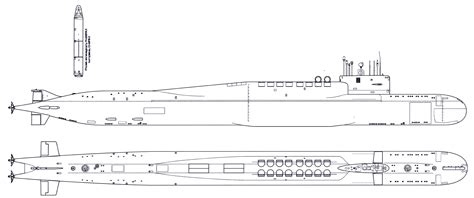
The VM-4SG’s compact modular design, pipe-within-pipe coolant loops, and highly enriched uranium fuel (between 20% to 40% U-235) made it ideal for extended underwater operations—a critical requirement for strategic deterrence missions. Despite the apparent discontinuation of VM-4SG production, this shipment suggests otherwise.
Evidence of Sabotage and Advanced Naval Weaponry
The Spanish maritime investigative report (8059/24-Escora) revealed a 50×50 cm inward-bent hull breach, consistent with an underwater explosive detonation. The seismic activity matched supercavitating torpedo signatures, likely carrying 20–50 kg of TNT, generating 1.6–1.8 magnitude seismic waves. The type of precision and explosive power involved points to the intervention of a sophisticated naval power.
The ship’s declared route—from St. Petersburg to Vladivostok—involved a 15,000 km voyage, unusually circuitous, bypassing more direct land and sea routes. Furthermore, the Ursa Major was equipped with heavy-lift cranes, unsuitable for Vladivostok but perfectly tailored for underdeveloped ports like Rason, North Korea. Analysts agree this was a covert operation aimed at delivering strategic assets to Pyongyang.
North Korea’s Nuclear Submarine Ambitions
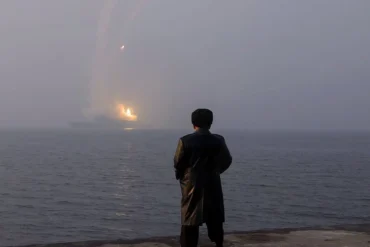
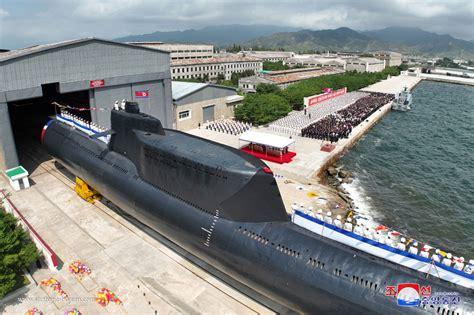
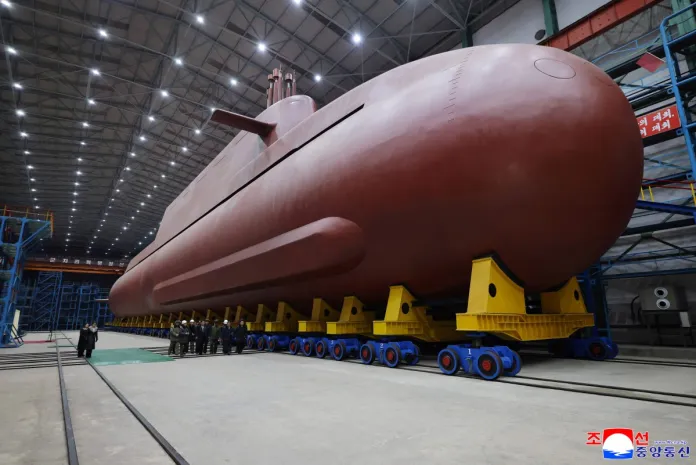
The timing of this report aligns eerily with North Korea’s escalating submarine nuclear capabilities. In January 2021, Kim Jong Un publicly announced that a nuclear-powered submarine design was in its final stages. By March 2025, North Korea released photos showing Kim inspecting a partially built SSBN, followed by December’s unveiling of a nearly complete 8,700-ton strategic nuclear submarine. These developments signal North Korea’s intent to possess a credible second-strike nuclear capability.
While the country has long pursued nuclear deterrence via land-based ballistic systems, underwater platforms offer stealth, survivability, and global reach—making nuclear submarines the ultimate force multiplier.
India’s Deepening Nuclear Submarine Ties with Russia
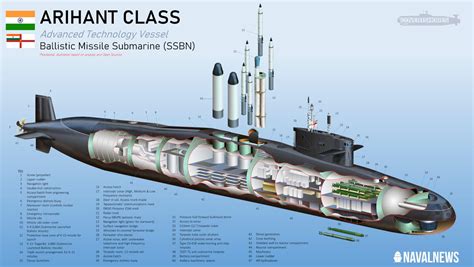
The detonation of a Russian vessel carrying reactors linked to Soviet-era submarines would typically seem a relic of Cold War intrigue, but India’s strategic submarine program ties directly into this web. According to Russian defense outlet bmpd TC, the VM-4SG reactor is technologically connected to India’s CLWR-B1 nuclear reactor, which powers the Arihant-class submarines. Despite official claims that these reactors are indigenous, it is widely acknowledged in defense circles that the CLWR-B1 is heavily derived from the VM-4SG design.
Until 2021, India lacked the infrastructure to produce such reactor vessels domestically. The NPCIL-L&T facility in Hazira only recently became operational, and so far, no public confirmation exists of completed Indian-made reactor hulls. Instead, reactor vessels for Arihant-class submarines have been sourced from Russia, alongside numerous other crucial submarine components.
This context raises uncomfortable questions: Was the reactor shipment part of a covert supply chain supporting India’s SSBN fleet? Or was it purely intended for North Korea’s burgeoning submarine ambitions? Either possibility suggests ongoing Russian reactor production, contradicting assertions that the VM-4SG series is obsolete.
S-5-Class: India’s Next Nuclear Leap
India’s long-term naval strategy includes a clean-sheet SSBN design, known as the S-5 class, weighing 13,300 tonnes and capable of carrying 12 K-6 ballistic missiles with a 6,000 km range. At its core will be the CLWR-B2, a 190-MW nuclear reactor developed by Bhabha Atomic Research Centre (BARC). While presented as indigenous, the CLWR-B2 draws heavily from the Soviet VM-11 reactor, more commonly associated with Project 971 Akula-class submarines—including the INS Chakra, which India leased from Russia.
The OK-650B reactor, on which the CLWR-B2 is based, boasts a thermal output of 190 MW, delivering up to 50,000 shp to a single seven-blade propeller. It provides 33–35 knot submerged speed and unlimited range, making it an ideal candidate for India’s next-generation deterrence platform.
Strategic Implications and Global Suspicion
The conclusion drawn by Spanish investigators—that the Ursa Major was sunk by a NATO or US submarine—fits a logical narrative. A denied proliferation route between Russia and North Korea, especially involving nuclear submarine tech, would warrant clandestine interdiction by Western powers. The advanced supercavitating torpedo signature reinforces this assumption, as only a handful of nations possess such capabilities.
Yet this covert action comes at a time when North Korea is openly showcasing strategic naval advancements, and Russia remains under intense sanctions and geopolitical isolation. The convergence of motives—North Korea’s need for advanced tech, Russia’s willingness to circumvent global norms, and India’s dependency on legacy Soviet systems—creates a web of strategic opacity and plausible deniability.
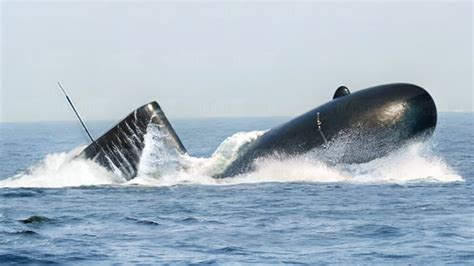
What the Ursa Major Incident Means for India
If the VM-4SG reactors were indeed intended for India’s Arihant-class program, the destruction of the cargo represents a critical vulnerability in India’s defense supply chain. Thankfully, all four Arihant-class submarines have been launched or are nearing completion, insulating India from immediate programmatic delays. However, the event underscores a deeper concern: India’s nuclear submarine capability remains partially tethered to foreign suppliers, especially for components as vital as nuclear reactors.
The implications are clear:
- India must accelerate the indigenization of its reactor design and manufacturing capabilities.
- Strategic alliances, while useful, can no longer substitute for autonomous capability.
- The Indian Navy must reevaluate logistical redundancies and supply chain security for its most sensitive platforms.
Conclusion: Sabotage, Proliferation, and the Strategic Chessboard
The sinking of the Ursa Major marks a critical flashpoint in the murky world of strategic weapons proliferation. Whether the nuclear reactor cores were destined for North Korea, India, or both, the stakes are high. Nuclear propulsion for submarines represents the pinnacle of naval military technology, offering stealth, endurance, and second-strike capability.
If the Spanish findings are accurate, the incident affirms the existence of an active nuclear smuggling network, one sophisticated enough to move top-tier technology across continents under maritime cover. For India, the event serves as a clarion call to end reliance on external suppliers for its strategic assets, while vigilantly guarding against becoming collateral in a secret war waged beneath the ocean’s surface.