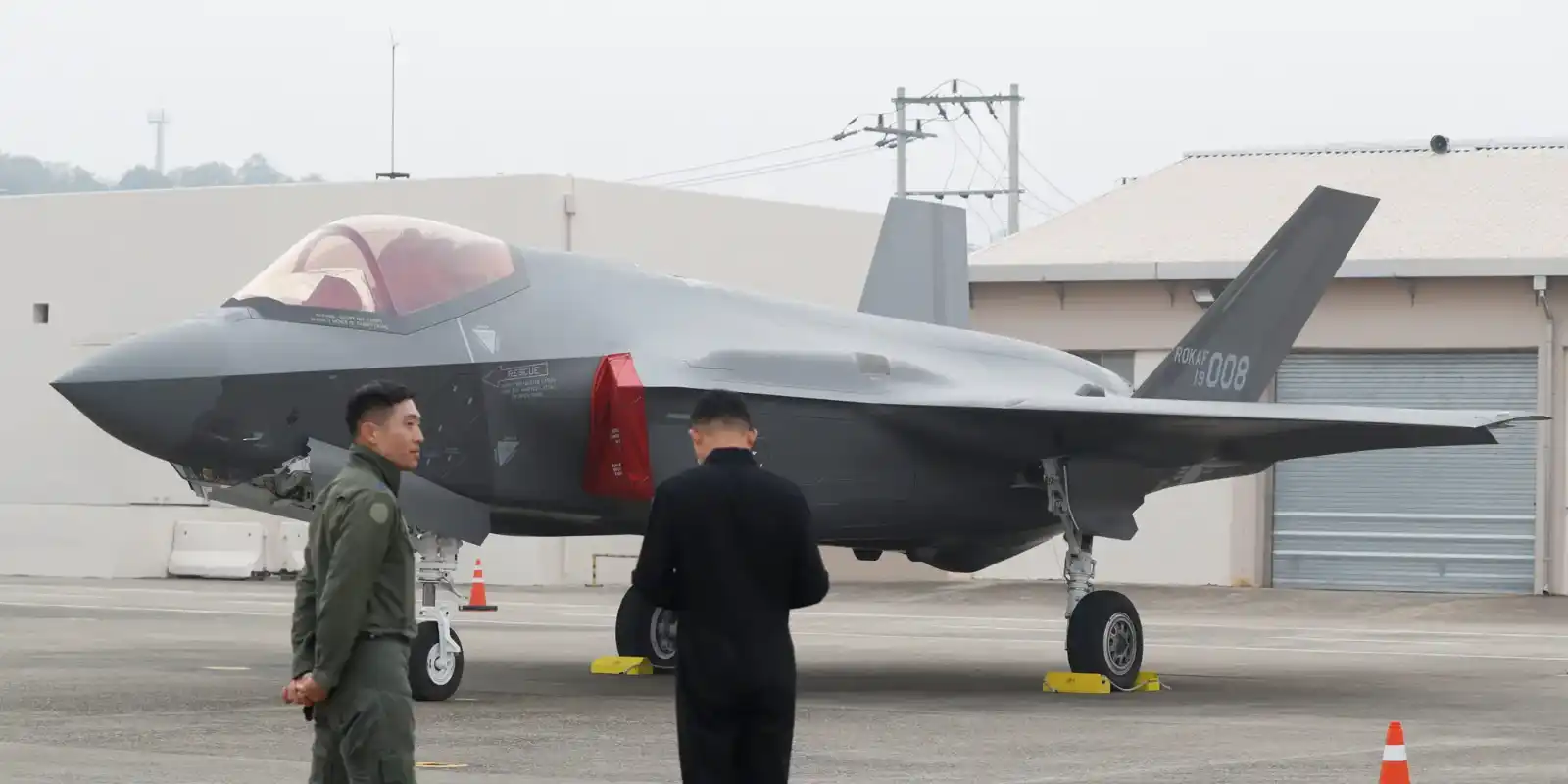
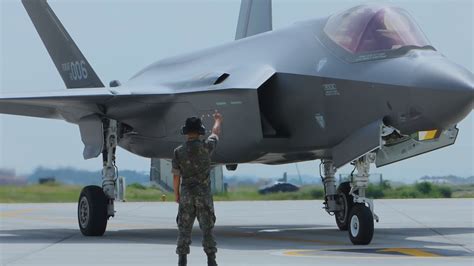
On January 4, 2022, a Republic of Korea Air Force (ROKAF) pilot executed a belly landing with an F-35A Lightning II at Seosan Air Base, southwest of Seoul. This event marked the first known gear-up landing involving an operational F-35 variant, sending ripples through international defense communities. The incident, while ultimately non-fatal and structurally survivable, raised critical questions about the reliability of the F-35’s avionics architecture, the robustness of emergency procedures, and the sustainability of advanced stealth fighter operations under real-world stress.
Avionics Failure and the Moments Leading to Impact
The aircraft was conducting a routine training sortie when it suffered an unexpected avionics systems failure—a category that encompasses the radar, flight control, communication, and sensor fusion systems. Most notably, the failure rendered the landing gear inoperative. Despite multiple backup protocols integrated into the F-35’s flight control system, the gear could not be deployed, leaving the pilot with no other option but to attempt a belly landing.
The emergency response was swift. Ground crews deployed fire suppression foam across the runway in a preemptive maneuver to reduce landing friction, prevent fire, and minimize airframe damage. This foam-based procedure, typically reserved for high-risk landings, was executed effectively, allowing the aircraft to touch down without igniting the fuel or causing sparking due to metal-to-surface contact.
Pilot Response and Aircraft Survivability
In the cockpit, the ROKAF pilot faced one of the most dangerous scenarios in modern fighter aviation—manual control of an aircraft with failed landing gear and a compromised avionics suite. Maintaining composure under such intense pressure, the pilot executed a controlled, no-gear descent.
Upon landing, the pilot evacuated independently, confirming that the cockpit escape mechanisms and cabin pressure systems were uncompromised. Structural assessments revealed no catastrophic fuselage damage, although the internal state of the aircraft’s sensors, cooling systems, and stealth coatings were not publicly disclosed.
This scenario demonstrated the structural resilience of the F-35A’s titanium and composite airframe, as well as the pilot’s exceptional skill in managing a failure cascade during approach and descent.
Fleet-Wide Implications and Investigation
Following the incident, South Korea grounded its entire fleet of F-35A aircraft. The grounding was not merely procedural—it reflected serious concerns regarding the systemic vulnerability of the platform. A joint investigation involving the Republic of Korea Air Force, Lockheed Martin, and the U.S. Department of Defense commenced immediately.
Investigators focused on the landing gear deployment logic embedded within the F-35’s Prognostics and Health Management (PHM) systems. The PHM is designed to predict failures before they occur and support maintainers in identifying issues preemptively. The failure to deploy landing gear, despite these systems, hinted at fundamental integration faults between hardware diagnostics and software-based recovery protocols.
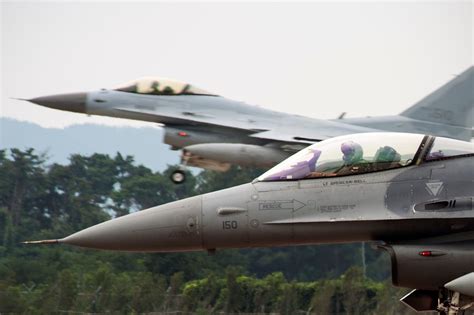
The global defense community paid close attention. Nations operating or planning to procure F-35 variants—including Japan, Australia, Norway, and the United Kingdom—sought detailed insight into whether this was an isolated mechanical anomaly or an indicator of deeper fleet-wide vulnerabilities.
Complexity of the F-35 Avionics Suite
The F-35 Lightning II is widely recognized for its next-generation avionics, including sensor fusion, radar cross-section reduction, electronic warfare capabilities, and networked data sharing across allied forces. However, this complex integration comes at a cost: systemic fragility under failure conditions.
Unlike legacy fourth-generation fighters, which feature mechanical redundancy, the F-35 operates heavily through digital fly-by-wire systems, with mission-critical functions governed by software layers. In high-stress scenarios, such as this one, a failure in one module can cascade into multi-system degradation, as potentially occurred with the gear deployment issue.
Lockheed Martin has consistently promoted the aircraft’s built-in redundancy, but this incident underscores the real-world limitations of theoretical safety protocols, especially when simultaneous avionics faults render multiple systems unresponsive.
Tactical and Strategic Lessons from the Belly Landing
The 2022 Seosan incident exposed several areas where F-35 operations need enhancement—particularly for users with limited domestic sustainment infrastructure. South Korea, while technologically advanced, relies heavily on Lockheed Martin and the U.S. for parts, upgrades, and system diagnostics. This dependence makes rapid repair cycles and localized fault analysis more difficult.
For operational planners and aviation tacticians, the belly landing highlighted four major points:
- Pre-flight diagnostic systems must evolve to simulate real-failure scenarios, not just nominal checks.
- Avionics complexity must be matched with fail-safe redundancies that are not software-dependent.
- Pilot training must emphasize manual emergency recovery even in stealth-oriented aircraft.
- Runway fire suppression measures, often considered secondary, can play a decisive role in damage mitigation.
Additionally, this incident has been used as a teaching case across NATO joint training exercises, emphasizing the importance of cross-national feedback loops for fifth-generation aircraft.
Global Policy Reactions and Future Adjustments
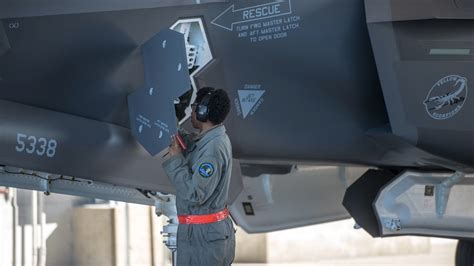
In the wake of the event, both Lockheed Martin and the U.S. Department of Defense F-35 Joint Program Office initiated a review of emergency systems diagnostics, with the intent to push updates across all delivered F-35s. Nations operating the jet issued their own advisories, recommending increased pre-mission fault simulations and enhanced pilot briefing protocols for gear-related emergency scenarios.
Furthermore, aerospace analysts noted the potential geopolitical ramifications. The F-35 remains central to deterrence strategies in East Asia, particularly amid growing tensions in the Korean Peninsula and South China Sea. As such, any perceived reliability issues could influence procurement timelines, budget allocations, and even doctrinal reassessments concerning air superiority frameworks.
Conclusion
The F-35A belly landing at Seosan Air Base was not just a rare emergency maneuver—it became a symbol of the technological paradox embedded in fifth-generation fighters. While these aircraft offer unprecedented capabilities, they are also more sensitive to failure and require intensive maintenance ecosystems to support their operational viability.
As more nations adopt the F-35 platform, this incident serves as a critical reminder of the balance between innovation and resilience. It is not enough for a fighter jet to dominate in simulations or controlled engagements. It must also withstand real-world attrition, operate under degraded conditions, and recover from complex faults without compromising pilot safety or mission success.
We believe that this moment in the F-35’s operational history will catalyze important changes—not only in its engineering roadmap, but also in how pilots are trained, how alliances coordinate support, and how we conceptualize the future of stealth aviation in a volatile and high-tech battlespace.
FAQ
What caused the F-35 belly landing in South Korea?
The aircraft suffered a critical avionics system failure, specifically affecting its landing gear deployment mechanism. This left the pilot no option but to perform a controlled gear-up landing, a maneuver executed successfully due to emergency protocols and foam deployment on the runway.
Did the incident damage South Korea’s entire F-35 fleet?
No, the damage was limited to a single aircraft, though the fleet was temporarily grounded as a precaution. A joint investigation between South Korea, Lockheed Martin, and U.S. military officials was launched to understand and address the root cause.
Is the F-35A safe to operate after the belly landing?
Yes, following investigation and fleet-wide diagnostics, operations resumed. The incident underscored the need for enhanced emergency training, software updates, and greater fault tolerance, but did not fundamentally alter the aircraft’s safety record.