During World War II, victory was not solely achieved on the battlefield—it was forged in factories, assembly lines, and testing fields across the United States. With unmatched industrial capacity and engineering prowess, American aircraft manufacturers produced tens of thousands of bombers, fighters, and transports that turned the tide of the global conflict. Today, many of these companies have faded into the background of modern aerospace giants or disappeared entirely, but their wartime legacy remains towering. We revisit the top five American aircraft manufacturers of WWII, whose ingenuity, scale, and relentless output helped secure Allied victory.
Boeing: The Fortress Foundry That Rained Hell
Boeing, now synonymous with commercial airliners, was a key force in WWII military aviation. Long before it dominated passenger skies, Boeing sharpened its edge producing formidable bombers that became icons of American air power.
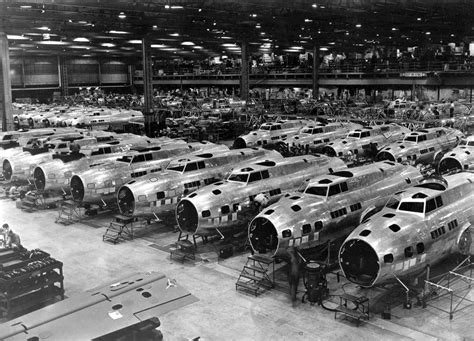
During the war, Boeing’s Seattle Plant 2 alone produced 12,692 B-17 Flying Fortress heavy bombers. Designed for high-altitude strategic bombing, the B-17 proved devastating over Europe, delivering payloads deep into enemy territory while enduring punishing flak and fighter resistance. Its reputation for returning home despite brutal damage made it beloved by crews and a terror for the Axis.
Even more ambitious was the B-29 Superfortress, with nearly 3,900 units built across Boeing’s Renton and Wichita facilities. Engineered for long-range, high-speed bombing, the B-29 was the most technologically advanced and expensive aircraft of the war—costing a staggering $3 billion, surpassing the Manhattan Project. Pressurized cabins, remote-controlled gun turrets, and the ability to reach Japan from Pacific islands made it the ultimate strategic bomber. It was the B-29 that dropped atomic bombs on Hiroshima and Nagasaki, concluding the Pacific war.
Consolidated-Vultee: Mass Producer of the Liberator
Known by its wartime callsign “Consair,” Consolidated-Vultee was a production juggernaut. Initially two separate companies—Consolidated Aircraft and Vultee—merged in 1943, their combined might produced staggering quantities of war-winning aircraft.
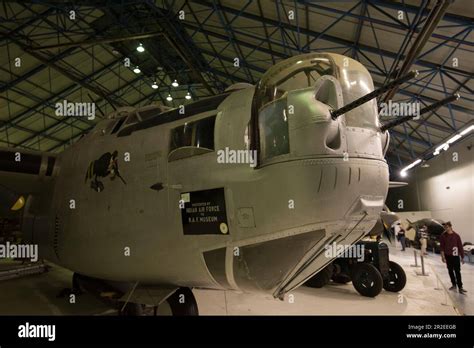
Their crowning achievement was the B-24 Liberator, the most-produced bomber and multi-engine aircraft in U.S. history, with 18,190 units built. The B-24 served in every theater of war, offering longer range and heavier payloads than its cousin, the B-17. Yet its complexity and challenging handling made it less adored by pilots.
Consolidated also manufactured over 11,500 BT-13 Valiant trainers under the Vultee brand, and thousands of PBY Catalinas—durable amphibious patrol bombers used for anti-submarine warfare, search and rescue, and maritime reconnaissance. The PBYs were instrumental in early Pacific engagements, and their distinctive profile became a familiar sight over oceans.
Despite struggling with capacity, forcing companies like Ford and Douglas to license-produce its designs, Consolidated-Vultee’s influence was undeniable. After the war, it eventually became part of Rockwell, and later absorbed by Boeing—its legacy now embedded within a modern giant.
North American Aviation: Birthplace of the Mustang
When it comes to iconic American fighters, North American Aviation (NAA) wrote history with the P-51 Mustang. But its contribution spanned much wider, making it the largest U.S. aircraft manufacturer during WWII by sheer unit count.
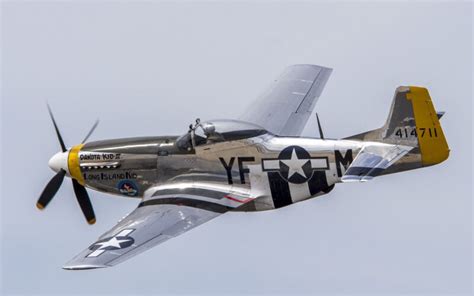
North American produced an astonishing 14,686 P-51 Mustangs, a sleek, fast, and long-range escort fighter that turned the tide over Europe. With drop tanks and the mighty Rolls-Royce Merlin engine, the Mustang accompanied heavy bombers all the way to Berlin and back, reducing bomber losses and clearing enemy skies.
Alongside the Mustang, NAA built 9,816 B-25 Mitchell medium bombers, made famous by the audacious Doolittle Raid on Tokyo in 1942. These twin-engine workhorses supported every Allied campaign, from North Africa to the Pacific.
Its production wasn’t limited to combat—NAA also delivered over 15,500 AT-6 Texan trainers, ensuring tens of thousands of Allied pilots learned to fly safely and effectively. With facilities in Inglewood (CA), Grand Prairie (TX), and Kansas City, NAA stood at the industrial heart of wartime aviation.
Douglas Aircraft Company: Backbone of Allied Transport
While known today for early jetliners, during WWII, Douglas played a critical role in airborne logistics and carrier warfare. The company was instrumental in building the aerial supply network and provided key dive bombers for the Navy.
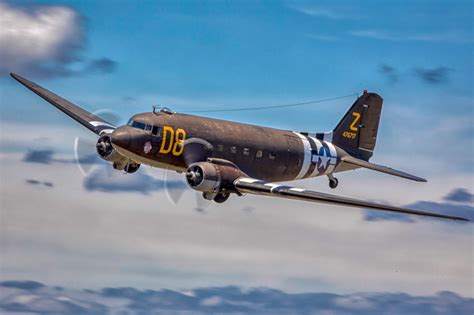
Douglas built over 10,000 C-47 Skytrain transports—military versions of the famed DC-3 airliner. Nicknamed the “Gooney Bird,” the C-47 became indispensable, hauling troops, towing gliders, delivering supplies, and dropping paratroopers. During D-Day, more than 50,000 paratroopers were deployed over Normandy from these aircraft.
Equally vital were 1,162 C-54 Skymaster long-range transports, pivotal in ferrying VIPs, cargo, and medical evacuees across the globe.
Douglas also excelled in combat aircraft. The SBD Dauntless dive bomber crippled the Japanese fleet at Midway, helping sink four aircraft carriers. The A-20 Havoc and A-26 Invader brought speed and firepower to low-level attack missions in Europe and the Pacific.
Douglas collaborated in producing B-17s and B-24s, reflecting its integration into the broader aviation war machine. By war’s end, its designs had touched nearly every aspect of the U.S. aerial campaign.
Curtiss-Wright: Fighter of the Skies and Giants of Industry
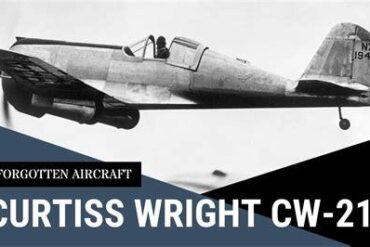
Though often overlooked today, Curtiss-Wright was once a titanic force in American aviation, producing over 30,000 aircraft and nearly 143,000 engines during WWII. Employing over 180,000 workers, it ranked second only to General Motors in wartime contracts.
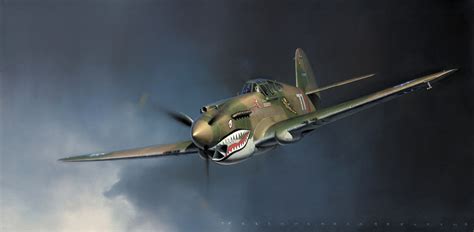
Curtiss-Wright’s signature aircraft, the P-40 Warhawk, saw extensive service with the famed Flying Tigers in China and was the third most-produced American fighter. With 13,738 built, the P-40 played a key role in the early years of the war, holding the line while more advanced designs were in development.
It also built around 7,000 SB2C Helldiver dive bombers for naval service, which, despite initial design flaws, became vital in late Pacific campaigns.
The massive C-46 Commando transport rivaled the C-47 in role but offered greater capacity and range. Its rugged design allowed it to fly critical “Hump” missions over the Himalayas, supplying Chinese forces fighting the Japanese.
Today, Curtiss-Wright continues as an independent defense contractor, specializing in high-tech components and systems. While it no longer builds complete aircraft, its WWII legacy endures through its parts, engines, and influence on aviation history.
The Silent Wings Behind Thunderous Victories
These five manufacturers did more than build planes—they built the future of American air power. Their factories never slept, their engineers innovated under fire, and their aircraft flew into history. From the blazing skies of Europe to the wide Pacific, the war was won not just by bravery, but by the tireless roar of American industry. And while many of these brands have faded or merged into today’s corporate titans, their machines—and the people behind them—carved a legacy of engineering excellence that still soars.