The United States stands at the forefront of military drone innovation, backed by billions in defense spending, advanced research institutions, and a network of elite defense contractors. From long-endurance ISR platforms to autonomous combat drones and loitering munitions, American companies are continuously evolving to meet the needs of modern warfare. As of 2025, these are the top 10 U.S. drone manufacturers shaping global military technology.
Lockheed Martin Corporation: Precision in Tactical Surveillance
Lockheed Martin, headquartered in Bethesda, Maryland, leverages decades of defense expertise to lead in long-endurance and tactical drone solutions. Among its flagship unmanned systems, the Stalker XE and Desert Hawk excel in persistent surveillance and intelligence gathering.
The Stalker XE, recently upgraded with fuel cell technology, enables operations exceeding 8 hours of flight with silent propulsion, making it ideal for ISR (Intelligence, Surveillance, Reconnaissance) missions in contested zones. Lockheed’s continuous investment in miniaturized sensor payloads and autonomous flight capabilities aligns with evolving Pentagon contracts that demand precision with stealth.
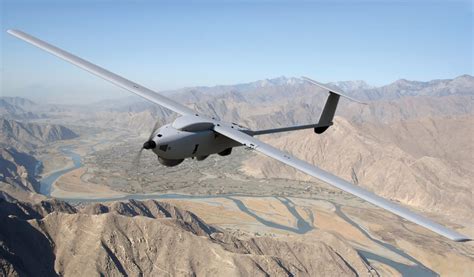
Its commitment to modularity ensures that platforms like the Desert Hawk III remain adaptable across rapidly changing tactical environments. As a core contractor for the U.S. Department of Defense, Lockheed remains a pillar in operational drone development.
General Atomics Aeronautical Systems: Dominance in ISR and Strike Capabilities
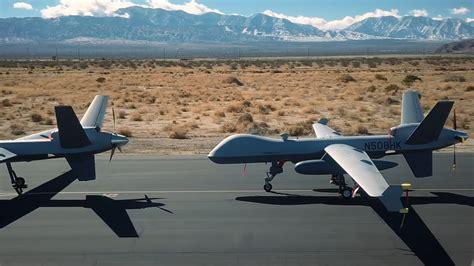
General Atomics Aeronautical Systems, based in Poway, California, is synonymous with the MQ-9 Reaper, the world’s most well-known armed drone. It has redefined long-endurance drone warfare with capabilities including high-altitude flight, satellite connectivity, and multi-sensor payloads.
The Reaper is more than a platform—it’s a strategic asset. In 2020, a $93.3 million contract signaled the beginning of AI integration, allowing real-time decision-making and autonomous threat evaluation. The newer Gray Eagle 25M, featuring upgraded engines, enhanced range, and advanced target-tracking software, demonstrates the company’s drive to push the performance envelope.
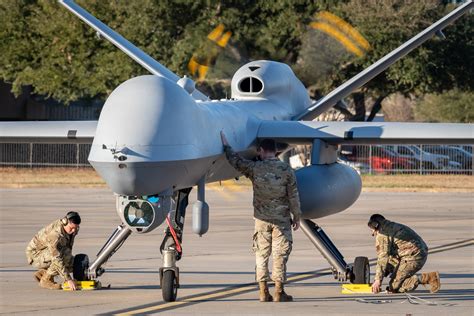
NATO allies and the U.S. Air Force rely heavily on General Atomics to maintain air dominance, leveraging the Reaper for missions from counterterrorism to border surveillance.
Northrop Grumman Corporation: High-Altitude, Long-Endurance Specialists
Northrop Grumman, headquartered in Falls Church, Virginia, brings its legacy of aerospace excellence to the unmanned sector through platforms like the RQ-4 Global Hawk and MQ-4C Triton. These systems deliver strategic ISR at altitudes above 60,000 feet, offering persistent eyes in the sky for over 32 hours.
The Global Hawk series has been a cornerstone of U.S. Air Force ISR operations, covering vast theaters from the Pacific Command to Middle Eastern conflicts. Its maritime cousin, the Triton, built for the U.S. Navy, incorporates de-icing systems and maritime radar, ideal for long patrol missions in unpredictable sea conditions.
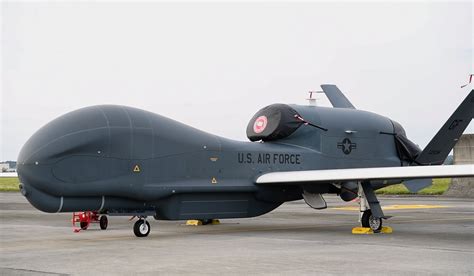
Northrop’s innovation lies not only in altitude and endurance but in the data fusion capabilities that allow real-time intelligence to support tactical and strategic decisions.
AeroVironment, Inc.: Tactical Innovation for the Frontlines
Founded in 1971 and based in Arlington, Virginia, AeroVironment is the U.S. leader in tactical UAS and loitering munitions. Its signature Switchblade 300 and Puma 3 AE are fielded by Special Operations Forces and front-line infantry units.
The Switchblade functions as a kamikaze drone, enabling soldiers to engage distant targets with minimal collateral damage. Lightweight and backpack-portable, it delivers battlefield lethality without risking human life. Meanwhile, the Puma 3 AE serves as a rugged hand-launched ISR platform ideal for urban combat and rural overwatch.
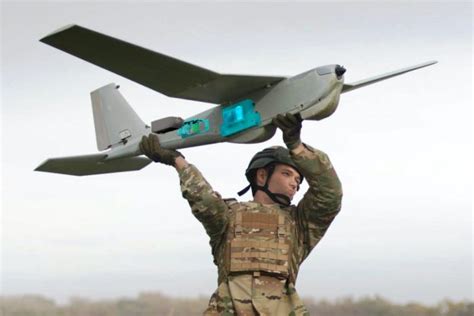
AeroVironment’s continuous evolution of sensor suites and MESH networking keeps its systems relevant across asymmetric battlefields.
Anduril Industries: Disruptive Autonomy and Swarming Technology
Anduril Industries, founded in 2017 and headquartered in Costa Mesa, California, rapidly emerged as a next-gen defense innovator. With its Ghost 4 drone and Lattice AI platform, Anduril redefines autonomy.
Ghost 4 operates autonomously in GPS-denied environments, analyzing terrain, threats, and movement with real-time AI inference. Coupled with Lattice, a software core that processes sensor data across multi-domain systems, Anduril’s products excel in drone swarm coordination, counter-drone operations, and force protection.
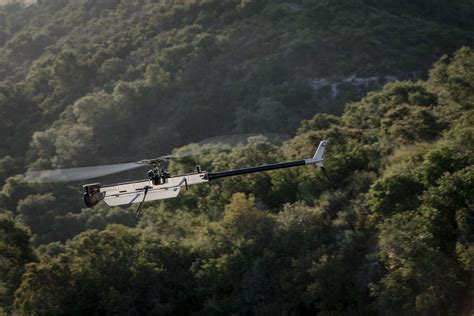
The company’s appeal lies in rapid iteration cycles and its Silicon Valley approach to defense R&D—an edge few legacy firms can match.
Skydio: Autonomous Drones for Modern Battlefields
Skydio, based in Redwood City, California, specializes in autonomous aerial surveillance. The Skydio X2 is engineered for military reconnaissance, featuring thermal sensors, GPS-denied navigation, and real-time obstacle avoidance.
Its AI-piloted drones reduce pilot load while maximizing mission success in cluttered urban environments or dense foliage, often where GPS falters. Skydio’s continued contracts with the U.S. Army and Homeland Security reflect its growing role in tactical ISR support.
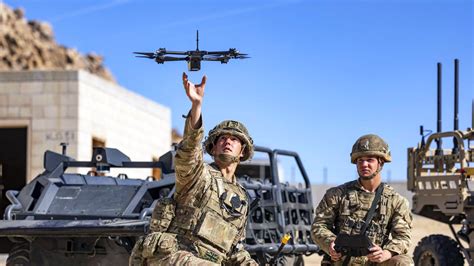
Its software-defined flight intelligence pushes the boundary of what autonomous drones can achieve in combat.
Boeing: Heavy-Duty Systems with Multi-Role Versatility
As a long-standing aerospace titan, Boeing continues to influence the unmanned domain. Based in Arlington, Virginia, Boeing’s MQ-25 Stingray and ScanEagle highlight its strategic alignment with U.S. Navy requirements.
The MQ-25 Stingray, designed for carrier-based aerial refueling, extends the range of F/A-18 and F-35C aircraft. Meanwhile, the ScanEagle offers a rugged, compact ISR solution with over 20 hours of flight time. These systems underscore Boeing’s multi-domain capabilities, combining aerial refueling, surveillance, and signal intelligence in a unified ecosystem.
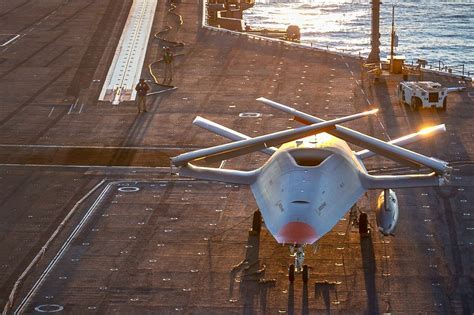
Boeing’s vast R&D infrastructure ensures that its UAS continue to serve both strategic deterrence and tactical advantage missions.
Trexton Inc.: Modular Systems for Tactical Intelligence
Trexton Inc., headquartered in Chicago, Illinois, might not command the headlines, but its Lynx UAS plays a crucial role in tactical military intelligence. Designed with modular payloads and interoperable communication systems, Lynx supports real-time coordination between ground troops and command units.
The flexibility of the Lynx enables rapid deployment for border surveillance, recon patrols, and disaster response, with payloads customizable from thermal cameras to signal intercept tools.
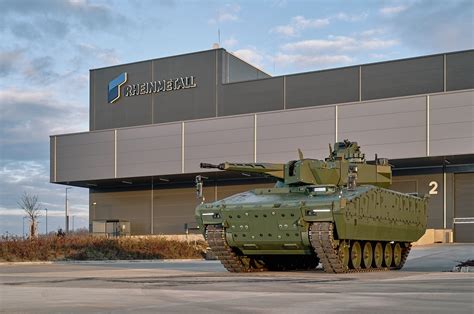
Its low-cost adaptability has earned it a place within Homeland Security and U.S. Army surveillance units.
Kratos Defense & Security: Next-Gen Combat Drones
Kratos Defense, located in San Diego, California, leads the charge in low-cost, high-performance combat drones. Its XQ-58A Valkyrie and UTAP-22 Mako represent the future of manned-unmanned teaming.
The XQ-58A operates as a loyal wingman, flying alongside fighters and responding to mission data in real time. It incorporates stealth shaping, subsonic speed, and the ability to carry precision munitions or electronic warfare payloads.
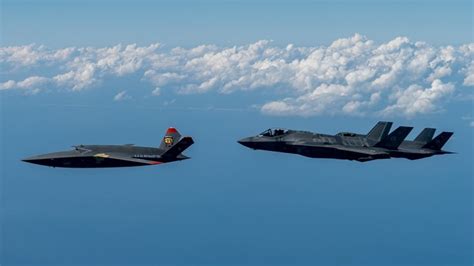
The UTAP-22, meanwhile, offers adaptable roles from decoy missions to reconnaissance. Kratos proves that combat-capable drones can be affordable, scalable, and reliable.
Red Cat Holdings: Night Vision and Hazard Inspection Pioneers
Red Cat Holdings, based in San Juan, Puerto Rico, focuses on night operations and hazardous inspections through drones like the Teal 2 and Skypersonic Rover.
The Teal 2 excels in low-light surveillance with enhanced infrared optics and secure live-streaming, supporting operations that continue after sunset. The Skypersonic Rover, designed for confined spaces, supports hazmat inspections, urban rescues, and facility assessments.
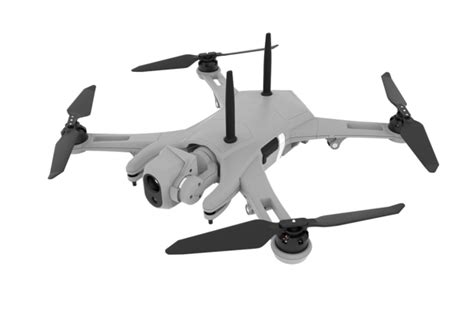
Their niche in high-risk environments makes them essential for both military and civil defense missions.
Strategic Trends Driving U.S. Drone Innovation
AI Integration and Autonomy
- Advanced AI systems now drive autonomous navigation, real-time targeting, and threat identification without human intervention.
Swarm Technology
- Multiple drones operate in tandem, communicating to achieve mission goals—ideal for area denial, sensor saturation, and electronic warfare.
Cybersecurity Emphasis
- Firms prioritize encrypted channels, intrusion monitoring, and operator training to secure drone operations from cyber threats.
Stealth and Endurance Enhancements
- Designs incorporate radar-absorbing materials, low-noise propulsion, and longer battery life to expand mission profiles.
Multi-Role Expansion
- Drones are now platforms for electronic warfare, search and rescue, and communications relay, beyond ISR and strike roles.
Conclusion
The U.S. drone industry is defined by rapid innovation, mission flexibility, and dominance in battlefield intelligence. As ethical and regulatory frameworks evolve, these manufacturers will shape not only the future of warfare but the global defense landscape itself.