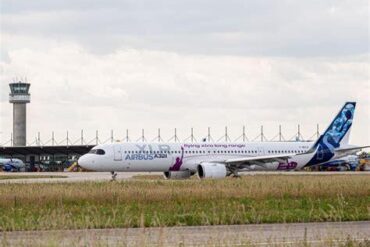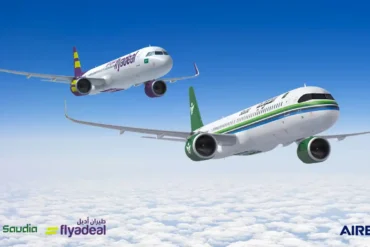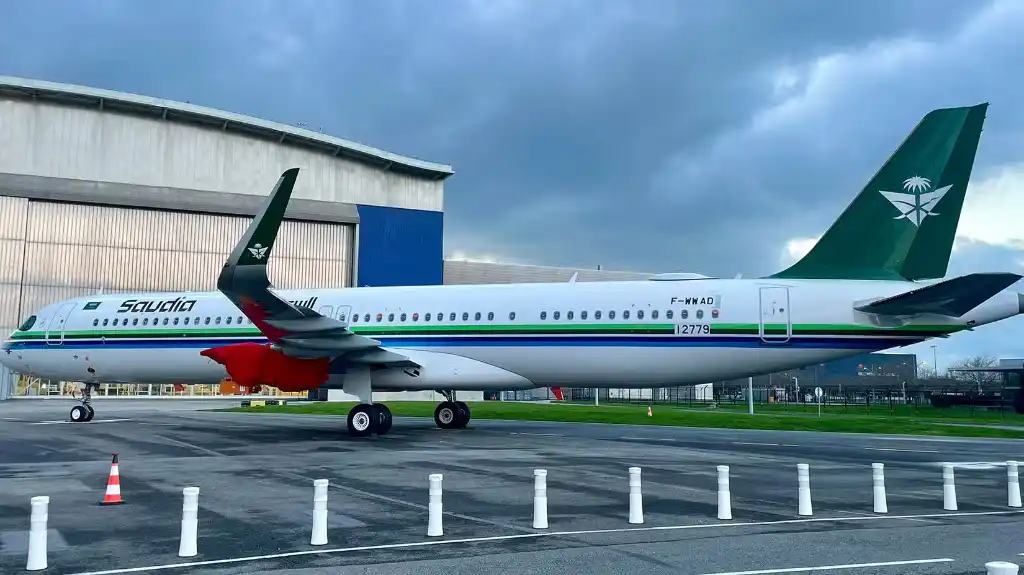
Saudia has officially entered a new era of premium narrowbody flying after taking delivery of its first Airbus A321XLR, becoming the launch operator of the aircraft type in the Middle East. The Saudi flag carrier accepted the jet during a delivery ceremony at Airbus facilities in Toulouse on May 24, marking a major milestone in the airline’s ambitious fleet modernization strategy and reinforcing Saudi Arabia’s growing influence in global aviation.
The aircraft, registered HZ-ASBA, immediately attracted industry attention not only because it is Saudia’s first A321XLR, but because it introduces the most premium-heavy configuration yet seen on the long-range narrowbody platform. Configured with just 144 seats, the aircraft features an extraordinary 24 fully lie-flat business class suites alongside 120 economy seats, setting a new benchmark for luxury on single-aisle operations.
Saudia’s latest fleet addition arrives at a pivotal moment for the airline as it aggressively expands international connectivity under Saudi Arabia’s broader Vision 2030 transformation agenda. The A321XLR is expected to become a cornerstone of the carrier’s strategy to open thinner long-haul routes while delivering a premium passenger experience previously associated almost exclusively with widebody aircraft.
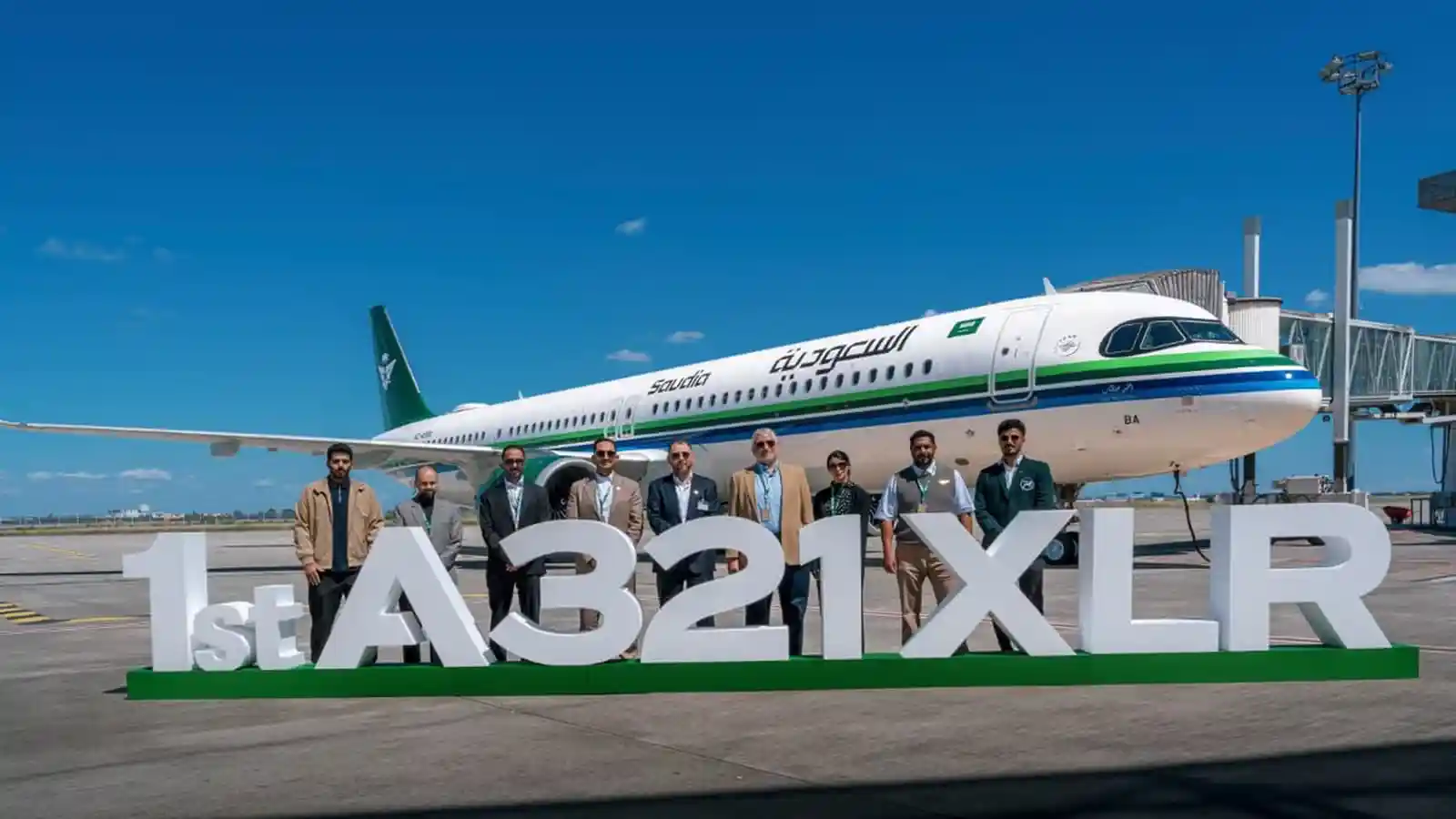
The delivery flight itself offered a glimpse into the aircraft’s historic arrival. Operating under flight number SVA9010, the jet departed Toulouse at approximately 09:20 UTC before beginning its nearly six-hour journey toward Jeddah. Aviation tracking data showed the aircraft initially diverting north toward Luxembourg before eventually turning south toward Saudi Arabia, a routing reportedly linked to financing or insurance formalities.
Once arriving in Jeddah, the aircraft was expected to receive a ceremonial water cannon salute, symbolizing the beginning of commercial service preparations ahead of its inaugural passenger flight scheduled for early June.
Saudia Creates The Most Luxurious A321XLR Cabin In Service
While the Airbus A321XLR has already generated enormous excitement across the aviation industry for its long-range efficiency, Saudia’s configuration pushes the aircraft into an entirely new premium category.
Most airlines operating the A321XLR have balanced premium seating with higher-density economy layouts to maximize profitability. Saudia instead chose a dramatically different path by prioritizing passenger comfort and exclusivity over total seat count.
The result is the largest business class cabin currently installed on any A321XLR worldwide.
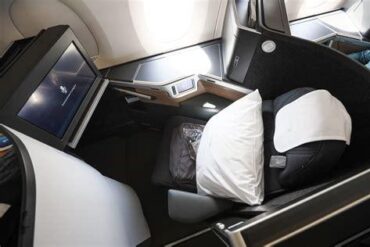
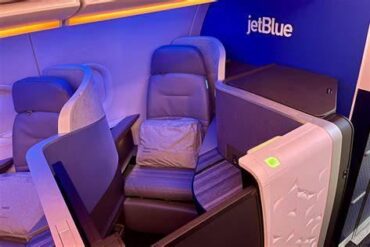
The aircraft’s 24 business class suites are arranged in an ultra-premium 1-1 configuration, guaranteeing every passenger direct aisle access. The carrier selected the highly regarded Thompson Aero VantageSOLO seat platform, already known among frequent premium travelers through JetBlue Mint and Iberia’s A321XLR fleet.
Each suite transforms into a fully flat bed designed for overnight sectors stretching up to 11 hours. Combined with enhanced privacy doors, expanded personal storage, high-definition entertainment systems, and modern cabin finishes, the experience is intended to rival widebody business class products operated by Gulf competitors.
Compared with rival A321XLR operators, Saudia’s premium ambitions become even clearer. American Airlines plans 20 Flagship Suites on its aircraft, while Aer Lingus configured 16 business seats and Iberia installed only 14. Even future operator United Airlines, which intends to heavily premium-configure its fleet, will offer 20 Polaris suites alongside Premium Plus seating.
Saudia’s decision effectively transforms the A321XLR from a narrowbody efficiency tool into a boutique long-haul luxury aircraft.

Why The Airbus A321XLR Changes Long-Haul Aviation Economics
The Airbus A321XLR represents one of the most commercially important aircraft developments of the modern aviation era. Built as the longest-range variant of the A321neo family, the jet can travel up to 4,700 nautical miles, allowing airlines to operate routes previously impossible or uneconomical using narrowbody aircraft.
That capability fundamentally changes how airlines approach international expansion.
Traditionally, long-haul routes required larger twin-aisle aircraft such as the Boeing 787 or Airbus A350. Those aircraft carry higher operating costs and require stronger passenger demand to remain profitable. The A321XLR instead allows airlines to launch “long and thin” routes with fewer seats while maintaining attractive economics.
For Saudia, this creates enormous strategic flexibility.
From its hubs in Jeddah and Riyadh, the airline can now connect secondary European destinations, premium leisure markets, and underserved Asian routes without deploying larger widebody aircraft. The combination of long range and low-density luxury seating also enables the carrier to target high-yield premium travelers on routes where demand may not justify a larger aircraft.
The A321XLR therefore becomes both a network expansion tool and a competitive weapon.
Saudia’s Initial A321XLR Routes Focus On Europe And Premium Leisure Markets
Saudia plans to launch the aircraft commercially on June 3 with inaugural service between Jeddah and Madrid. The route choice highlights exactly how the airline intends to deploy the jet — combining premium demand with operational flexibility.
Madrid represents a strong business and leisure destination while also fitting comfortably within the aircraft’s range capabilities.
Additional European destinations are expected within weeks. Paris and Vienna are reportedly next in line for A321XLR deployment later in June, while Geneva and the Maldives are scheduled for introduction during the summer expansion phase.
These routes align perfectly with the aircraft’s mission profile. Rather than flooding markets with excessive capacity, Saudia can precisely match passenger demand while offering a significantly elevated onboard product.
A Key Piece Of Saudi Arabia’s Aviation Transformation
Saudia currently holds commitments for 15 Airbus A321XLR aircraft, with deliveries expected to continue steadily through the end of 2027. The airline had originally anticipated receiving the first aircraft much earlier, but industry-wide supply chain disruptions delayed the program by nearly two years.
Despite the delay, the aircraft now arrives at a critical growth stage for Saudi aviation.
Saudi Arabia is investing heavily in tourism, aviation infrastructure, and international connectivity as part of its broader economic diversification plans. Airlines operating under the Kingdom’s aviation strategy are rapidly modernizing fleets while aggressively expanding route networks across Europe, Asia, and Africa.
The A321XLR fits directly into that vision. Alongside existing Airbus A320 and A321neo operations, the aircraft strengthens Saudia’s narrowbody fleet while enabling premium-focused expansion into new international markets.
More importantly, the airline’s uniquely luxurious configuration demonstrates that narrowbody aircraft no longer need to feel like a compromise on long-haul journeys. With 24 lie-flat suites onboard, Saudia’s A321XLR may redefine passenger expectations for premium single-aisle flying worldwide.