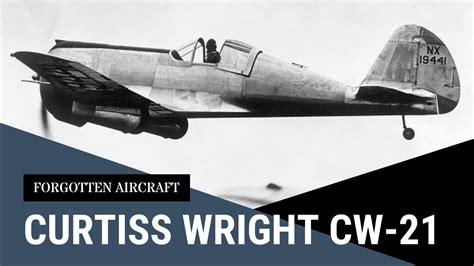
The Curtiss-Wright CW-21 Demon remains a largely forgotten name in the annals of World War II aviation history, overshadowed by the iconic silhouettes of P-51 Mustangs, Spitfires, and Bf 109s. Yet, for a short but significant window of time in the late 1930s and early 1940s, the CW-21 was a bold, forward-thinking aircraft built with one goal in mind: to climb faster than anything else in the sky and intercept incoming bombers before they had the chance to drop their lethal payloads.
Unlike most American aircraft of the era, the CW-21 was never adopted by the United States military. Designed as a lightweight, fast-climbing interceptor, it was developed specifically for export markets—most notably China and the Dutch East Indies. With only 62 aircraft produced, the CW-21’s legacy became entangled in the chaos of rapidly shifting battlefronts, logistical breakdowns, and the sheer brutality of the Pacific and Southeast Asian theaters of war.
Origins of the CW-21 Demon: Speed and Climb Over Durability
Designed by Curtiss-Wright, the CW-21 was conceived in a period when military aviation was undergoing rapid technological evolution. The design philosophy behind the CW-21 was radically different from the robust, multi-role fighters that would dominate the skies a few years later. Instead of building a rugged dogfighter, Curtiss-Wright chose to build a fast, nimble aircraft focused solely on high-speed interception.
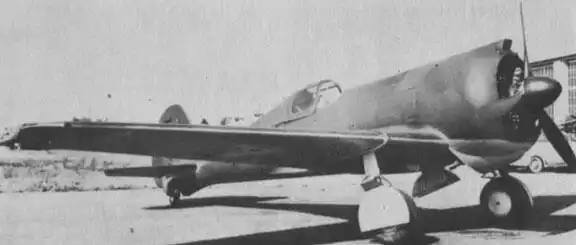
To achieve this goal, the CW-21 sacrificed protection and survivability in favor of speed and climb rate. The aircraft was built using lightweight construction methods, with minimal armor and no self-sealing fuel tanks. This gave it a curb weight of just 4,528 pounds (2,054 kg) fully loaded—a featherweight compared to contemporaries like the P-40 Warhawk.
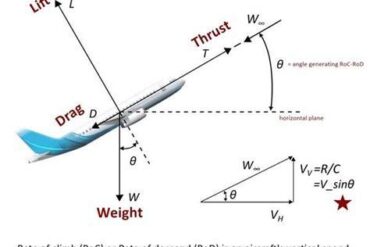
At the heart of the CW-21 was a Wright R-1820-G5 radial engine, capable of delivering 1,000 horsepower. This engine, coupled with the aircraft’s lightweight frame, allowed the CW-21 to achieve a climb rate of 5,000 feet per minute—a performance statistic that stunned observers and easily outpaced most contemporary fighters.
Technical Specifications: Precision Built for Interception
The CW-21 was designed to quickly gain altitude and engage high-flying bombers before they could unleash their attacks. Its performance envelope reflected this mission profile:
- Engine: Wright R-1820-G5, 1,000 hp (746 kW)
- Top Speed: 314 mph (505 km/h) at 15,000 ft
- Range: 630 miles (1,014 km)
- Service Ceiling: 34,300 ft (10,455 m)
- Climb Rate: 5,000 ft/min (1,524 m/min)
- Armament:
- 2 × .50 in (12.7 mm) M2 Browning machine guns, or
- 2 × .30 in (7.62 mm) M1919 Browning machine guns
This limited armament was not designed for fighter-versus-fighter engagements. Instead, it was optimized for bomber interception—focusing on agility and vertical reach rather than sustained combat endurance or firepower.
Export Missions: China’s Early Adoption of the Demon
The first international operator of the CW-21 was the Republic of China, which faced growing aerial threats from Imperial Japan. In 1940, Curtiss-Wright sent three completed aircraft and kits to assemble 27 more. These were intended to strengthen China’s interception capabilities against Japanese bombers targeting cities, infrastructure, and troop concentrations.
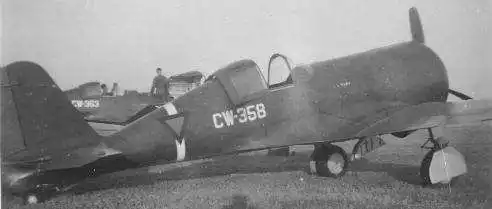
However, the Japanese advance into territories where these aircraft were being assembled disrupted the entire program. Despite Chinese efforts to mobilize and deploy these interceptors, very few were fully assembled before the factories fell into Japanese hands. The CW-21’s impact in China was limited more by logistics and geography than by its flight performance.
Dutch Deployment: The Demon Takes to Southeast Asian Skies
After the Chinese setback, Curtiss-Wright found another buyer in the form of the Dutch East Indies Air Force. The Netherlands had placed an order for 24 CW-21s, which were rerouted to the Dutch colonies after the German invasion of the Netherlands in May 1940.
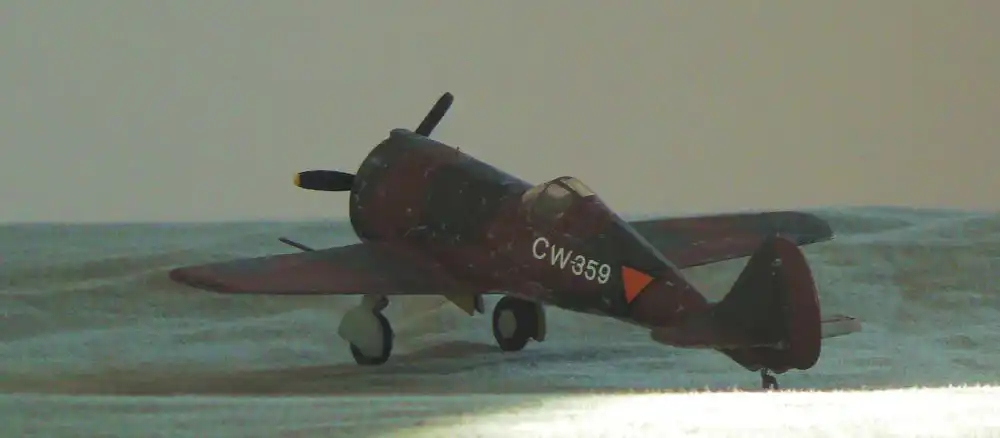
In the jungles and island airstrips of Southeast Asia, CW-21s flew against overwhelming odds as Japanese aircraft swept through the region. While initially successful at intercepting and damaging enemy bombers, the Demons were ultimately outnumbered and outclassed by Japan’s newer aircraft, such as the Mitsubishi A6M Zero.
The CW-21s were often destroyed on the ground during airfield bombings, or lost in dogfights for which they were never intended. Still, in the early weeks of the Pacific War, they provided a fleeting but critical high-speed response capability for Dutch forces.
The CW-21B: A Minor Evolution, a Shorter Life
In response to early feedback and operational needs, Curtiss-Wright developed an improved version—the CW-21B. It featured retractable landing gear, which reduced drag and improved performance. Several of these were also sold to the Dutch, and a few made it to Java before the Japanese invasion.
However, the improvements came too late. With Japanese forces advancing rapidly, the CW-21Bs were often lost without ever seeing combat. By 1942, the aircraft had virtually disappeared from the battlefield.
Why the U.S. Rejected the CW-21
Despite its impressive climb performance, the CW-21 was never adopted by the United States Army Air Corps. There were several reasons behind this decision:
- Lack of Armor: The aircraft’s lightweight design lacked pilot protection and self-sealing tanks.
- Limited Role: It was a single-purpose interceptor at a time when multi-role fighters were becoming the standard.
- Short Range and Weak Armament: U.S. doctrine emphasized endurance and versatility, areas where the CW-21 was deficient.
Moreover, the U.S. was already investing heavily in proven platforms like the P-40 Warhawk, which could carry bombs, engage enemy fighters, and survive damage better than the CW-21.
A Legacy of Unrealized Potential
Though some aviation historians have called the CW-21 “one of the worst fighter planes of WWII,” such criticism often misses the context. The aircraft did exactly what it was designed to do—climb faster than any aircraft in its class and intercept bombers at high altitude.
Its limited production and rapid obsolescence weren’t failures of design but rather consequences of wartime logistics, changing military doctrines, and rapid technological advancement. If deployed in greater numbers or used in a theater where its unique strengths were prioritized, the CW-21 could have achieved far more.
Conclusion: Remembering the Demon
The Curtiss-Wright CW-21 Demon was a pioneering aircraft, a bold answer to a very specific combat problem—intercepting bombers before they reached their targets. While history ultimately overshadowed it, the CW-21 played a vital, if short-lived, role in two major theaters of WWII.
Its unmatched climb rate, elegant design, and forgotten combat history make it a fascinating case study in aviation specialization, where the race to innovate sometimes left even the best ideas behind.