At the dawn of the 20th century, human flight transitioned from an impossible dream to a reality grounded in precision, patience, and daring innovation. Orville and Wilbur Wright, two mechanically gifted brothers from Dayton, Ohio, would etch their names into the annals of history by achieving what had eluded humanity for centuries. The story of their first powered flight on December 17, 1903, is not merely one of aviation’s origin—it is a chronicle of persistence, engineering discipline, and vision that reshaped the world.
Their achievement was no accident, nor a product of blind luck. It was the result of meticulous experimentation, deep research, and a commitment to practical problem-solving that spanned several years. From their modest beginnings as bicycle mechanics to becoming the pioneers of powered aviation, the Wright brothers’ journey is both epic and exacting.
Early Fascination and the Path to Flight
The Wright brothers’ interest in flight was sparked in childhood when their father gifted them a small rubber-band-powered toy helicopter designed by French aviation pioneer Alphonse Pénaud. Unlike many who dismissed flight as folly, the Wrights became increasingly curious, devoting time to reading all available scientific works, especially the writings of Otto Lilienthal, a German glider experimenter who tragically died in a crash.
By 1899, the brothers had decided to begin their own experiments. They started by designing kites and gliders to test lift, control, and stability. They immediately recognized that the key to controlled flight lay in managing all three axes of motion: pitch, roll, and yaw. This was an insight that set them apart from their contemporaries.
Their 1900–1902 glider trials at Kitty Hawk, North Carolina—a location chosen for its strong winds and remote setting—taught them invaluable lessons. Through repeated testing, they not only refined the aerodynamic qualities of their aircraft but also invented the crucial three-axis control system, enabling a pilot to steer the plane effectively.
Building the Wright Flyer: A Marvel of Engineering
By 1903, the Wrights had accumulated enough data to build a powered aircraft. They constructed the Wright Flyer, a biplane with a wingspan of 40 feet 4 inches and a weight of approximately 605 pounds without the pilot. It featured a 12-horsepower, four-cylinder gasoline engine designed and built by their colleague Charlie Taylor, as no commercial engine met their specifications.
The aircraft was a masterpiece of balance and innovation. It used wing warping to control roll, a forward-mounted canard for pitch, and a rear rudder for yaw. The propellers, unique in their twisted shape, were carved and tested by the Wrights themselves based on their own wind tunnel experiments. Few understand today how radically different their propeller design was compared to marine propellers used at the time.
The First Flight: December 17, 1903
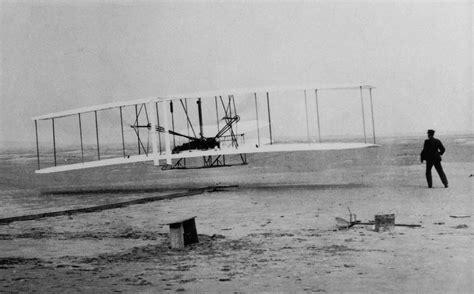
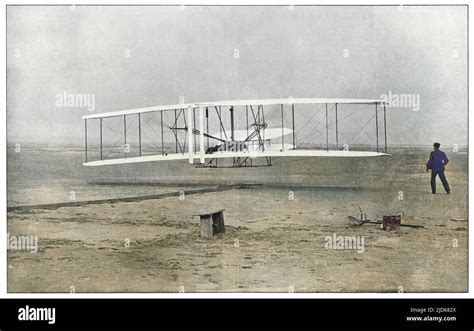
On a cold, wind-swept morning at Kill Devil Hills, near Kitty Hawk, the Wright brothers prepared to test their aircraft. The Flyer rested on a 60-foot wooden launch rail, and the team, consisting of Orville, Wilbur, and five local witnesses, held their breath.
At 10:35 a.m., Orville Wright lay prone on the lower wing of the Flyer and released the restraining wire. The aircraft accelerated down the rail and lifted into the air. It flew for 12 seconds over a distance of 120 feet—a seemingly modest feat that transformed the future of transportation. Three more flights followed that day, the longest lasting 59 seconds and covering 852 feet, piloted by Wilbur.
The Global Impact of a 12-Second Flight
Though short in duration, the Wrights’ first flight was profound in implication. It marked the beginning of a technological revolution that would, within a few decades, bring about commercial air travel, aerial warfare, and eventually space exploration.
Their success was not widely celebrated at first. The U.S. government remained skeptical, and most newspapers relegated the flight to brief mentions. It wasn’t until later demonstrations in France in 1908 that the world truly began to grasp the significance of what the Wright brothers had accomplished.
Scientific Method Meets Practical Ingenuity
What set the Wright brothers apart was their insistence on a scientific approach to flight. Instead of relying on guesswork or mere imitation, they devised a wind tunnel to test over 200 wing designs, gathering more accurate aerodynamic data than anyone before them. They also recognized that flight wasn’t just about lift but also about control and stability, which they solved using coordinated control surfaces.
Their ability to merge theory with practice placed them well ahead of their time. They applied the principles of mechanical engineering, fluid dynamics, and structural design in ways few others had imagined. Unlike many contemporaries who pursued power over control, the Wrights understood that safe flight depended on balance.
Challenges, Patents, and Public Demonstrations
Despite their success, the Wrights faced skepticism and legal disputes in the years following 1903. Their attempts to patent their control system led to extended litigation with rivals like Glenn Curtiss, who refused to acknowledge their priority.
Their public demonstration flights in Le Mans, France, and Fort Myer, Virginia, in 1908–1909, helped dispel doubts. These flights, often lasting over an hour, showcased their aircraft’s maneuverability and endurance. The Wrights were soon celebrated as heroes in Europe and America.
Legacy and Preservation of the Wright Flyer
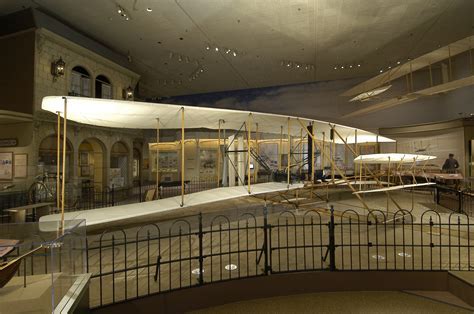
Today, the original 1903 Wright Flyer is preserved in the Smithsonian National Air and Space Museum in Washington, D.C., having been returned by the Science Museum in London, where it resided due to the Wrights’ early disputes with American institutions.
Its fabric-covered wooden frame, delicate in appearance yet revolutionary in function, remains a symbol of human ingenuity. Visitors are struck by how small and rudimentary it looks by modern standards, yet its influence towers over the aviation industry.
Kitty Hawk and Kill Devil Hills: A Living Memorial
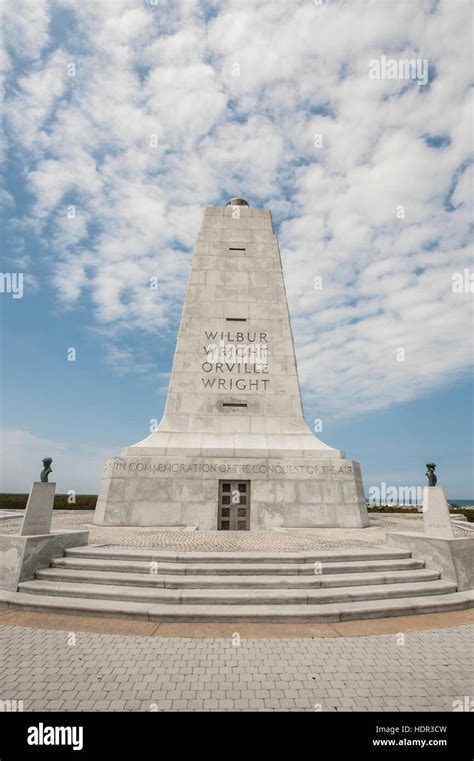
The landscape of Kitty Hawk and Kill Devil Hills is now home to the Wright Brothers National Memorial, a fitting tribute built by the National Park Service. It features a towering granite monument, visitor center, reconstructed camp buildings, and replicas of the Flyer and its testing equipment.
Each year, thousands travel here to stand on the very ground where history took flight. The preserved sand dunes, the commemorative granite boulder at the takeoff point, and the markers showing each flight’s distance create a vivid sense of the events of 1903.
Conclusion: The Birth of Aviation as We Know It
The first flight by the Wright brothers was more than just a technological milestone—it was a moment that redefined what was possible for mankind. In just 12 seconds, the boundaries between imagination and execution were obliterated.
Their achievement reminds us that progress often begins in workshops, not boardrooms, and that the quiet persistence of a few can change the course of history for all. As we soar across continents or gaze toward the stars, we still fly in the wake of that fragile biplane on the dunes of North Carolina.