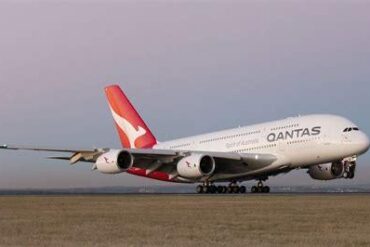
Qantas’ ambitious plan to return its full Airbus A380 fleet to the skies hit a turbulent snag when its final reactivated aircraft, VH-OQC, suffered significant wing damage on its very first commercial flight post-storage. The aircraft, dubbed ‘Paul McGinness’, had just completed a seemingly smooth transpacific journey from Sydney Kingsford Smith Airport (SYD) to Los Angeles International Airport (LAX) on December 7, when disaster was narrowly averted.
Catastrophic Damage During Final Approach
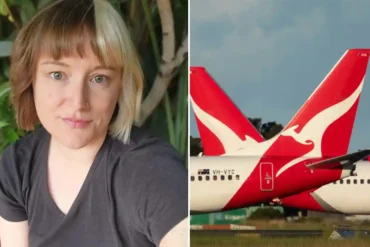
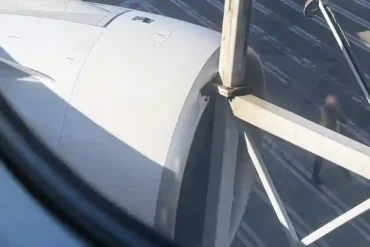
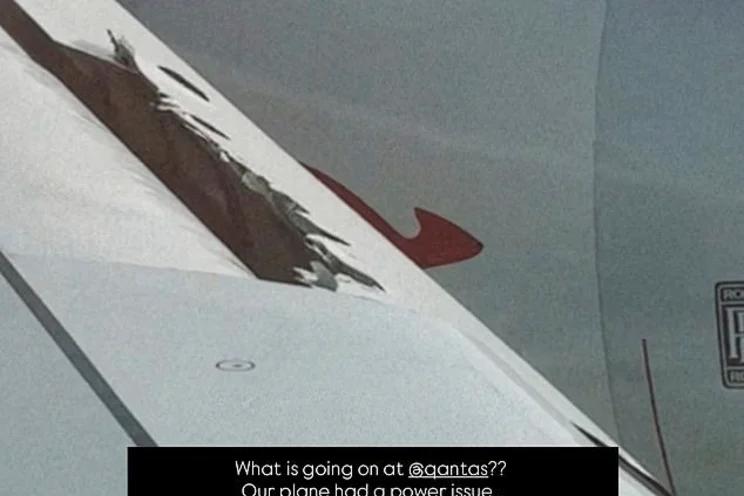
The journey, QF11, departed Sydney at 6:18 PM local time and landed seven minutes early in Los Angeles at 12:23 PM. However, the on-time arrival masked what turned out to be a serious in-flight incident. As the aircraft descended into LAX, a section of the slat on the left wing peeled off, a potentially dangerous event that could have impacted aerodynamics during landing. The alarming damage was first revealed publicly by prominent Australian actor and TV host Lynn Gilmartin, who was onboard.
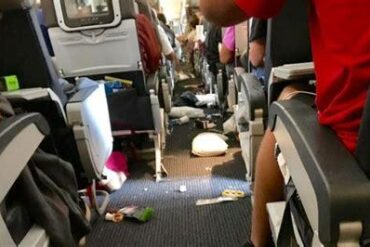
Passengers, including Gilmartin, reported multiple issues during the flight. In a now widely shared social media post, she wrote that there were “no lights in most of the cabins”, TV screens and seat recliners were non-functional, and even alleged that some toilets were overflowing. While Qantas asserted that the aircraft “landed without incident,” Gilmartin’s firsthand account painted a much more disturbing picture of a chaotic and deteriorating onboard experience.
Aircraft Grounded Indefinitely Amid Safety Concerns
Since the December 7 landing, VH-OQC has remained grounded at LAX. The return leg, flight QF12, scheduled for that same evening, was canceled. Engineers immediately inspected the damage, and the results confirmed the severity. According to Qantas, a replacement part is being flown in from Dubai, with expectations for the aircraft to be returned to service by Thursday. Passengers have reportedly been compensated for the power failure, though the incident raises deeper questions about the readiness of long-dormant aircraft being brought back into rotation.
A False Start After Years In Storage
VH-OQC had been grounded since March 2020, initially stored in Melbourne and Sydney, before being moved to Victorville, California, in July 2020. It was later flown to Los Angeles, then to Abu Dhabi in June 2021, where it remained until the end of November 2024. Reactivating the jet was no small feat—Qantas dedicated over 100,000 hours to bringing it back into compliance, replacing major components such as landing gear and seating.
The superjumbo’s return was meant to signal the final chapter in Qantas’ recovery from the pandemic-era shutdowns. Instead, it has highlighted the complexity and risks of reactivating long-idled aircraft. Industry insiders now question whether the rush to restore high-capacity routes amid surging demand may be compromising long-held standards of safety and reliability.
Customer Confidence Shaken Despite Qantas’ Safety Legacy
Historically, Qantas has been lauded for its impeccable safety record, frequently cited as one of the world’s safest airlines. But incidents like this one challenge that reputation. Gilmartin, a loyal Qantas flyer, expressed deep disappointment in her post: “It’s been so disappointing to watch the steep decline in customer service, and now safety.” Her remarks have since sparked public debate on social media about Qantas’ recent service levels and the broader implications of bringing older aircraft back into service.
While no passengers were harmed and the aircraft did land safely, the visible wing damage and overall failure of in-flight systems signal potential gaps in maintenance quality and pre-flight checks. For an aircraft to lose structural integrity during its first reactivated commercial flight is a rare and troubling event, one that the airline—and regulators—cannot afford to treat lightly.
Looking Ahead: A Test of Operational Readiness
Qantas’ next steps will be closely watched by aviation analysts, safety boards, and the traveling public. The airline must not only complete thorough repairs to VH-OQC but also ensure enhanced inspection protocols are in place for other long-grounded aircraft being reintroduced into service. As the industry continues its post-COVID recovery, this incident serves as a cautionary tale: returning to the skies is not merely about demand, but about meticulous preparation and uncompromising safety standards.
For now, the spotlight remains fixed on VH-OQC, grounded in Los Angeles, as Qantas scrambles to recover from what should have been a celebratory milestone—but instead became a high-profile embarrassment in full view of the world.