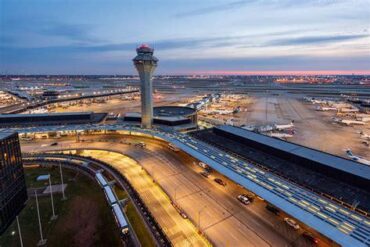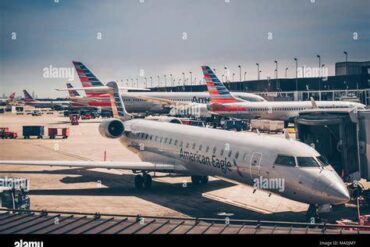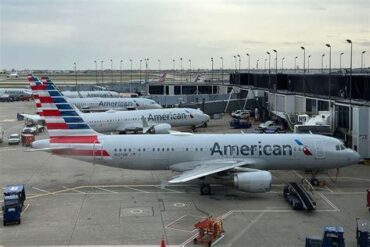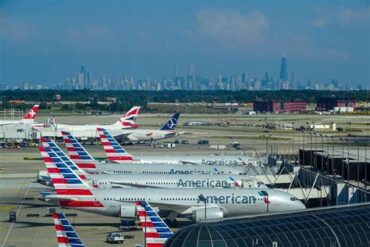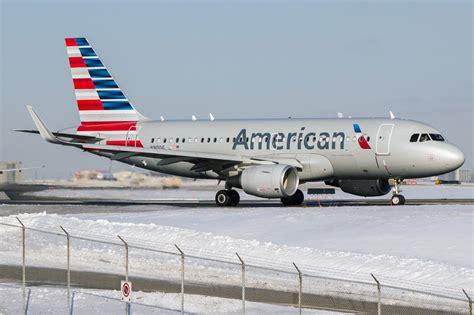
American Airlines was forced to remove an Airbus A319 from active service after an unusual ground incident at Chicago O’Hare International Airport disrupted operations and left passengers waiting onboard for hours. The event unfolded on January 30 as Flight AA2121, scheduled to operate from Chicago to Boston, was completing the final stages of winter ground handling at one of the busiest hubs in the United States.
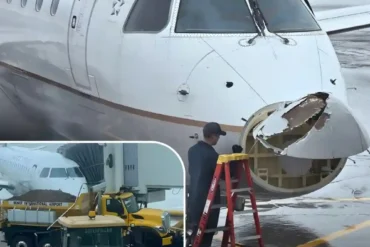
Passengers had already boarded the aircraft and settled in for what should have been a routine two-hour hop to Boston Logan. Instead, the aircraft’s wing made contact with a nearby de-icing truck during ground movement, abruptly halting departure plans. While no injuries were reported among passengers or crew, the aircraft sustained damage significant enough for American Airlines to immediately withdraw it from service for inspection.
The incident occurred as the aircraft was pushing back from Gate K8 at O’Hare, a phase of ground operations that requires tight coordination between cockpit crew, ground handlers, and de-icing personnel. According to reports first published by NBC Chicago, the contact happened in the closing moments of the de-icing process, when the aircraft was beginning to maneuver away from the gate area. Even minor misalignments during this phase can have outsized consequences, especially in congested winter operations.
After the contact, passengers remained onboard the aircraft for nearly two hours as assessments were made. Eventually, American Airlines opted to deplane everyone and source a replacement aircraft, citing safety as the overriding concern. The airline confirmed that the A319 would remain out of service while maintenance teams conducted a detailed inspection to determine the extent of the damage.
Ground Collision Highlights Winter Operational Risks
Winter weather places enormous pressure on airport ground operations, and Chicago O’Hare is no exception. De-icing trucks operate in close proximity to aircraft wings and engines, often in low visibility and icy conditions. Even with established procedures, the margin for error is slim. A wing-to-vehicle strike, while rare, can compromise structural components, protective coatings, and critical control surfaces, all of which demand thorough inspection before an aircraft can safely return to service.
American Airlines emphasized that safety protocols worked as intended. The aircraft was immediately grounded, and no attempt was made to rush it back into operation. From an operational standpoint, however, the ripple effects were substantial. AA2121, originally scheduled to depart at 1:25 p.m., did not leave Chicago until 8:16 p.m., resulting in a delay of nearly seven hours.
Replacement Aircraft and Extended Delay
The delayed flight eventually departed on a larger Airbus A321-200, registered as N903AA. This aircraft, delivered to American Airlines in May 2017, offers a significantly higher capacity than the grounded A319, accommodating up to 190 passengers across Domestic First and Main Cabin. While the substitution ensured passengers reached their destination the same day, the delay extended the arrival time in Boston to late evening, with touchdown expected around 11:22 p.m. based on Flightradar24 data.
For travelers, the inconvenience was clear. For the airline, the costs ran deeper. Extended gate occupancy, crew scheduling complications, passenger reaccommodation, and the logistics of sourcing a replacement aircraft all add up quickly. These indirect costs often exceed the immediate expense of repairing physical damage.
The Aircraft at the Center of the Incident
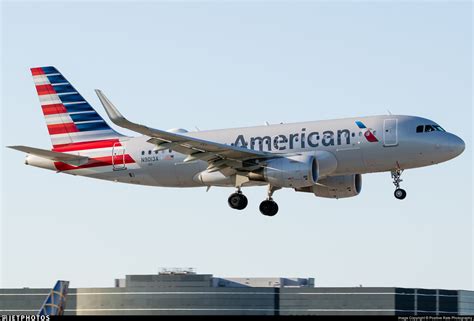
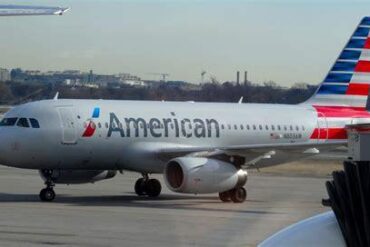
The affected aircraft, registered N9013A, is a 12-year-old Airbus A319-115 that entered service with American Airlines in November 2013. Originally test-flown under German registration D-AVXM, the aircraft is powered by CFM56-5B7/P engines and configured for 128 passengers. Despite its age, the jet remains a core part of American’s domestic short-haul fleet.
Notably, this A319 belongs to a subset of American Airlines aircraft equipped with seatback entertainment screens, a feature that has become increasingly rare in the carrier’s narrowbody fleet. American has already announced plans to remove these screens in favor of streaming entertainment to personal devices, alongside cabin reconfiguration that expands first class seating.
Broader Implications for Fleet and Operations
American Airlines operates roughly 32 Airbus A319s, many inherited through mergers with US Airways and America West. These aircraft are often described as legacy airframes, bridging older design philosophies with modern operational demands. Incidents like the Chicago ground collision highlight the operational vulnerabilities of maintaining aging yet essential fleet segments.
The full extent of the damage to N9013A has not been publicly disclosed, and repair timelines remain uncertain. Depending on whether structural components were affected, the aircraft could be sidelined for days or weeks. Beyond repair costs, the airline must also absorb the cascading impact on scheduling, aircraft availability, and customer confidence.
At a congested hub like O’Hare, where winter weather is a constant variable, even a brief ground incident can echo across the network. This event serves as a sharp reminder that aviation safety does not end at the runway threshold. Precision on the ground is just as critical, and when something goes wrong, the consequences reach far beyond a single delayed flight.