Wright-Patterson Air Force Base in Dayton, Ohio has long stood at the crossroads of American aviation history and modern aerospace innovation. Now the historic installation is preparing for another defining chapter. The United States Air Force has formally designated the base as the future site of a groundbreaking educational facility—the STEM Talent Development Complex, a large-scale initiative designed to cultivate the next generation of scientists, engineers, and aerospace innovators.
Planned as a 90,750-square-foot campus, the project carries an estimated price tag of $38 million to $40 million. The complex aims to create a dynamic environment where students, educators, and industry professionals can collaborate, experiment, and explore emerging technologies. More than just another training center, the facility is intended to become a regional hub for science, technology, engineering, and mathematics education, bridging academic curiosity with real-world aerospace applications.
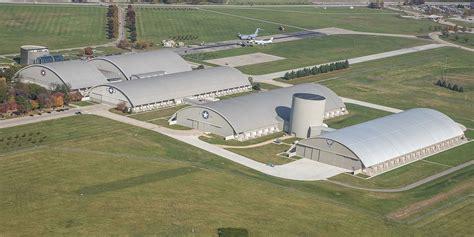
Wright-Patterson Air Force Base offers a setting that is both symbolic and practical. The sprawling 12.5-square-mile installation employs more than 38,000 personnel, including military members, civilians, and contractors, many of whom work in highly specialized technical fields. With its dense concentration of research activity and aerospace expertise, the base provides an environment uniquely suited for cultivating STEM talent.

A Facility Designed to Build the Future Aerospace Workforce
The planned complex will feature state-of-the-art classrooms, research laboratories, collaborative workspaces, and residential dormitories. These facilities are designed to support immersive programs for students from elementary school through high school, allowing them to participate in extended learning experiences focused on aerospace engineering, robotics, physics, and advanced computing.
Unlike traditional classrooms, the environment will emphasize hands-on experimentation and project-based learning. Students will be encouraged to design prototypes, test engineering concepts, and collaborate on complex technical challenges that mirror the type of work performed within the aerospace industry.
The strategic objective extends beyond education alone. By exposing young students to aerospace careers early in their academic journeys, the Air Force hopes to cultivate a long-term talent pipeline capable of supporting both military research programs and the broader civilian aerospace sector. The facility effectively connects educational pathways with real-world technological development, positioning Wright-Patterson as a cradle for future innovation.
Air Camp: The Organization Behind the Vision
At the heart of the initiative is Air Camp, a Dayton-based nonprofit organization founded in 2006. The group was established with a clear mission: connect the region’s deep aviation heritage with modern STEM education opportunities.
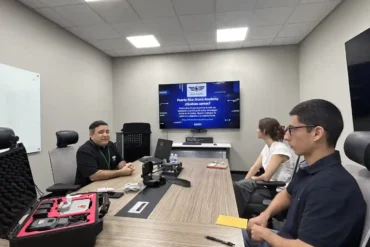
Air Camp has spent nearly two decades organizing STEM-focused camps, aerospace competitions, teacher training programs, and student workshops. These programs have served thousands of young learners from across the Midwest, often utilizing facilities provided by local institutions such as the University of Dayton.
The proposed complex represents a transformative step for the organization. Instead of relying on temporary or borrowed spaces, Air Camp will finally have a permanent headquarters dedicated entirely to aerospace education. The facility will also host additional organizations and tenants connected to STEM development, creating a collaborative ecosystem for innovation and learning.

A Unique Partnership With the U.S. Air Force
The agreement enabling the project reflects a creative collaboration between government and nonprofit partners. Air Camp has been granted a five-year lease on 16 acres of land at Wright-Patterson Air Force Base. Once construction begins, that agreement will transition into a 50-year lease at no cost, ensuring long-term stability for the facility and its educational mission.
In return, the Air Force gains something equally valuable: a steady stream of technically skilled students already familiar with aerospace technologies and defense-related career paths. By nurturing interest in fields like avionics, propulsion systems, and advanced materials science, the program effectively strengthens the future workforce supporting national defense innovation.
The concept aligns with broader military efforts to address growing demand for highly trained STEM professionals. As aerospace systems grow more complex—from hypersonic aircraft to autonomous drones—the need for skilled engineers and scientists continues to expand.
Funding the Vision and the Road to 2031
Despite the strong institutional support behind the project, the complex remains in its early planning stages. The most immediate challenge involves securing the multisource funding necessary to begin construction.
Air Camp and its partners are pursuing a mixed financing strategy that includes federal and state funding, local government support, philanthropic contributions, and private donations. This collaborative approach reflects the regional significance of the project, which promises to benefit educational institutions, aerospace companies, and government agencies alike.
If the funding effort proceeds as planned, the organization hopes to open the facility by 2031. When completed, the campus will sit directly beside one of the most visited aviation attractions in the world—the National Museum of the United States Air Force.
Where Aviation History Meets Tomorrow’s Innovation
The decision to build the STEM complex in Dayton carries a powerful historical resonance. The city is famously the hometown of Wilbur and Orville Wright, whose pioneering aircraft experiments launched the age of powered flight in the early 20th century. Their legacy still defines the region’s identity, influencing everything from research institutions to aerospace manufacturing.
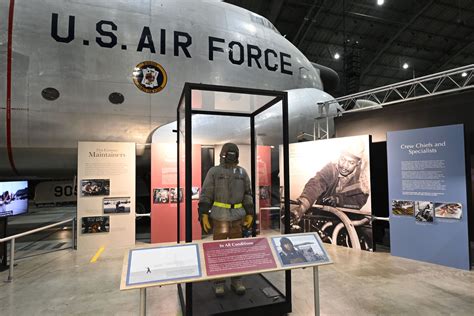
Placing the new campus next to the Air Force museum reinforces that connection between past achievement and future discovery. Visitors who arrive to explore historic aircraft—from early biplanes to stealth bombers—will also see a facility dedicated to the next generation of aerospace thinkers.
In a sense, the project forms a bridge across time. Just as the Wright brothers transformed imagination into engineering reality, the STEM Talent Development Complex seeks to inspire young minds to design the technologies that will shape the skies—and perhaps even space—throughout the coming decades.