The rapid evolution of aerial threats has forced militaries to rethink how they defend airspace at low and medium altitudes. From cheap quadcopters to coordinated drone swarms and low-flying helicopters, modern battlefields are increasingly contested from above. Against this backdrop, a new generation of high-speed interceptor drones is emerging as a critical layer in air defense architectures.
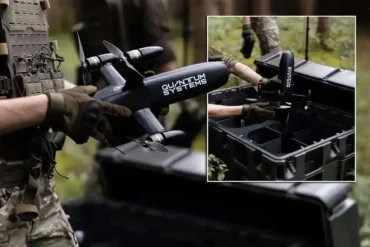
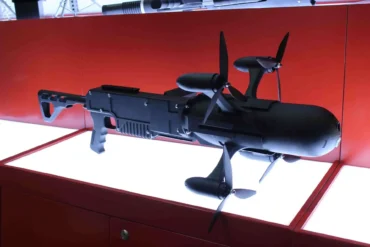
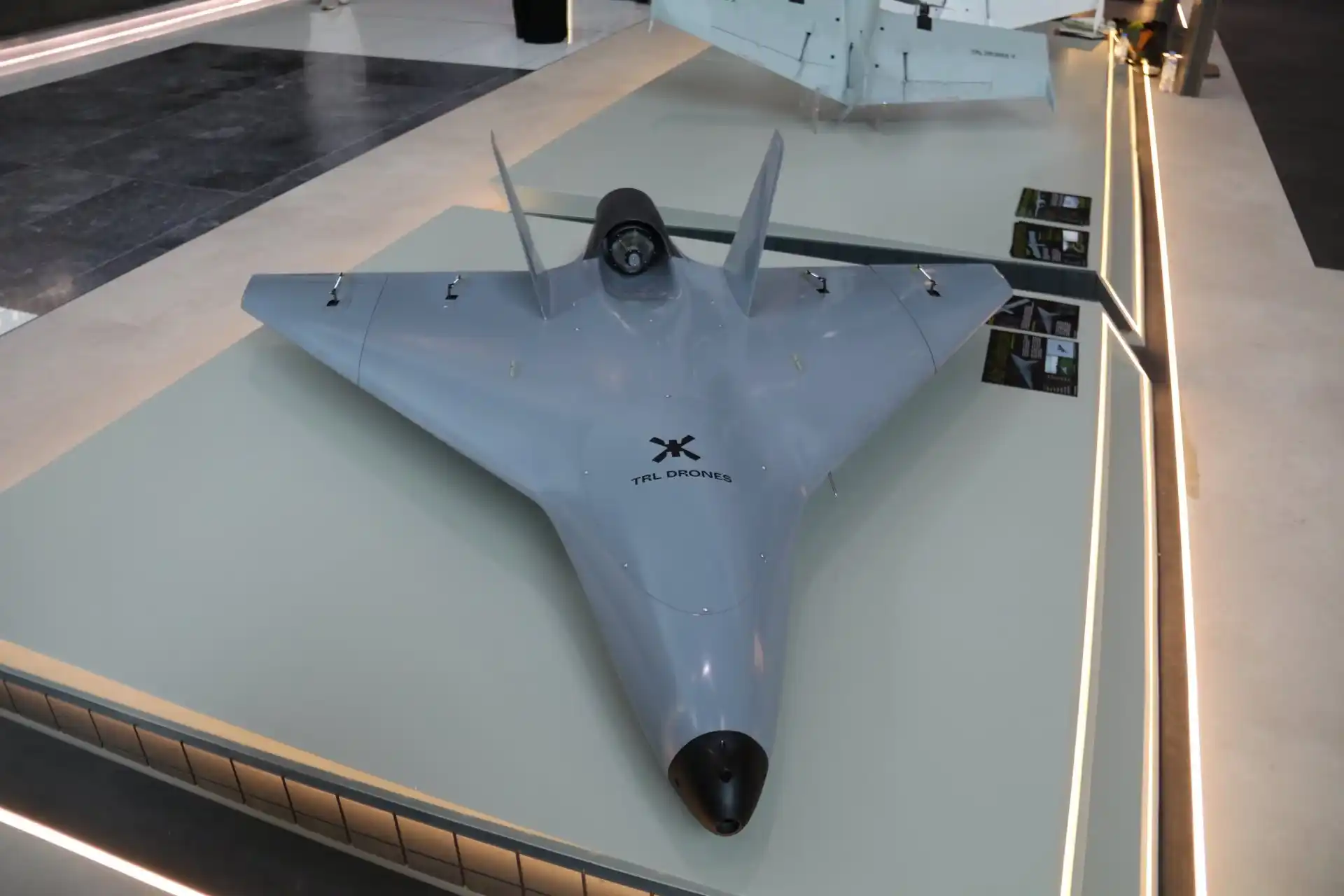
At UMEX 2026 in Abu Dhabi, Czech defense technology developer TRL Drones X presented a fixed-wing unmanned aerial vehicle designed specifically for interception rather than surveillance. The platform reflects a clear doctrinal shift: instead of merely detecting hostile aerial systems, armed forces now require fast, autonomous assets capable of actively engaging and neutralizing them before they reach protected zones.
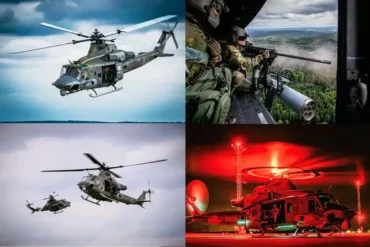
Unlike traditional reconnaissance UAVs, the Czech interceptor drone is built around speed, acceleration, and responsiveness. Its role is not to loiter passively but to launch rapidly, climb aggressively, and pursue intruding targets with precision. This design philosophy directly addresses the challenge posed by loitering munitions, kamikaze drones, and rotary-wing aircraft exploiting low-altitude flight paths to evade conventional radar coverage.
The unveiling also highlights the growing ambition of the Czech defense sector in advanced unmanned systems. By positioning the platform as a dedicated aerial interceptor, TRL Drones X signals its intent to compete in a niche increasingly valued by militaries seeking cost-effective, scalable counter-UAS solutions that complement missiles and ground-based electronic warfare.
High-Speed Design Built for Aerial Interception
At the core of the system is a fixed-wing airframe optimized for high-velocity flight and stability during aggressive maneuvers. With a wingspan of 1,740 millimeters, the drone balances compact dimensions with aerodynamic efficiency. Its structure allows it to reach cruising speeds of around 450 kilometers per hour, while maximum velocity exceeds 500 kilometers per hour, placing it well above the performance envelope of most hostile UAVs.
The interceptor’s payload capacity of up to 10 kilograms enables flexible mission configurations. Depending on operational requirements, this space can accommodate kinetic interceptors, non-kinetic countermeasures, or advanced sensor packages. This modularity allows the platform to be tailored for specific threat environments without redesigning the airframe.
Endurance is rated at approximately 45 minutes, sufficient for rapid-response interception missions within a tactical radius. With an effective range beyond 200 kilometers and a service ceiling of 4,500 meters, the drone can dominate the altitude band commonly exploited by small drones and low-flying helicopters.
AI-Guided Autonomy and Rapid Launch Capability
What truly distinguishes the Czech interceptor is its integration of AI-driven guidance and targeting systems. The onboard architecture fuses sensor data in real time, allowing the drone to detect, classify, and track aerial threats even in congested or electronically degraded environments. This autonomy reduces reliance on continuous human control and shortens the sensor-to-shooter loop during fast-moving engagements.
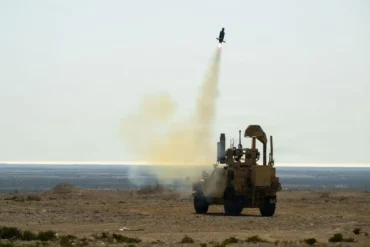
The system’s rapid catapult launch capability further enhances its operational value. Demonstrated at UMEX 2026, this feature allows deployment from forward positions without prepared runways, enabling defenders to respond within minutes to emerging threats. Once airborne, the drone can adapt dynamically, re-tasking mid-flight as threat priorities change.
Strategic Role in Layered Air Defense Systems
As drone warfare becomes more autonomous and more affordable, traditional air defense assets face saturation risks. High-speed interceptor UAVs offer a lower-cost, reusable alternative capable of absorbing threats that would otherwise require expensive missile systems. Integrated into a layered defense network, they can protect critical infrastructure, border zones, and deployed forces.
Defense analysts observing UMEX 2026 noted strong interest from Middle Eastern and Eastern European militaries seeking compact solutions to counter irregular aerial threats. Although no procurement contracts were announced, the platform’s reception suggests a growing market for interceptor drones operating at the tactical edge.
TRL Drones X’s interceptor represents more than a single product launch. It embodies a broader shift toward autonomous, AI-enabled air defense, where speed, adaptability, and modular design define survivability. In an era where the front line increasingly extends into the air, such systems may become indispensable guardians of contested skies.