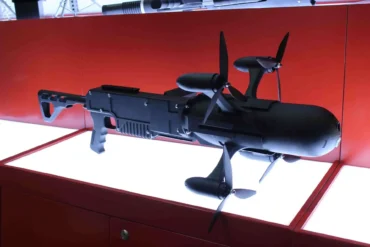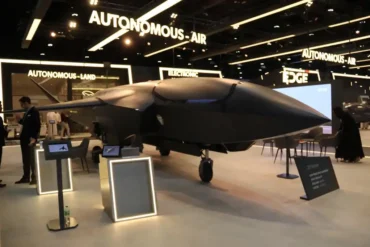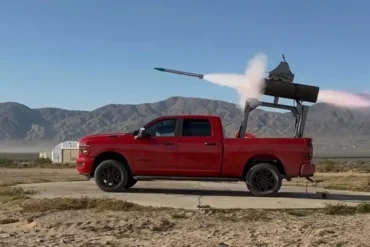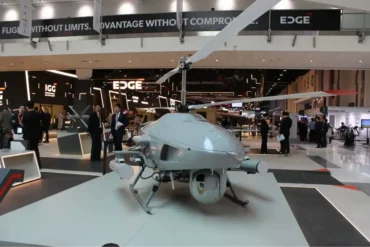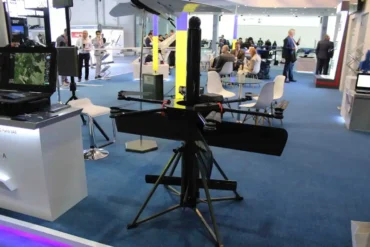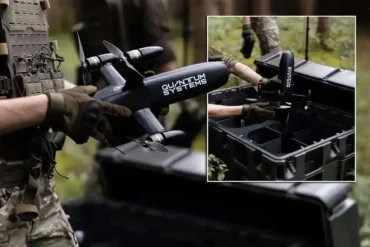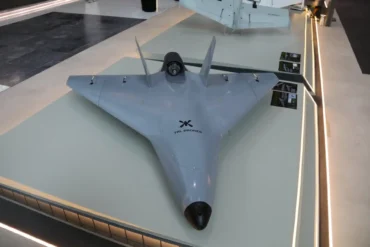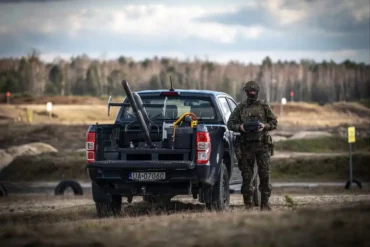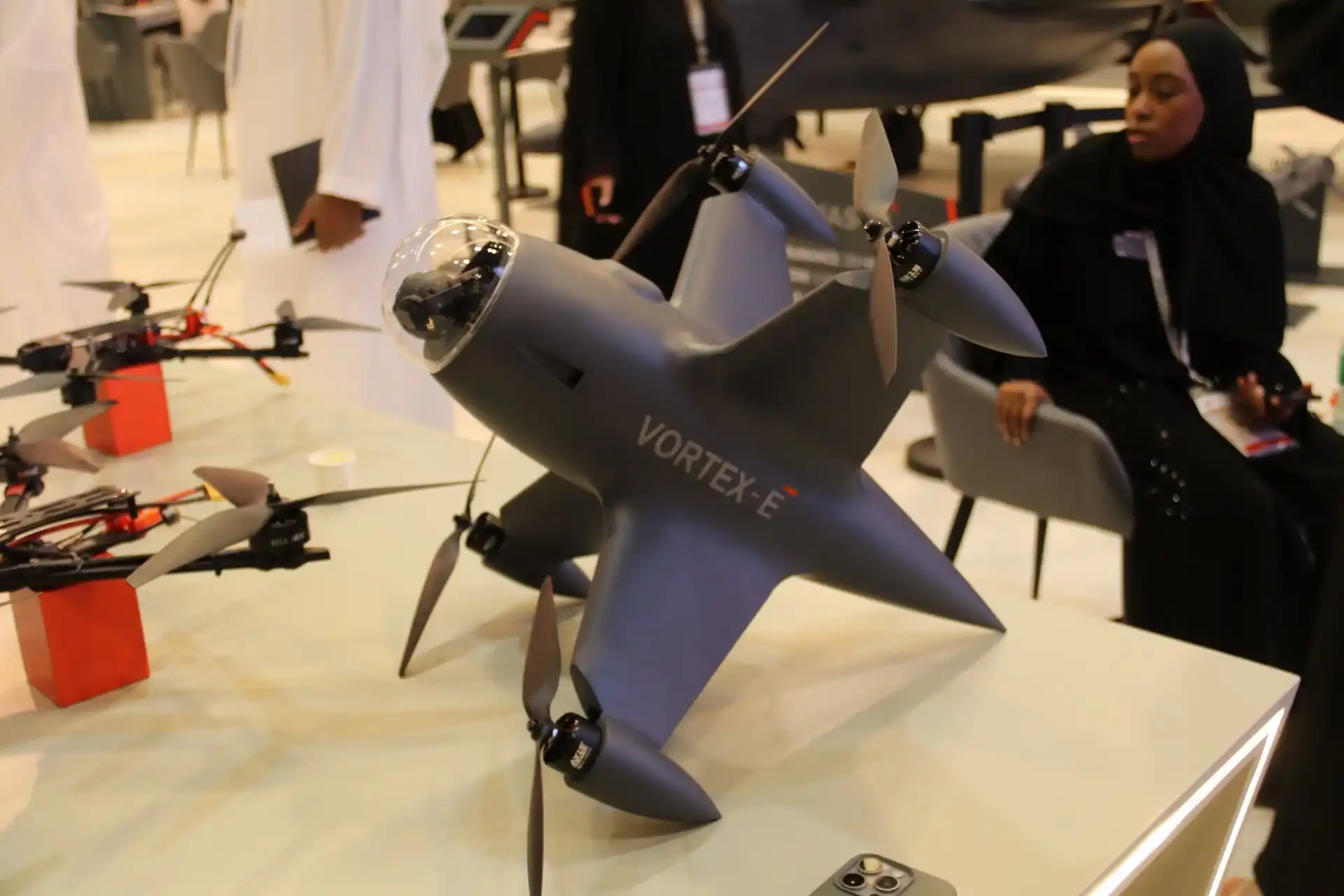
The unveiling of VORTEX-E by UAE-based EDGE Group at UMEX 2026 marks a decisive step in the evolution of counter-drone warfare, reflecting how air defense priorities are shifting toward autonomous, precision-driven solutions. As hostile unmanned aerial vehicles increasingly threaten military bases, urban centers, and critical infrastructure, traditional electronic warfare and missile-based systems are proving either insufficient or operationally risky. EDGE’s latest system directly addresses these gaps with a kinetic interceptor designed to destroy targets through controlled impact rather than explosive force.
The VORTEX-E presentation in Abu Dhabi positioned the system as a response to the changing character of aerial threats, where low-cost drones can achieve disproportionate strategic effects. EDGE officials emphasized that the interceptor was conceived from the outset as an AI-native platform, capable of operating independently in complex environments while remaining fully compatible with human oversight. This duality reflects a broader doctrine shift toward manned-unmanned teaming in air defense architectures.
Unlike many counter-UAS solutions that prioritize jamming or electronic disruption, VORTEX-E focuses on physical neutralization, ensuring that once a threat is identified, it is conclusively removed from the airspace. This approach is particularly relevant in scenarios where drones operate autonomously, use hardened navigation systems, or function in GPS-denied conditions where soft-kill measures may fail.
Autonomous Design Built for Modern Threat Environments
The interceptor’s design philosophy centers on speed, precision, and autonomy, allowing it to respond within seconds to emerging threats. VORTEX-E can operate in a fully autonomous mode or under direct operator control, giving commanders flexibility depending on rules of engagement and operational sensitivity. Its aerodynamic profile and propulsion system enable speeds of up to 350 km/h, allowing it to overtake agile UAVs before they reach protected zones.
With an engagement range of up to 24 kilometers, the system is optimized for layered defense concepts, where early interception reduces the need for inner-ring protection. EDGE has highlighted that this range makes VORTEX-E suitable for defending air bases, energy facilities, and high-value civilian infrastructure, especially in regions where drone incursions are frequent and unpredictable.
AI-Enabled Target Recognition and Tracking
At the heart of VORTEX-E lies an advanced artificial intelligence engine that fuses data from onboard radar and electro-optical sensors. A front-mounted AI-enabled tracking camera allows the interceptor to identify, classify, and lock onto targets with minimal latency. This capability is critical in cluttered airspaces, where birds, debris, and friendly drones can complicate engagement decisions.
The AI system continuously updates its flight path during pursuit, enabling adaptive maneuvering against evasive or fast-changing targets. EDGE has indicated that the interceptor’s algorithms are trained to function effectively even when communication links are degraded, ensuring mission continuity under electronic attack or in contested electromagnetic environments.
Kinetic Interception Without Explosive Risk
One of the most distinctive aspects of VORTEX-E is its non-explosive kinetic kill mechanism. Carrying a compact payload in the 1 to 2 kilogram range, the interceptor relies on direct impact energy to disable or destroy hostile drones. This design significantly reduces collateral damage, a factor that has become increasingly important as drone threats migrate toward densely populated areas.
By avoiding fragmentation or blast effects, VORTEX-E can be deployed in urban environments, near airports, or around sensitive civilian facilities without the secondary risks associated with traditional air defense munitions. This makes it particularly attractive for homeland security missions and critical infrastructure protection.
Integration and Swarm Potential
EDGE has engineered VORTEX-E with modularity and network integration in mind. The system can operate as a standalone interceptor or as part of a coordinated defensive network, sharing sensor data with other air defense assets. This interoperability allows commanders to build layered counter-drone systems that combine detection, tracking, and interception across multiple domains.
The company has also confirmed that VORTEX-E is capable of swarm-based deployment, enabling multiple interceptors to coordinate engagements against complex or saturated attacks. This capability is increasingly relevant as adversaries experiment with multi-drone tactics designed to overwhelm conventional defenses.
Strategic Significance for EDGE and the UAE
The introduction of VORTEX-E reinforces EDGE Group’s ambition to position the United Arab Emirates as a global hub for advanced defense technologies. By developing a homegrown, autonomous counter-drone solution, EDGE reduces reliance on foreign systems while offering an export-ready platform aligned with global security demands.
As drone proliferation accelerates across conflict zones and civilian airspaces alike, demand for precise, scalable counter-UAS solutions continues to grow. With VORTEX-E, EDGE is signaling that the future of air defense lies not in larger warheads or broader jamming, but in intelligent speed, controlled force, and autonomous decision-making.
Path Toward Operational Deployment
Although no live intercept demonstration accompanied the UMEX 2026 unveiling, EDGE officials have indicated that advanced field trials are already underway. Operational deployment is expected within the next 18 months, positioning VORTEX-E as a near-term solution rather than a conceptual prototype.
As nations reassess their defenses against increasingly sophisticated unmanned threats, VORTEX-E stands as a clear example of how autonomous kinetic interceptors are reshaping counter-drone doctrine. Its combination of AI-driven autonomy, high-speed performance, and low-collateral engagement reflects a new benchmark in modern air defense capability.