The economics of modern warfare have taken a strange turn. A $20,000 drone can provoke the launch of a $3.7 million interceptor, creating a lopsided exchange that would make any accountant wince. Into this imbalance steps iRocket’s iRX-100, a compact, high-speed interceptor designed to flip the script—offering a solution that could be up to 100 times cheaper than a Patriot missile while still delivering credible counter-drone capability.
This is not just another missile announcement. It is a signal that air defense is undergoing a quiet but profound transformation, driven less by raw power and more by cost-efficiency, scalability, and adaptability. In a world where drones are cheap, numerous, and increasingly lethal, the question is no longer just “Can you shoot them down?” but “Can you afford to keep shooting them down?”
The iRX-100 Flight Test: A Compact Missile With Serious Intent
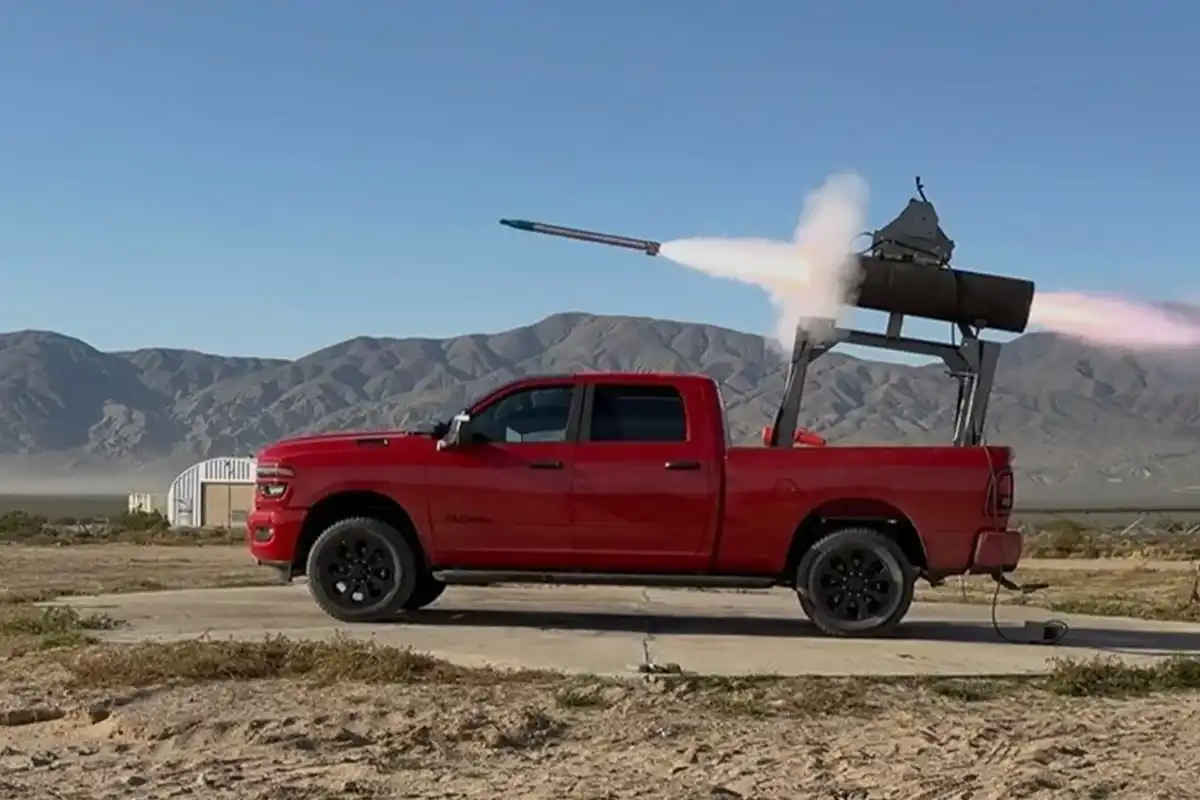
On March 11, 2026, iRocket conducted a controlled flight demonstration of the iRX-100 interceptor, launching it from an Arnold Defense 70mm rocket system. The test validated something deceptively simple yet strategically critical: compatibility with existing launcher infrastructure.
The missile reached Mach 2 speeds—twice the speed of sound—and covered approximately six kilometers, confirming that its propulsion and flight control systems perform reliably within operational parameters. This wasn’t just a speed test; it was proof that the missile can operate seamlessly within a widely deployed launcher ecosystem already used by U.S. and allied forces.
That compatibility is where the real magic lies. Military systems are notoriously expensive to replace, but the iRX-100 sidesteps that problem entirely. It integrates into existing Hydra 70 launcher platforms without requiring structural or electronic modifications. In practical terms, that means faster deployment, lower integration costs, and immediate operational relevance.
Why Cost Matters More Than Ever in Air Defense
Modern conflicts have revealed an uncomfortable truth: cheap drones can drain expensive defenses at alarming rates. Iranian-designed Shahed drones, for example, typically cost between $20,000 and $50,000, yet they often require interceptors costing hundreds of thousands—or even millions—of dollars to neutralize.
Consider the numbers:
- Patriot PAC-3 missile: approximately $3.7 million per unit
- SM-2 naval interceptor: over $2 million
- THAAD interceptor: roughly $12 million
- AIM-120 AMRAAM: about $1 million
- AIM-9X Sidewinder: around $450,000
Against this backdrop, the iRX-100 aims to land in the tens of thousands to low hundreds of thousands per unit, aligning far more closely with the cost of the threats it is designed to defeat.
This shift is not merely financial—it is strategic. When a defense system achieves a balanced cost-exchange ratio, it becomes sustainable under prolonged conflict conditions. Without that balance, even the most advanced systems risk being overwhelmed—not by capability, but by economics.
Hydra 70 Legacy: The Foundation Behind the Innovation
The iRX-100’s design philosophy leans heavily on one of the most versatile rocket systems ever developed: the Hydra 70. This 2.75-inch rocket has been a staple of U.S. military operations for decades, deployed across a wide range of platforms including the AH-64 Apache, UH-60 Black Hawk, A-10 Thunderbolt II, F-16 Fighting Falcon, and F/A-18 Hornet.
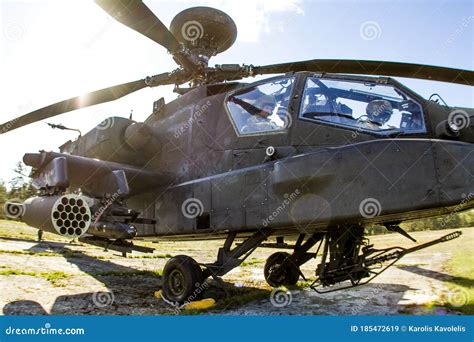
The brilliance of leveraging the Hydra 70 ecosystem lies in its existing logistics network. Launchers such as the M260 (seven-tube) and M261 (nineteen-tube) systems are already integrated across multiple branches of the military, while naval and air platforms utilize variants like the LAU-61, LAU-68, and LAU-131.
By designing the iRX-100 to operate within this established framework, iRocket avoids reinventing the wheel. Instead, it upgrades the wheel—transforming a legacy rocket system into a modern counter-drone interceptor platform.
From APKWS to iRX-100: Evolution of Precision and Affordability
The path to the iRX-100 did not emerge in isolation. It follows a lineage of cost-effective weapon systems derived from Hydra 70 technology, most notably the Advanced Precision Kill Weapon System (APKWS). This laser-guided rocket has already demonstrated its effectiveness in intercepting drones at a cost of roughly $20,000 to $35,000 per round.
Operational deployments in the Middle East have shown that APKWS can serve as a highly efficient counter-UAS (Unmanned Aerial System) solution, bridging the gap between unguided rockets and high-end missile systems.
The iRX-100 builds on this concept but takes it further. Instead of adapting an existing rocket, it introduces a purpose-built interceptor optimized for speed, targeting, and integration. The result is a system that retains the affordability of Hydra-based solutions while enhancing performance characteristics required for modern aerial threats.
Industrial Scale: The Hidden Engine Behind Low-Cost Missiles
A missile is only as useful as the number you can produce. This is where iRocket’s broader expertise becomes relevant. Founded in 2018, the company has been deeply involved in rocket propulsion, reusable launch systems, and automated manufacturing.
Their flagship space initiative, the Shockwave reusable launch vehicle, focuses on liquid oxygen and methane propulsion, rapid turnaround, and scalable production. While this might seem distant from missile development, the overlap is significant. The same principles—efficient propulsion design, automated fabrication, and high-rate output—translate directly into defense manufacturing.
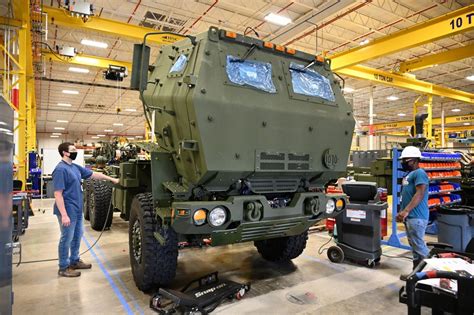
iRocket is investing in robotics-driven production systems that emphasize repeatability and traceability. These systems allow for rapid scaling, ensuring that production can meet surging demand during periods of conflict. In an era where munitions stockpiles can be depleted بسرعة, the ability to replenish inventory quickly is just as important as the weapon’s performance.
The SHIELD Program and Strategic Positioning
The iRX-100 program is not operating in a vacuum. iRocket is part of the Missile Defense Agency’s SHIELD initiative—a ten-year, potentially $151 billion program focused on scalable, layered homeland defense.
This framework provides a pathway for emerging technologies to be integrated into national defense architectures. For iRocket, participation in SHIELD offers more than funding opportunities; it provides strategic validation and access to a network of defense stakeholders.
The layered defense concept itself is worth pausing on. Instead of relying solely on high-end interceptors, modern systems are evolving toward multi-tiered architectures, where different threats are handled by appropriately scaled responses. The iRX-100 fits neatly into the lower-cost, high-volume interception layer, complementing systems like Patriot rather than replacing them.
Operational Implications: Rethinking Air Defense Doctrine
The introduction of the iRX-100 invites a broader reconsideration of how air defense systems are deployed. Traditional doctrine prioritizes maximum capability per interceptor, but this approach struggles against swarm tactics.
Drone swarms exploit three variables simultaneously: low cost, high numbers, and distributed attack vectors. Countering such threats requires a shift toward distributed, affordable interception, where quantity becomes a form of quality.
Imagine a scenario where a base is targeted by dozens of incoming drones. Using high-end interceptors for each target would rapidly deplete inventory. In contrast, a system like the iRX-100 enables defenders to engage multiple threats without incurring prohibitive costs.
This is not just about saving money—it is about maintaining operational endurance.
The Physics of Speed and Interception
Speed remains a critical factor in interception. At Mach 2, the iRX-100 operates within a performance envelope sufficient to engage most small and medium-sized drones, which typically travel at much lower speeds.
Interception is fundamentally a problem of closing distance and predicting trajectory. A faster interceptor reduces the time available for the target to maneuver, increasing the probability of a successful engagement. Combined with guidance systems (details of which remain limited in public disclosures), the iRX-100 is designed to deliver rapid-response interception within short to medium ranges.
This performance profile aligns with its intended role: point defense and short-range air defense, rather than long-range missile interception.
A Broader Trend: The Democratization of Airpower
The rise of systems like the iRX-100 reflects a larger, almost philosophical shift in warfare. Airpower, once the domain of advanced nations with billion-dollar budgets, is being democratized by inexpensive drones.
In response, defense technology is undergoing its own democratization—moving toward modular, scalable, and cost-effective solutions. The iRX-100 is a manifestation of this trend, representing a move away from monolithic systems toward adaptive ecosystems.
This dynamic creates an ongoing cycle: as offensive systems become cheaper and more numerous, defensive systems must become more economically sustainable and operationally flexible.
Conclusion: A Small Missile With Outsized Strategic Impact
The iRX-100 may not carry the prestige of a Patriot missile or the sheer power of a THAAD interceptor, but it addresses a problem those systems were never designed to solve. By aligning cost with threat level, it introduces a form of economic symmetry that has been missing from modern air defense.
Its compatibility with existing launchers, reliance on proven rocket architectures, and integration into scalable manufacturing processes position it as more than a niche solution. It is a pragmatic response to a changing battlefield, where the ability to sustain defense operations matters as much as the ability to win individual engagements.
In the grand chessboard of military innovation, the iRX-100 is not a queen or a rook. It is something subtler—a well-placed pawn that changes the structure of the game.