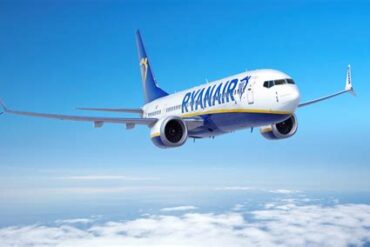
Ryanair’s refusal to adopt Starlink has landed like a jolt in an aviation industry racing toward always-on connectivity. As carriers tout the world’s fastest satellite internet as a passenger essential, Europe’s largest airline by traffic is taking the opposite stance—arguing that speed alone doesn’t justify cost, weight, or fuel burn on short hops. The decision, confirmed by chief executive Michael O’Leary in January 2026, crystallizes a deeper truth: technological excellence does not automatically translate into commercial sense.
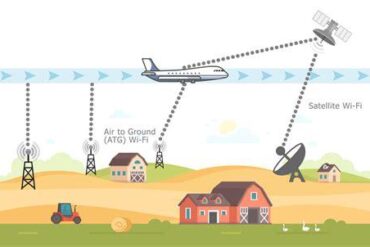
Starlink’s aviation pitch is compelling. Low-Earth orbit satellites promise high throughput, low latency, and the reliability that legacy systems struggled to deliver. Airlines from Lufthansa to Scandinavian Airlines are rolling out fleetwide installations, framing connectivity as a modern baseline rather than a premium perk. Against that momentum, Ryanair’s “no” stands out not as technophobia, but as a rigorous application of its ultra-low-cost playbook.
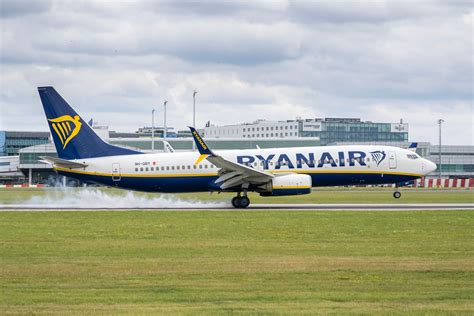
The airline’s argument is blunt. Ryanair flies predominantly one-hour sectors. Its customers choose the carrier for price and punctuality, not streaming at 35,000 feet. In that context, even marginal cost increases matter. O’Leary points to the physical realities of satellite hardware—antennas add weight and aerodynamic drag—and pegs the fuel penalty at roughly 2%. Spread across a single-type fleet of hundreds of Boeing 737s and more than 180 million annual passengers, that penalty compounds fast.
Why Short-Haul Economics Break the Starlink Case
Ryanair’s network is engineered for speed on the ground, not bandwidth in the air. Fast turnarounds, high utilization, and simplified maintenance underpin its profitability. Installing satellite equipment introduces complexity: downtime for retrofits, long-term maintenance contracts, and operational variables that don’t help the core mission of selling the lowest fare.
On a one-hour flight, usage time is minimal. The airline’s leadership doubts passengers would pay enough to offset costs, especially when personal mobile plans resume upon landing. Free Wi-Fi—now common on long-haul—would be a direct subsidy Ryanair refuses to provide. In a business where cents per seat mile decide winners, the math fails quickly.
Fuel Burn, Weight, and the Ruthless Math of Low Fares
Starlink’s low-profile antenna is widely praised for reducing drag compared with older systems. Yet “reduced” is not “zero.” For Ryanair, a 2% fuel increase is not a rounding error; it’s a structural disadvantage in a market defined by thin margins and volatile energy prices. Fuel already represents one of the airline’s largest cost lines. Adding hardware that doesn’t demonstrably sell tickets undermines the model.
Sustainability pressures amplify the issue. Airlines face tightening emissions targets and public scrutiny over environmental impact. Any technology that increases burn—even slightly—faces a higher bar. Ryanair has invested heavily in fleet efficiency and operational discipline; accepting extra drag for a feature customers may ignore would be a step backward by its own metrics.
A Growing Divide in Airline Connectivity Strategy
Ryanair’s stance exposes a widening split in the market. Full-service and long-haul carriers view connectivity as table stakes—a tool for productivity, entertainment, and loyalty. On multi-hour flights, passengers stream, work, and message continuously; the value proposition is clear. Connectivity also supports ancillary revenue, premium branding, and competitive differentiation.
Low-cost carriers see a different reality. Historically, many budget airlines have tested onboard Wi-Fi only to retreat after lukewarm uptake. Short sectors compress the window of use, while rising fuel costs and stricter sustainability goals raise the cost of added weight. Ryanair’s decision aligns with this pattern, reinforcing that adoption is not universal—it’s business-model specific.
The Technology Isn’t the Problem—Fit Is
Starlink remains a technological leap. Its performance outpaces legacy geostationary systems, and airlines adopting it report strong early results. But Ryanair’s rejection underscores a crucial nuance: best-in-class tech can still be the wrong tool. The airline’s customers prioritize punctual departures, dense networks, and the lowest possible fare. Anything that distracts from those outcomes faces resistance.
This calculus explains why Ryanair has historically shunned amenities it believes don’t sell tickets. The brand is built on transparency—no frills, no illusions. In that framework, connectivity is not a differentiator; it’s a distraction with a price tag.
What Ryanair’s “No” Means for Starlink’s Future
Starlink’s growth in aviation is unlikely to slow. Demand remains strongest among premium-focused and long-haul operators where connectivity supports streaming, productivity, and satisfaction. Yet Ryanair’s refusal signals that adoption will plateau along business-model lines. Ultra-low-cost carriers will remain selective, while network airlines push ahead.
The takeaway is not that the world’s fastest satellite internet falls short. It’s that speed alone doesn’t guarantee relevance. For Ryanair, the winning formula is unchanged: relentless efficiency, rapid turnarounds, and fares that undercut rivals. Until onboard Wi-Fi can deliver measurable revenue without weight, drag, or complexity, the airline will stay offline—and unapologetic—while the rest of the industry logs on.