JetBlue Airways is repositioning its boarding process as a cleaner, more intuitive experience, but among its most loyal passengers, the reaction has been anything but smooth. Beginning April 29, the airline will replace its familiar branded boarding groups with a simplified numbered system. While this shift promises operational clarity and potentially faster departures, frequent fliers are already questioning whether the move subtly diminishes the value of elite status and premium travel benefits.
At first glance, the redesign appears straightforward. JetBlue will continue granting early boarding access to its most valuable customers—Mint passengers, Mosaic elites, and EvenMore fare holders—but instead of distinct branded categories, these travelers will now be grouped numerically. The airline frames this as a customer-friendly change, eliminating confusing terminology and streamlining the gate experience. Yet for seasoned travelers who have invested heavily in loyalty, the simplicity feels suspiciously like consolidation.
A Compressed Hierarchy Raises Concerns
The most pointed criticism centers on how JetBlue has compressed its boarding hierarchy. Under the new structure, Mosaic 3 and 4 members—the airline’s higher-tier elites—will board in Group 1 alongside Mint passengers. Meanwhile, Mosaic 1 and 2 members are placed in Group 2 with EvenMore customers. Group 3 expands even further, incorporating credit card holders, select fare classes, and other passengers who have purchased priority access.
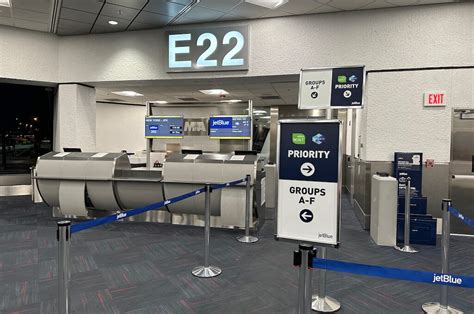
This blending of categories has triggered unease among frequent fliers. Elite status, traditionally a marker of distinction earned through repeated travel, now risks feeling diluted when grouped alongside passengers who simply paid for early boarding perks. The psychological shift is subtle but significant: status no longer guarantees exclusivity, only relative positioning within a broader, more crowded pool.
The practical implications are equally concerning. Larger boarding groups often translate to longer lines, increased congestion at the gate, and intensified competition for overhead bin space. The phenomenon of “gate lice”—passengers clustering prematurely around the boarding area—may become more pronounced as distinctions blur and travelers jockey for position within broader categories.
From Operational Fix to Revenue Strategy
JetBlue’s decision is not happening in isolation. Boarding has evolved into a critical intersection of customer experience and ancillary revenue generation, and airlines are increasingly treating it as such. A numbered system is undeniably easier for occasional travelers to understand, particularly those unfamiliar with JetBlue’s branded fare ecosystem. Names like “Mosaic” or “EvenMore” carry little meaning for infrequent flyers, whereas numerical sequencing is universally intuitive.
However, beneath the surface, the shift reflects a deeper strategic pivot. By reorganizing boarding into flexible numerical tiers, JetBlue gains the ability to package and sell priority access more effectively. Credit card partnerships, bundled fares, and paid upgrades can all be slotted into earlier groups without the constraints of rigid branding.
This transforms boarding from a logistical necessity into a merchandising tool. Airlines can preserve the illusion of exclusivity for top-tier customers while quietly expanding access to those willing to pay. The risk lies in perception: what looks like simplification to one traveler may feel like devaluation to another.
Industry Trends Point in the Same Direction
JetBlue is far from alone in this approach. Across the industry, major carriers are converging on similar models that balance clarity with monetization. Delta Air Lines, for instance, reverted to a numbered boarding system in 2024, abandoning branded zones in favor of a cleaner structure that still prioritizes premium cabins and elite members. American Airlines employs a highly segmented nine-group system, while United Airlines integrates priority boarding into both loyalty programs and paid add-ons.
These systems share a common philosophy: make boarding appear simple while embedding layers of monetization beneath the surface. Credit cards, elite status, premium seating, and ancillary purchases all influence a passenger’s place in line. The result is a hybrid model where operational efficiency and revenue optimization coexist—sometimes uneasily.
Loyalty Under Pressure
For JetBlue, the challenge is maintaining trust among its most loyal customers while adapting to competitive pressures. Frequent fliers are not merely purchasing transportation; they are investing in a relationship with the airline. When benefits become less distinct, that relationship can weaken.
The concern is not just about boarding order—it’s about what that order represents. If elite status feels interchangeable with paid perks, its perceived value diminishes. Over time, this could influence traveler behavior, pushing high-value customers to reconsider where they concentrate their loyalty.
A Simpler System, or a Subtle Shift?
JetBlue’s new boarding process is undeniably more straightforward on paper. Numerical groups reduce confusion and align the airline with broader industry practices. Yet simplicity often comes with trade-offs. In this case, the cost may be a gradual erosion of the exclusivity that once defined elite status.
Whether the change ultimately improves the passenger experience will depend on execution. If boarding becomes faster and less chaotic, many travelers may welcome the update. But if congestion increases and distinctions blur further, the criticism from frequent fliers will only intensify.
For now, the rollout represents a delicate balancing act—streamlining operations while preserving the perception of value. And in an industry where perception can be just as important as reality, that balance is anything but easy to maintain.