The battlefield of the 21st century is transforming at a staggering pace, and First-Person View (FPV) drones are now central to that change. Once the realm of hobbyists and DIY enthusiasts, these small, agile, and increasingly lethal drones are rewriting the doctrines of modern warfare. Where once tanks, infantry, and artillery dominated the strategic playbook, a new contender has emerged — cheap, explosive-laden quadcopters capable of destroying million-dollar hardware for a fraction of the cost.
FPV drones have not just evolved as surveillance tools. They have crossed the line into becoming frontline combatants. With the rise of affordable digital transmission systems, real-time camera feeds, and improvised explosive payloads, FPV drones are now capable of executing surgical strikes against armored vehicles, logistical convoys, and even personnel.
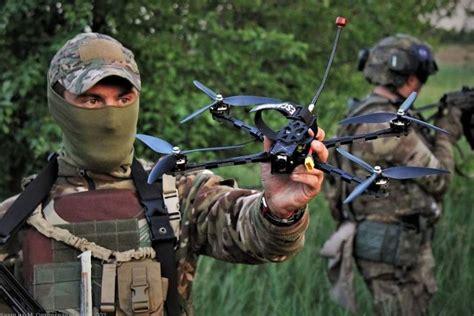
The war in Ukraine provided the world with undeniable proof of this paradigm shift. Ukrainian forces have used consumer-grade FPV drones rigged with anti-tank grenades to devastating effect. A drone costing $300–$500 has, in multiple instances, taken out tanks worth over $2 million.
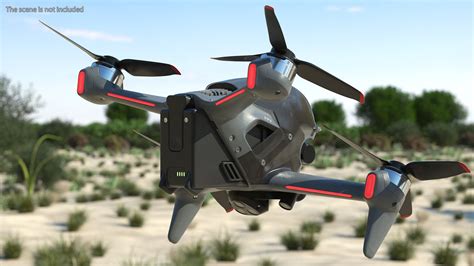
The Cost Equation: $100 Million for a Drone Army
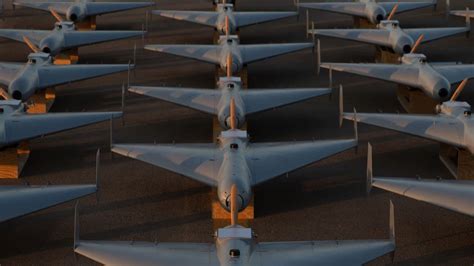
One of the most compelling hypotheticals put forward by military analysts and drone enthusiasts is the concept of building a drone army — a swarm of 100,000 armed FPV drones for under $100 million. To put that into context, this sum is less than the cost of a single advanced fighter jet or a small squadron of modern tanks. And yet, this theoretical drone force could potentially neutralize an entire mechanized division.
The cost-efficiency is stark:
- FPV drone unit: $200 to $1,000, depending on range, payload, and comms.
- Anti-armor payload (e.g., PG-29V): ~$300–$500.
- Relay/booster systems: ~$2,000 per 20km range extension node.
- Total force projection: < $100M for 100,000 units.
When compared to the estimated $150 billion value of the Russian military’s conventional forces, including thousands of tanks, infantry fighting vehicles (IFVs), artillery systems, and support logistics, the asymmetry becomes a matter of calculus, not fantasy.
Drones vs. Armor: The Beginning of the End?
For decades, military technology has followed a predictable pattern — every new offense begets a counter-defense. From the trenches of World War I to the IED-scarred streets of Iraq, armor has always had its nemesis. But never has the threat been so small, so cheap, and so omnipresent.
Modern tanks like the T-90 or the Leopard 2 are equipped with reactive armor and active protection systems (APS) such as Russia’s Arena or Israel’s Trophy. These defenses are designed to intercept traditional anti-tank missiles or RPGs. However, they are often overwhelmed by drone swarm attacks that come from above, from blind spots, or from multiple directions at once.
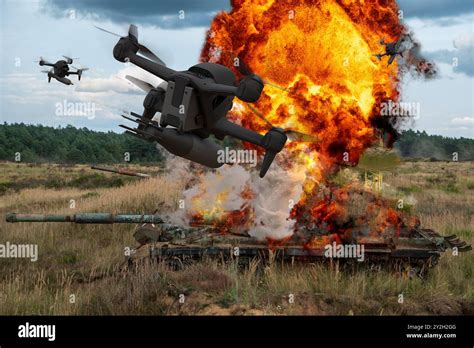
Moreover, FPV drones are not limited to direct confrontation. They specialize in asymmetric warfare. They exploit vulnerabilities: hatches left open, engines exposed, ammunition dumps poorly guarded. A drone does not care about troop morale or environmental stress. It simply executes a command.
Ukraine’s Drone Command: A Turning Point
In early 2024, Ukrainian President Volodymyr Zelensky announced the formation of a dedicated drone branch within the military. This was not symbolic — it was a direct response to how transformative FPV drones had become on the battlefield.
The creation of this branch signals a doctrinal shift in how national armies will operate in the future. Just as the Air Force was once a controversial offshoot of ground command, we may now be witnessing the birth of Drone Forces as independent entities with their own procurement, training, and strategic planning.

The Hard Reality: Supply Chains and Logistics
Despite their low cost and effectiveness, building a drone army is not as simple as placing a bulk order on a wholesale website. The challenges are significant:
- Sourcing: The global supply chain for FPV components — flight controllers, HD video transmitters, ESCs, motors — is stretched thin by both hobbyists and militaries.
- Manufacturing bottlenecks: Components are often manufactured in small-scale facilities, many of which are in East Asia, vulnerable to geopolitical shifts.
- Pilot training: Unlike automated drones, FPVs often require skilled human pilots. Scaling this training across thousands is no small feat.
- Electronic warfare (EW): Cheap drones are susceptible to jamming, GPS spoofing, and other forms of EW countermeasures.
The Counter-Evolution: Jammers, EW, and Hard-Kill Systems
The moment drones proved effective, defense contractors and military labs began working on countermeasures. Electronic warfare systems that jam control signals or confuse GPS have already appeared on the battlefield.
Hard-kill systems like Iron Fist or Trophy are becoming more agile, able to intercept threats coming at odd trajectories. In parallel, we see the rise of soft-kill solutions, such as frequency jamming, command-and-control disruption, and electromagnetic pulses (EMPs).
The downside? Many of these EW systems are non-discriminatory — they interfere with both enemy and friendly drones. This creates a new set of strategic dilemmas.
Autonomy and Swarm Intelligence
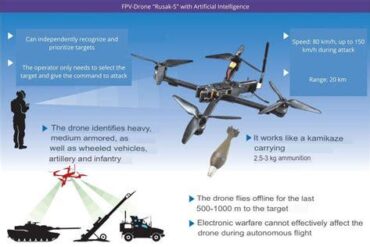
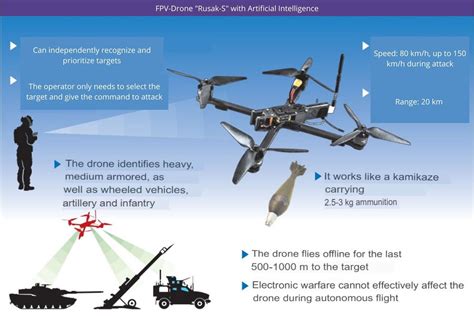
One way to counteract jamming is through autonomy. Drone swarms that can operate without centralized control, using preloaded flight paths and object recognition AI, are already in development. These swarms act collectively, sharing information and adapting mid-flight to changing battlefield conditions.
China, the U.S., and Israel are pouring resources into autonomous drone swarm programs. These drones do not need GPS. They do not need real-time control. They are told what to do, and they go.
Imagine a truck-mounted rocket system firing a canister of 50 FPV drones, each preprogrammed to loiter over a region, identify a target with onboard AI, and strike simultaneously from all sides. This isn’t fiction. It is the future of precision saturation warfare.
Doctrine in Flux: What Comes Next?
Traditional military doctrine is being rewritten. Tank formations are no longer safe without embedded drone defense teams. Infantry units may carry anti-drone rifles or portable EW systems. Forward operating bases are being redesigned with drone netting and signal deflection zones.
We are in the midst of an arms race between low-cost aerial offense and high-cost defensive adaptation. The side that can maintain agility in this race — in terms of innovation, manufacturing, and deployment — will dominate the next generation of warfare.
Conclusion: The Age of Drone Militarism
FPV drones are not just a new tool — they represent a shift in the economics of destruction. Their rise has unbalanced the scales of military power, allowing smaller forces to challenge larger, better-funded adversaries through ingenuity and adaptation.
The idea of a 100,000-strong drone army is not just a thought experiment. It is a warning and a blueprint. As the world watches Ukraine become the proving ground for this new doctrine, the global military-industrial complex is quietly pivoting.
The FPV drone era is here. It is not temporary. It is not niche. It is revolutionary.