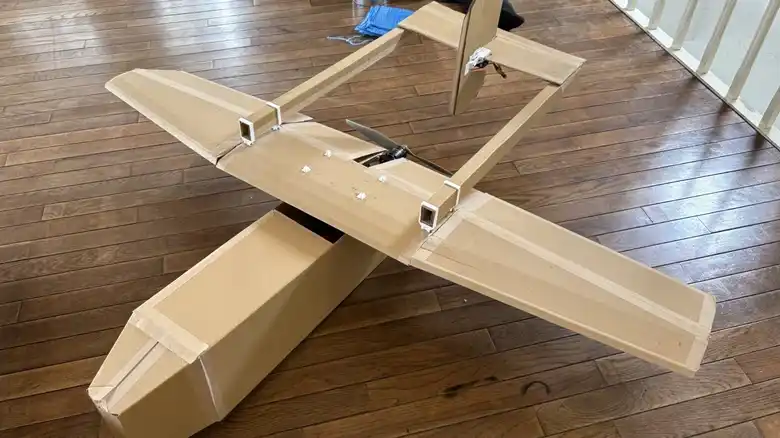
Japan is quietly developing one of the most unconventional military technologies of the decade: an ultra-cheap swarm drone made largely from corrugated cardboard. At a time when defense industries are racing toward stealth systems, AI-powered combat aircraft, and billion-dollar missile shields, Japan’s latest answer to drone warfare looks almost absurdly simple. Yet that simplicity may be exactly what makes it dangerous.
The drone at the center of growing international attention is the AirKamuy 150, developed by Japanese startup AirKamuy. Designed as a disposable, rapidly deployable unmanned aerial vehicle, the aircraft represents a dramatic shift in military thinking. Instead of relying solely on expensive high-end drones, militaries are increasingly embracing mass-produced expendable systems capable of overwhelming defenses through sheer numbers.
Modern battlefields have already proven that low-cost drones can destroy vehicles, disrupt logistics, and exhaust sophisticated air defense systems. Japan appears determined to avoid being left behind in this rapidly evolving arms race.
The AirKamuy 150 is intentionally simple. It ships flat-packed, can reportedly be assembled in under five minutes, and costs between $2,000 and $3,000 per unit — an astonishingly low figure in military aviation. For comparison, many military UAVs cost hundreds of thousands or even millions of dollars, while even relatively inexpensive Iranian Shahed drones often cost ten times more.
The drone is also surprisingly capable despite its lightweight cardboard-heavy construction. Reports indicate it can fly at speeds approaching 120 km/h, remain airborne for around 80 minutes, and operate at ranges of approximately 50 miles. These numbers place it far beyond the category of improvised hobby drones often seen in asymmetric conflicts.
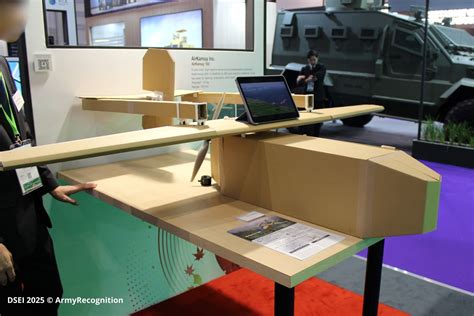
What makes the AirKamuy 150 strategically important is not its individual capability but its scalability. Military planners increasingly understand that future wars may not be dominated by a handful of exquisite aircraft. Instead, they may be shaped by massive autonomous swarms capable of saturating enemy radar, consuming interceptor missiles, and forcing adversaries into impossible cost equations.
A missile worth several million dollars becomes economically unsustainable if it is repeatedly used to destroy drones costing only a few thousand dollars each.
This is where Japan’s cardboard drone concept becomes genuinely disruptive.
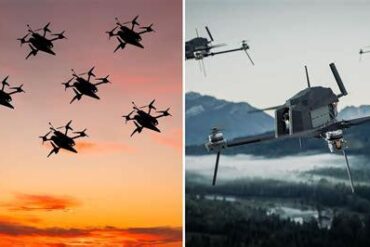
Swarm warfare relies on quantity, coordination, and persistence rather than traditional battlefield superiority. A coordinated formation of dozens or even hundreds of cheap drones can confuse air defenses, overwhelm radar systems, and create openings for larger strikes. Even if many drones are destroyed, the overall mission may still succeed because the attacking side accepts attrition as part of the operational design.
The cardboard structure itself offers additional advantages beyond manufacturing cost. Corrugated materials are lightweight, easy to transport, and fast to produce in large quantities. Flat-packed transportation also dramatically increases logistical efficiency. A single shipping container could potentially carry dozens of disassembled drones, enabling rapid deployment to remote islands, naval platforms, or forward operating bases.
For Japan, geography plays a critical role in the appeal of such systems.
The country faces growing security pressures across the Indo-Pacific region, particularly around contested maritime zones and remote island chains. Maintaining persistent surveillance and defensive coverage across vast ocean areas is expensive and operationally demanding. Cheap disposable drones provide a way to expand situational awareness without risking valuable manned aircraft or costly UAV platforms.
Japanese officials have already hinted that the country’s Maritime Self-Defense Force is evaluating potential uses for the system. That alone signals the technology is being viewed as more than a startup curiosity.
今日は段ボール製ドローンで有名なエアカムイの皆さんと意見交換をさせて頂きました。海上自衛隊では既に標的として活用しています。ドローンをはじめとする無人アセットを世界で最も駆使する自衛隊を目指す上で、防衛分野に意欲あるスタートアップの皆さんと連携強化は不可欠です。今日は非常に濃密な… pic.twitter.com/OJwVOpFiBT
— 小泉進次郎 (@shinjirokoiz) April 27, 2026
The emergence of systems like the AirKamuy 150 also reflects a broader transformation in military procurement philosophy. For decades, advanced militaries focused heavily on building fewer but more technologically superior platforms. Recent conflicts, however, have exposed the vulnerability of expensive systems against relentless waves of cheap unmanned aircraft.
Attritable drones are changing the math of warfare.
Instead of preserving every aircraft at all costs, militaries are beginning to treat some drones as consumable battlefield assets. Their value lies in mission success rather than survivability. This mindset resembles ammunition doctrine more than traditional aviation strategy.
AirKamuy’s drone may also find civilian applications beyond combat. The company has reportedly explored emergency response operations, medical supply transport, and disaster-relief logistics. In earthquake-prone Japan, rapidly deployable low-cost UAVs could become useful tools during humanitarian crises where damaged infrastructure prevents conventional transport.
Still, the military implications remain the real reason the world is watching.
The AirKamuy 150 demonstrates how modern warfare is shifting away from prestige hardware toward adaptable, mass-produced systems designed for relentless operational tempo. The future battlefield may not belong exclusively to stealth bombers or sixth-generation fighters. It may also belong to fleets of disposable cardboard drones flying in coordinated swarms across contested skies.