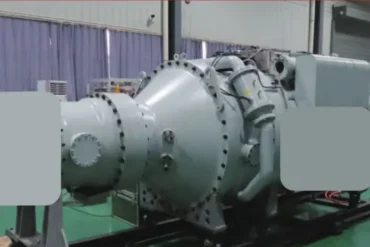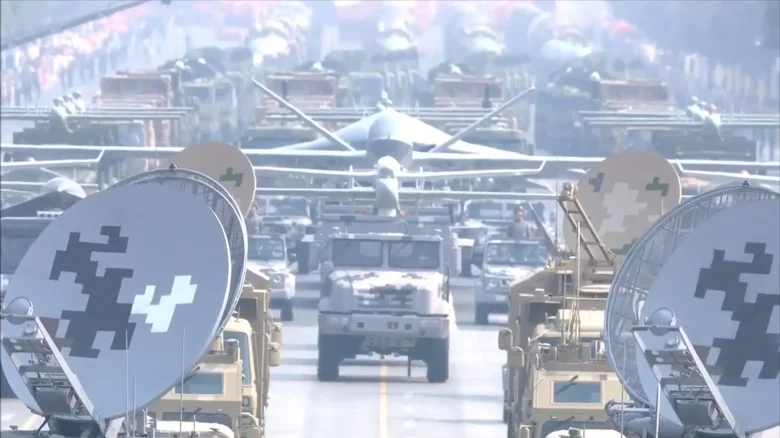
China’s push to dominate next-generation military technology has taken another dramatic step forward with the development of a microwave-based drone charging platform capable of powering unmanned aircraft while they remain airborne. The experimental system, created by researchers at Xidian University, signals a future where drones may no longer be restricted by short battery life or the need for frequent landings. Instead, military UAVs could remain in the sky for hours — or eventually days — through wireless energy transmission delivered directly during flight.
The breakthrough arrives at a time when modern warfare is rapidly shifting toward autonomous systems, long-range drone strikes, and artificial intelligence-assisted combat operations. Across battlefields from Eastern Europe to the Middle East, drones have evolved from reconnaissance tools into strategic assets capable of surveillance, precision attacks, electronic warfare, and infrastructure disruption. The country that solves the endurance problem first may gain a major operational advantage in future conflicts.
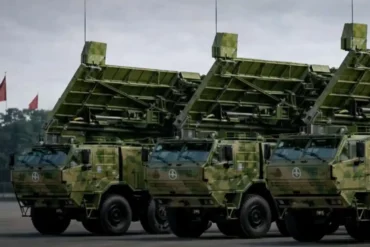
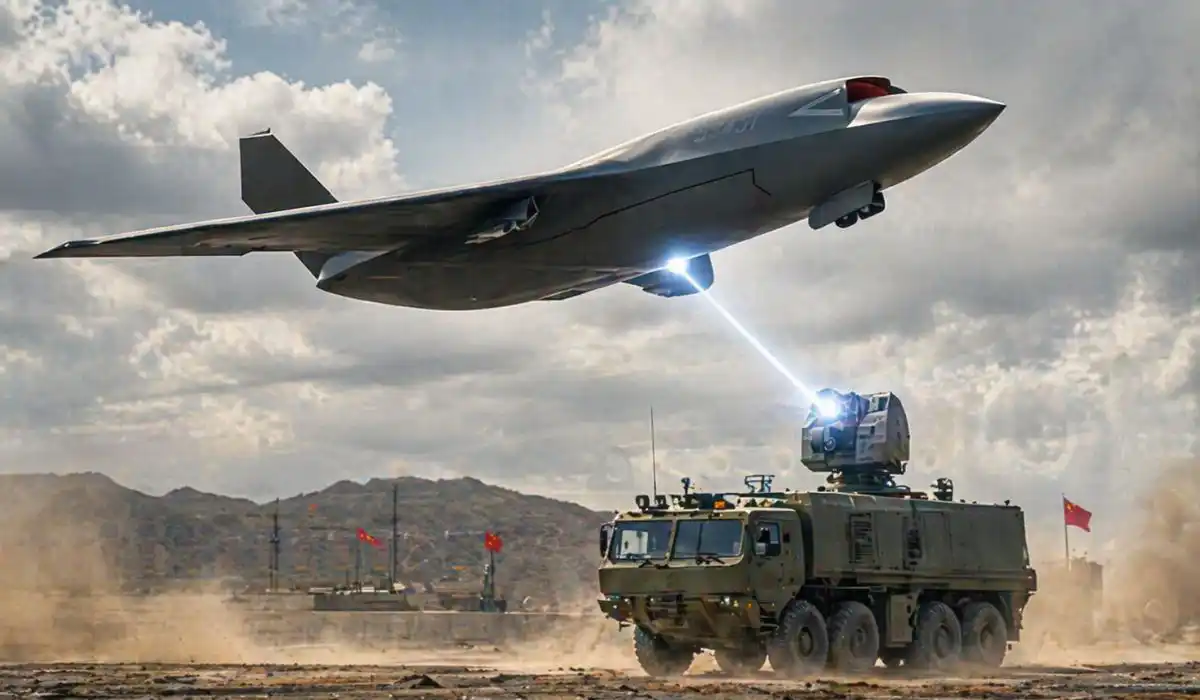
China’s latest experiment centers on a vehicle-mounted microwave emitter that beams energy toward drones equipped with receiving antennas. Rather than forcing UAVs to land for battery replacement or charging, the system transfers energy wirelessly as the aircraft continues its mission. While the technology remains far from perfect, defense analysts already see it as one of the clearest signs yet that military powers are preparing for an era of near-persistent aerial drone presence.
China’s Wireless Drone Charging System Signals a New Military Direction
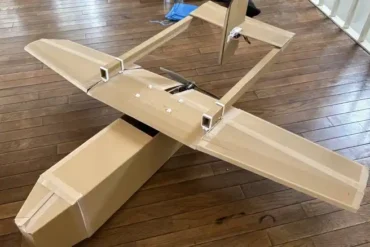
The experimental platform was developed by researchers affiliated with Xidian University, an institution closely connected to China’s defense and military research ecosystem. Mounted on a ground vehicle, the microwave transmission system projects focused electromagnetic energy toward fixed-wing drones operating overhead. Antennas mounted beneath or behind the aircraft convert the microwave energy into electrical power that replenishes onboard batteries during flight.
Although the technology currently achieves relatively modest energy transfer efficiency, the implications are enormous. Even limited wireless charging capability can significantly extend operational endurance for reconnaissance drones tasked with border patrol, battlefield surveillance, or maritime monitoring missions.
Military planners have long struggled with one of drone warfare’s biggest limitations: battery capacity. Lithium-ion batteries, while effective for civilian electronics and short-duration UAV missions, impose severe restrictions on flight range and loiter time. Combat operations frequently require drones to remain airborne for extended periods over hostile territory, but limited battery reserves force repeated returns to launch sites.
China’s experiment attempts to bypass that bottleneck entirely. Instead of carrying heavier batteries that reduce maneuverability and payload capacity, drones could theoretically receive supplemental energy from mobile microwave transmitters positioned on the ground or aboard support vehicles.
Researchers reportedly succeeded in keeping fixed-wing drones operational for more than three hours using the system. More importantly, the project demonstrated that wireless energy transfer can function while both the drone and transmitter remain in motion — a critical achievement for real-world military applications.
Why Drone Endurance Has Become One of Modern Warfare’s Biggest Challenges
The race to extend drone flight duration has intensified because UAVs are now central to military strategy worldwide. In Ukraine, drones have transformed frontline operations by enabling low-cost precision strikes hundreds of miles from combat zones. Swarms of inexpensive UAVs routinely target fuel depots, radar systems, logistics hubs, and airfields deep behind enemy lines.
Traditional missile systems are expensive and difficult to replace quickly. Drones offer a cheaper alternative capable of overwhelming defenses through mass deployment. However, even advanced military UAVs remain constrained by fuel limitations, battery depletion, and logistical complexity.
This challenge becomes especially dangerous during reconnaissance missions. If a surveillance drone loses power behind enemy lines, recovering it may expose soldiers to direct attack or reveal sensitive technology to opposing forces. Charging infrastructure also creates logistical burdens, requiring transport vehicles, spare batteries, and support crews close to operational zones.
China’s microwave charging project directly addresses these vulnerabilities. By reducing the need for landings or battery swaps, drone units could operate farther from support infrastructure while maintaining longer patrol cycles.
The concept also aligns with broader Chinese military doctrine emphasizing distributed operations, autonomous systems, and rapid-response battlefield networks. A future battlefield populated by continuously operating drones could dramatically increase surveillance coverage while compressing enemy reaction times.
The Science Behind Microwave Power Transmission
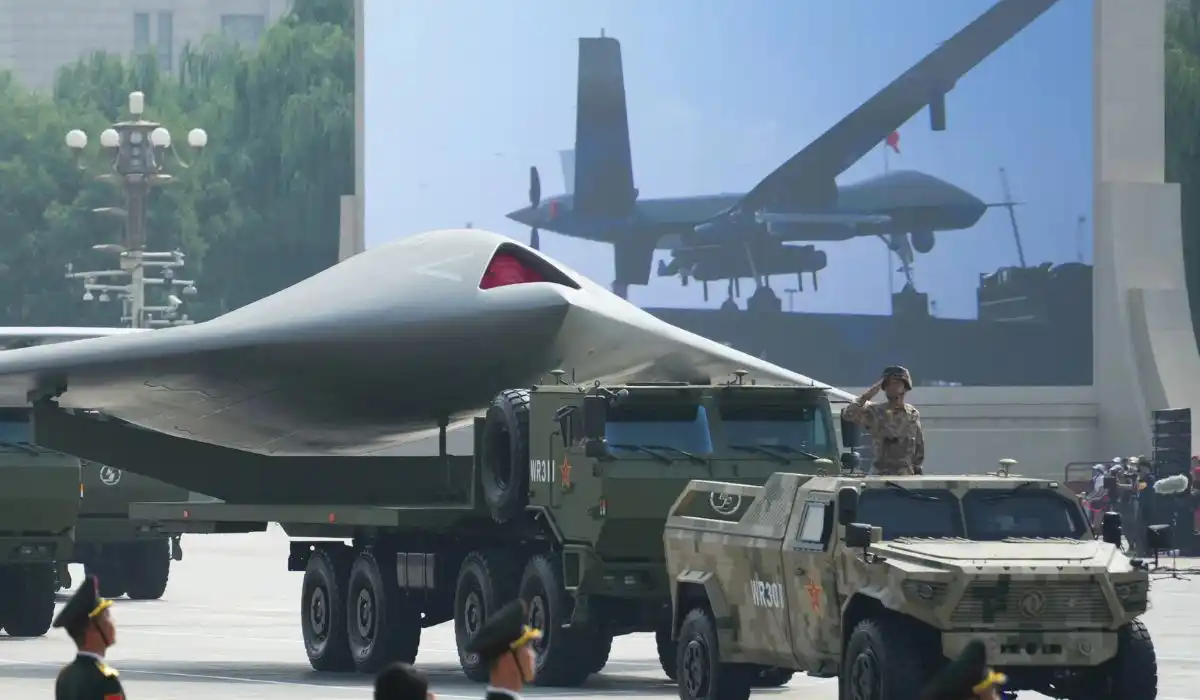
Wireless power transmission using microwaves is not entirely new. Scientists have explored the concept for decades, particularly for potential space-based solar energy systems. The principle involves converting electricity into microwave radiation, transmitting it through the air, and reconverting it into usable electrical energy at the receiving end.
In practice, however, the process is extraordinarily difficult.
One of the biggest obstacles is efficiency loss. Chinese researchers reported that only about 3% to 5% of transmitted energy was successfully absorbed by target drones during testing. Environmental conditions including wind, atmospheric interference, alignment instability, and movement significantly reduce transmission effectiveness.
Maintaining precise targeting is equally challenging. A microwave beam must remain accurately aligned with a moving aircraft despite changing altitude, velocity, and environmental conditions. Even minor deviations can drastically reduce charging efficiency.
To overcome these problems, the Chinese research team integrated advanced GPS tracking systems and flight-control coordination software capable of dynamically adjusting transmission alignment in real time. That achievement alone represents a major technical milestone.
Despite low efficiency rates, military analysts believe the technology could improve rapidly as artificial intelligence, targeting algorithms, and energy systems evolve. Incremental improvements in power conversion efficiency may eventually make airborne charging operationally viable for specific mission profiles.
America’s DARPA Is Pursuing Similar Drone Energy Technologies
China is not alone in pursuing wireless military energy transmission. The United States has invested heavily in similar concepts through the Defense Advanced Research Projects Agency, better known as DARPA.
DARPA’s POWER initiative seeks to create a “wireless energy web” capable of transmitting substantial amounts of electricity across long distances using lasers and airborne relay nodes. In recent testing, the agency reportedly achieved a global benchmark by transmitting hundreds of watts of power across distances exceeding five miles.
The Pentagon sees enormous strategic potential in these technologies. Instead of relying solely on onboard fuel or batteries, future combat systems may draw energy dynamically from distributed transmission networks operating across battlefields.
Such systems could support not only drones, but also forward operating bases, radar stations, autonomous vehicles, and electronic warfare platforms.
The United States military is simultaneously exploring other endurance-enhancing technologies. Some proposed concepts involve drones charging one another mid-flight using centralized airborne power banks. The U.S. Navy has also tested solar-powered UAV concepts capable of remaining airborne for multiple days.
These projects collectively reveal a larger transformation underway in military planning. Future warfare is increasingly being designed around persistence — the ability to maintain uninterrupted surveillance, communication, and strike capability over enormous geographic areas.

Microwave Charging Could Change Both Drone Warfare and Drone Defense
Microwave systems may eventually serve two very different battlefield purposes simultaneously: powering drones and disabling them.
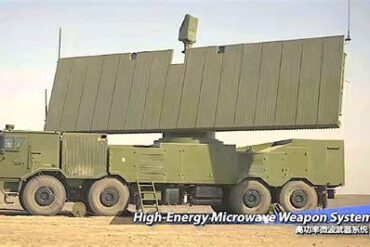
Directed-energy weapons already represent one of the fastest-growing areas of military investment worldwide. High-powered microwave systems can potentially interfere with electronics, disable communications, or fry sensitive drone circuitry without firing traditional ammunition.
If microwave charging systems evolve into scalable battlefield infrastructure, militaries may gain dual-use platforms capable of supporting friendly UAVs while disrupting hostile ones.
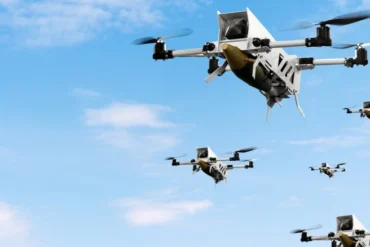
That possibility becomes particularly important as drone swarms become more common. Large-scale autonomous attacks involving dozens or even hundreds of drones could overwhelm conventional air defense systems. Microwave-based countermeasures may offer a cheaper and faster defensive response than missiles or anti-aircraft guns.
China’s current platform remains experimental, but its broader significance extends far beyond a single prototype vehicle. It reflects the accelerating global effort to build warfare ecosystems centered on autonomous machines, persistent surveillance, and continuous battlefield connectivity.
The nation that masters long-duration drone operations may fundamentally reshape future military strategy. Wireless power transmission could ultimately become one of the defining technologies behind that transformation.