A Radical Shift in Drone Power Technology
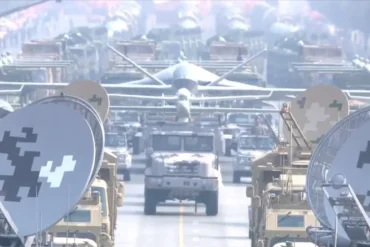
The idea of transmitting energy through the air has long hovered between science fiction and experimental engineering. Now, a Chinese research team has pushed that vision closer to reality by demonstrating a drone system powered not by onboard batteries alone, but by microwave energy beamed from a moving ground vehicle. The result is striking: a drone capable of remaining airborne for more than three hours at low altitude, far exceeding the endurance limits of conventional battery-powered systems.
This development introduces a bold rethinking of drone logistics. Instead of grounding drones for frequent battery swaps or recharging cycles, operators could theoretically sustain flight almost indefinitely—as long as a power source continues transmitting energy from below. In modern warfare and surveillance, where time in the air directly translates to tactical advantage, this shift could prove transformative.
How Microwave Power Transmission Works in Motion
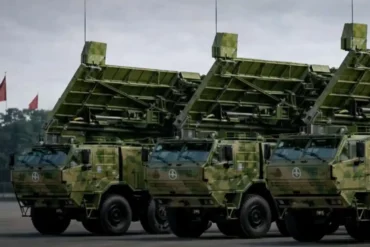
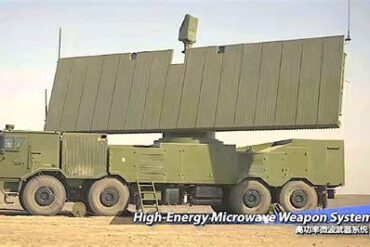
At the heart of this system lies a sophisticated coordination challenge. The ground vehicle emits a focused microwave beam aimed precisely at the drone’s onboard receiver. Unlike static wireless charging systems, both the transmitter and the drone are in motion, requiring real-time alignment and tracking.
To solve this, researchers integrated GPS positioning, dynamic tracking algorithms, and onboard stabilization controls. These systems constantly adjust the transmission angle, ensuring the energy beam remains locked onto the drone even as both platforms move independently. Despite the complexity, the system maintained stable power delivery at approximately 15 meters altitude during testing.
Efficiency remains a hurdle. Only about 3% to 5% of transmitted energy successfully reaches the drone. Yet even with such losses, the system proves viable because it eliminates the need for heavy onboard energy storage, effectively shifting the power burden to the ground.
Strategic Advantages of Wireless Drone Power
The implications extend far beyond longer flight times. By reducing reliance on large batteries, drone designers gain new flexibility in how they allocate weight and space. This trade-off opens the door to enhanced capabilities without increasing overall mass.
Key advantages include:
- Extended mission duration without frequent landings
- Reduced battery weight, enabling lighter airframes
- Increased payload capacity for sensors or equipment
- Continuous surveillance capabilities in dynamic environments
In practical terms, a lighter drone can carry more advanced imaging systems, communication tools, or defensive payloads. The ability to stay airborne longer also enhances persistent monitoring—an essential factor in both military reconnaissance and civilian applications like disaster response.
Microwaves vs. Laser Power: Competing Technologies
China’s microwave-based approach enters a field already explored by organizations such as the U.S. Defense Advanced Research Projects Agency (DARPA), which has experimented extensively with laser-based power transmission. Each method presents distinct trade-offs.
Laser systems typically offer higher efficiency and longer range. However, they are highly sensitive to environmental conditions. Fog, rain, dust, or physical obstructions can disrupt or completely block the beam. Microwave transmission, while less efficient, demonstrates greater resilience in varied weather conditions and does not require a perfectly unobstructed line of sight.
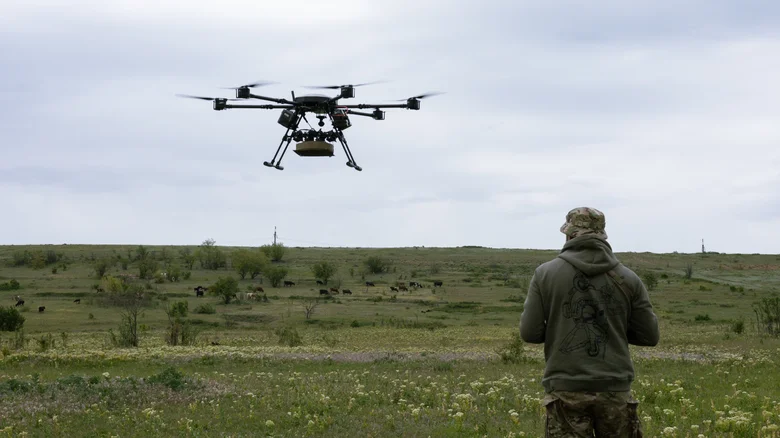
This contrast highlights a broader technological tension: efficiency versus reliability. In real-world deployments, especially in unpredictable environments, reliability often proves more valuable than theoretical performance gains.
Challenges That Still Stand in the Way
Despite its promise, this technology remains in an early developmental phase. The relatively low energy transfer efficiency means significant power is lost during transmission, raising concerns about scalability and energy consumption. Additionally, maintaining precise beam alignment over longer distances or higher altitudes introduces further complexity.
There are also operational considerations. A drone tethered to a ground-based energy source—albeit wirelessly—may face limitations in range and maneuverability compared to fully autonomous systems. Adversarial environments could exploit this dependency by targeting the transmitting vehicle or disrupting the signal.
The Future of Persistent Flight
Even with its current limitations, wireless power transmission represents a compelling evolution in drone capability. The ability to sustain flight without traditional refueling or recharging cycles addresses one of the most persistent constraints in unmanned aviation.
As research continues, improvements in beam precision, energy efficiency, and system integration could push this technology from experimental trials into operational reality. Whether used for surveillance, communications, or broader aerial infrastructure, the concept of continuous, wirelessly powered flight is no longer theoretical—it is rapidly approaching practical application.