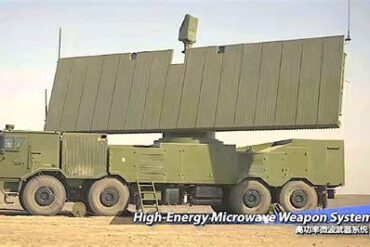
China has unveiled what it describes as a 20-gigawatt high-power microwave (HPM) system capable of disrupting or damaging low Earth orbit (LEO) satellites—an announcement that has sent ripples through defense and space technology circles. Dubbed by some researchers as an “Invisible Hunter,” the system is widely portrayed as a potential “Starlink killer”, engineered to counter SpaceX’s rapidly expanding satellite constellation.
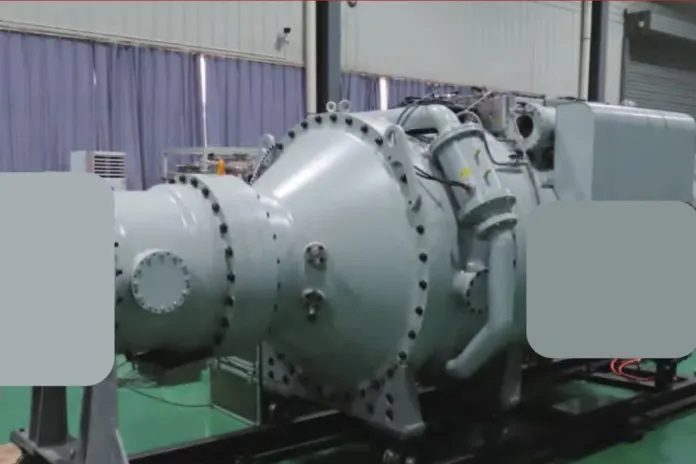
At the center of this development is the TPG1000Cs, a compact pulsed power driver reportedly developed by scientists at the Northwest Institute of Nuclear Technology (NINT) in Xi’an. According to published research in the Chinese journal High Power Laser and Particle Beams, the device can deliver up to 20 gigawatts of peak power and sustain operations for as long as one minute—an endurance level that marks a dramatic leap beyond previous systems.
The context is unmistakable. SpaceX’s Starlink network, comprising thousands of satellites in LEO, has reshaped modern warfare and communications. Elon Musk once remarked that disabling Starlink would require “a lot of anti-satellite missiles,” noting that satellites could be launched faster than they could be destroyed. Chinese scientists appear to be pursuing a different answer: directed energy instead of kinetic interception.
The TPG1000Cs: Engineering a 20GW Directed-Energy System
The TPG1000Cs is described as the world’s first compact driver capable of sustaining Tesla-type pulsed power output at extreme levels. While traditional pulsed power systems have been bulky and short-lived, this design reportedly weighs just five tons and measures roughly four meters in length. Earlier systems, such as Russia’s Sinus-7, weighed about ten tons and operated for only seconds. By contrast, the TPG1000Cs is said to generate up to 3,000 high-energy pulses per session, accumulating more than 200,000 operational pulses during testing.
The technical breakthroughs are significant. Researchers replaced high-strength steel with aluminum alloy, reducing overall weight by roughly one-third. They also introduced etched wavy grooves in insulating plates—an innovation likened to winding mountain roads that prevent electrical discharges from “cutting corners.” This design extends the surface path and mitigates breakdown risks under extreme voltage conditions.
Another key advancement lies in the dual-U-shaped energy storage structure. Traditional straight-tube designs required substantial length to store adequate energy. By allowing energy to bounce back and forth within a compact dual-U configuration, engineers effectively halved the spatial footprint without sacrificing performance. In pulsed power engineering, space efficiency directly affects deployability, making this innovation strategically relevant.
Why Starlink Is the Target
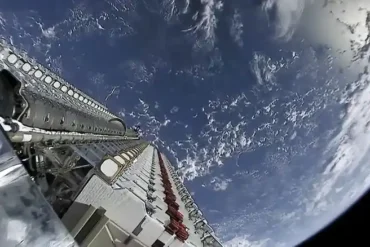
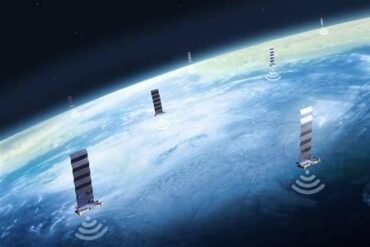
Starlink’s architecture makes it both resilient and exposed. The constellation consists of thousands of relatively small satellites operating in low Earth orbit, typically between 300 and 550 kilometers altitude. This lower altitude reduces signal latency and improves performance—but it also places the satellites closer to ground-based threats.
Chinese researchers argue that a microwave system exceeding 1 gigawatt could potentially disrupt or damage LEO satellites. At 20 gigawatts, the theoretical destructive potential increases substantially, particularly if the pulses are precisely focused. Unlike anti-satellite missiles, which create debris and provoke international backlash, microwave weapons attack electronics directly, potentially frying circuits without visible explosions.
Starlink satellites rely on commercial-grade components to keep launch and manufacturing costs manageable. They operate in the Ku-band frequency range, a wavelength suitable for high-speed communication but potentially vulnerable to targeted electromagnetic interference. Chinese research claims the ability to generate Ku-band electromagnetic pulses, aligning the weapon’s output with Starlink’s operating frequencies.

Lessons From Ukraine: A Battlefield Precedent
The urgency behind China’s efforts is not abstract. After Russia’s invasion of Ukraine in February 2022, Kyiv requested activation of Starlink terminals. Within days, satellite internet connectivity was restored across contested areas, enabling communication, drone coordination, and battlefield logistics. The episode demonstrated that a commercial satellite network could provide strategic resilience against conventional military disruption.
Russia subsequently attempted to jam or detect Starlink signals, forcing tactical adaptations. Observers in Beijing took note. Analysts warned that a similar deployment in a Taiwan Strait crisis could complicate operations for the People’s Liberation Army (PLA), particularly if the United States leveraged commercial constellations for intelligence, targeting, or communications support.
Starlink’s success in Ukraine reframed satellite constellations from civilian infrastructure to potential dual-use military assets. The calculus changed. Counter-space capability became not just theoretical but urgent.
The Rise of Directed-Energy Counterspace Weapons
The TPG1000Cs is not an isolated development. Chinese researchers have published numerous studies exploring methods to neutralize large satellite constellations. Simulations reportedly concluded that as few as 99 satellites could maneuver to approach over 1,400 Starlink satellites within 12 hours, potentially carrying lasers, microwaves, or reconnaissance payloads.
Directed-energy systems—particularly microwaves and lasers—have emerged as favored solutions. In 2023, Chinese scientists introduced a compact power source capable of producing 10 gigawatts at 10 pulses per second, dramatically shrinking the size of deployable microwave weapons. By January 2025, reports surfaced of an HPM weapon capable of generating electromagnetic pulses comparable in intensity to those produced by nuclear detonations—without the radioactive consequences.
Phased-array transmission technology reportedly enhances precision, focusing energy beams onto specific targets and extending effective range. Such systems could theoretically engage multiple satellites simultaneously, particularly if deployed from orbital platforms or high-altitude aircraft.
Deployment Scenarios: Ground, Sea, Air, and Space
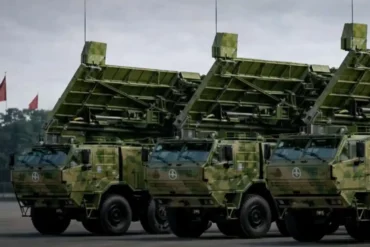
The compact size of the TPG1000Cs suggests flexible deployment. Chinese media indicates the system could be installed on trucks, warships, aircraft, or even satellites. Each platform introduces different tactical implications.
A ground-based system would rely on line-of-sight targeting, potentially exploiting Starlink’s lowered orbital altitude. SpaceX has reduced some satellites’ altitudes to mitigate collision risks, but this also narrows the distance between satellite and ground emitter.
A naval or submarine platform introduces another dimension. PLA-affiliated research in 2024 described submarines equipped with megawatt-class solid-state lasers, capable of firing at satellites while partially submerged before retracting optical masts. Such concepts blend stealth with directed-energy precision.
A space-based microwave emitter would represent the most disruptive scenario. An orbital platform could attack satellites at closer range, reducing atmospheric interference and increasing efficiency. If the pulses are truly “invisible,” detection becomes significantly more complex, complicating attribution and escalation dynamics.
Strategic Implications for Space Security
The emergence of compact 20GW microwave weapons signals an evolution in counterspace strategy. Kinetic anti-satellite tests have drawn global criticism due to orbital debris hazards. Directed-energy weapons promise a cleaner, though no less destabilizing, alternative.
This shift raises profound questions about the militarization of commercial constellations. If satellite networks become perceived as integral to military operations, they risk being treated as legitimate targets. That dynamic blurs the line between civilian infrastructure and battlefield asset.
For SpaceX and similar operators, resilience may depend on redundancy and rapid launch capability. Musk has asserted that satellites can be deployed faster than adversaries can destroy them. Whether that remains true in the face of high-power microwave systems capable of sustained pulses is uncertain.
The Invisible Battlefield in Orbit
Space is no longer a silent frontier. It has become a domain where electromagnetic waves, rather than missiles, may define the next phase of strategic competition. The TPG1000Cs represents more than a technological milestone; it embodies a doctrinal shift toward non-kinetic, high-energy disruption.
As satellite constellations proliferate and states invest in counterspace capabilities, the orbital environment grows increasingly contested. Microwave weapons, phased arrays, laser-equipped submarines—these are no longer science fiction tropes but research programs documented in peer-reviewed journals.
The trajectory is clear. The struggle for dominance in low Earth orbit will hinge on energy, precision, and the capacity to disable without debris. Whether China’s 20GW “Invisible Hunter” proves operationally decisive remains to be seen. What is certain is that the race to control the electromagnetic high ground has begun, and it is accelerating.