The modern battlefield has entered an era of aerial denial, where the once-unquestioned dominance of airborne early warning and control (AEW&C) platforms is being challenged by advanced, long-range air defenses and sensor systems. From the steppes of Ukraine to the mountains of Kashmir, adversaries are deploying Russian S‑500 surface‑to‑air missiles with engagement envelopes nearing 600 kilometers alongside China’s PL‑17 and PL‑20 air‑to‑air missiles, capable of engaging high‑value air assets (HVAA) at distances exceeding 400 kilometers. These emerging threats have put tanker aircraft, airborne command posts, and reconnaissance platforms squarely within the crosshairs of modern anti‑access/area denial (A2/AD) networks.
Beyond ground‑based missiles, the proliferation of very long‑range air‑to‑air missiles (LRAAMs) has redefined engagement doctrines. Equipped with active electronically scanned array (AESA) seekers and dual‑pulse rocket motors, missiles like China’s PL‑15 can strike targets at standoff ranges of 200–300 kilometers, with export variants still reaching 145 kilometers. Russia’s KS‑172 and R‑37M extend the threat envelope further, boasting speeds above Mach 3 and ranges beyond 400 kilometers. Coupled with sophisticated two‑way data links, these “fire‑and‑forget” weapons allow launch platforms to disengage or reassign targets almost immediately.
Simultaneously, satellite‑based surveillance has undergone a quantum leap. Major space‑faring nations now field constellations of electro‑optical, synthetic aperture radar (SAR), and signals intelligence (SIGINT) satellites providing persistent coverage across their areas of interest. The U.S. Space Force operates some 250 military satellites—including the Space‑Based Infrared System (SBIRS) and Next‑Gen Overhead Persistent Infrared (OPIR) platforms—while China’s Yaogan series and Russia’s Liana constellation bolster peer‑level capabilities. India, although currently operating around 10 satellites, is rapidly building the Rs 27,000 crore Space‑Based Surveillance‑III (SBS‑III) network poised to field 52 satellites by 2029.
AEW&C: Cornerstone of Airborne Command and Control
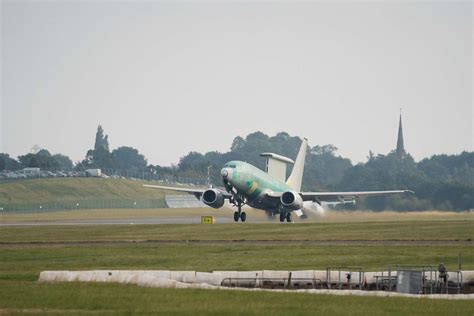
Airborne Early Warning and Control aircraft have long been the linchpin of air superiority campaigns. Outfitted with powerful radar arrays—such as Boeing’s AN/APY‑2 pulse‑Doppler radar on the E‑3 Sentry and E‑767 platforms reaching up to 650 kilometers against high‑altitude targets—these modified airliners provide 360‑degree battlespace awareness. They detect and track hundreds or even thousands of targets simultaneously, fuse sensor data from ground stations and allied platforms, and coordinate fighter patrols, tanker operations, and missile strikes in real time.
These airborne nerve centers extend detection horizons far beyond ground‑based radars limited by terrain and curvature of the Earth. They act as airborne command posts, directing friendly assets through the densest electronic warfare (EW) environments, and serve as vital nodes in a net‑centric architecture. However, their subsonic speed, large radar cross section (RCS), and reliance on continuous emissions make them vulnerable to standoff engagements by both ground‑based SAMs and LRAAMs.
Major AEW&C Platforms and Their Capabilities
When assessing the global AEW&C landscape, a handful of platforms dominate:
- Boeing E‑3 Sentry/E‑767: Introduced in 1977, with 68 airframes built. The AN/APY‑2 radar delivers over 400 km range against low‑flying threats and around 650 km at higher altitudes. Operated by the USAF, NATO, France, Chile, Saudi Arabia, and Japan.
- Grumman E‑2 Hawkeye: In service since 1965 with 313 built. Carrier‑capable and optimized for naval operations, the Hawkeye 2000 variant can track over 2,000 targets to ranges exceeding 640 km. Export customers include Egypt, France, Israel, Japan, Singapore, and Taiwan.
- Beriev A‑50/U “Shmel”: Russia’s primary AEW&C asset since 1985. Based on the Il‑76 airframe, its Vega‑M radar tracks 150 targets within 230 km and detects large ships at 400 km. Plans call for replacement by the AESA‑equipped A‑100 on the Il‑476.
- Indian Phalcon: The IAF’s 2009‑inducted platform uses the Israeli EL/W‑2090 radar to achieve 360‑degree coverage out to 400–500 km, supporting both surveillance and air traffic management.
- Chinese KJ‑2000/KJ‑3000: The KJ‑2000’s tri‑AESA radomes deliver up to 470 km detection range. The newer KJ‑3000, built on the Y‑20 transport, is optimized for detecting stealth aircraft and is still under testing.
- Indian DRDO Netra Mk1/Mk1A: Mounted on the Embraer EMB‑145, the Mk1 variant covers 250 km with 240‑degree radar sweep and benefits from air‑to‑air refueling. Plans include six Mk1A upgrades and six A321‑based platforms.
- Boeing E‑7 Wedgetail, Saab Erieye, Embraer E‑99: The E‑7 Wedgetail’s fixed AESA radar exceeds 600 km in look‑up mode, fielded by Australia, South Korea, and Turkey. Saab’s Erieye ER and Embraer’s E‑99 derivative augment niche regional requirements.
The Growing Threat: Long‑Range Aerial Missiles
Modern air combat increasingly favors stand‑off engagements. Long‑Range Air‑to‑Air Missiles (LRAAMs) employ active radar homing for fire‑and‑forget operation, allowing launch platforms to evade counterattack. Key examples include:
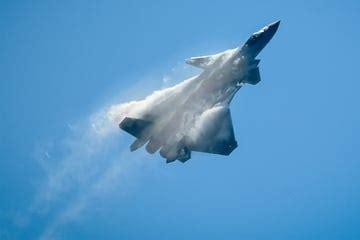
- PL‑15/PL‑15E (China): AESA seeker, dual‑pulse motor, two‑way datalink. Range of 200–300 km (145 km export).
- KS‑172/K‑100/R‑172 (Russia): Mach 3.3 propulsion, >400 km range to neutralize AWACS and tankers.
- R‑37M/RVV‑BD (Russia): Jettisonable booster pushes reach to 300–400 km (200 km export) at altitudes up to 25 km.
- Meteor (Europe): Throttleable ramjet, Mach >4, 150–200 km range, 60 km no‑escape zone.
- AIM‑260 JATM (USA): In initial production, >200 km range, missile designed for F‑22 and F‑35 integration.
- Astra Mk1/Mk2/Mk3 (India): Indigenous solid‑rocket and ramjet designs with ranges of 110 km, 160 km, and 350 km (ramjet still in trials).
LRAAM Tactical Implications
The proliferation of LRAAMs transforms aerial warfare. Pilots will rely increasingly on networked sensors—satellites, UAVs, and ground radars—to cue launches beyond visual range. Secure datalinks and midcourse updates become mission‑critical, while the ability to strike HVAA like AWACS and tankers from standoff ranges forces shifts in force structure. Collaborative combat aircraft (CCA) and loyal wingmen drones emerge as remote launch and sensor platforms, extending reach and diluting risk to manned assets. Yet these benefits come with significant challenges: the high per‑unit cost of advanced missiles, integration on legacy fighters, electromagnetic warfare resilience, and reliable identification‑friend‑foe (IFF) protocols at extreme distances.
Countering the Denial: Long‑Range Surface‑to‑Air Missiles
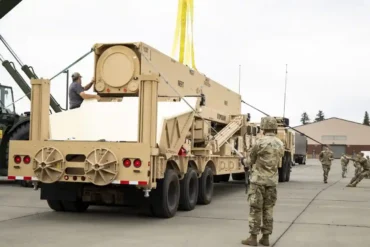
Ground-based Layered Air Defense (LRSAM) systems bolster the A2/AD environment. Leading systems include:
- S‑400/S‑500 (Russia): Engagement ranges >400 km, hypersonic intercept capability, multi‑target engagement.
- HQ‑9/HQ‑9B (China): 120 km/300 km range, widely exported.
- Barak 8/MX (Israel/India): 150 km sea/land, cooperative development by IAI and DRDO.
- Project Kusha (India): Mobile LRSAM with interceptor variants of 150, 250, and 350 km, slated for induction by 2028–29.
- SM‑6, THAAD, Patriot (USA): SM‑6 reaches 460 km against airborne threats and 500 km against surface targets; THAAD covers 200 km, Patriot 160 km.
- David’s Sling/Arrow 3 (Israel/USA): Medium‑ to long‑range coverage of 70–300 km and exo‑atmospheric interceptions up to 2,400 km respectively.
Advanced radars, active homing seekers, two‑way datalinks, and mobility allow these systems to engage saturation attacks and integrate seamlessly into a multi-layered defense network.
Satellite‑Based Surveillance and Control
Space has become the new high ground in ISR. Satellite constellations equipped with electro‑optical, SAR, and SIGINT payloads deliver persistent, global monitoring. The U.S. Space Force, under U.S. Space Command, manages approximately 250 military satellites via the Air Force Satellite Control Network (AFSCN) and specialized programs like the Space‑Based Infrared System (SBIRS) and Space Tracking and Surveillance System (STSS). China’s 160‑satellite fleet, including the Yaogan series, and Russia’s 110‑satellite Liana network provide similar capabilities. India’s ambitious SBS‑III program will expand its indigenous surveillance capacity with 52 satellites by 2029 under the Defence Space Agency, leveraging onboard AI for real‑time threat detection and response.
Stealthy AEW&C: The Next Frontier
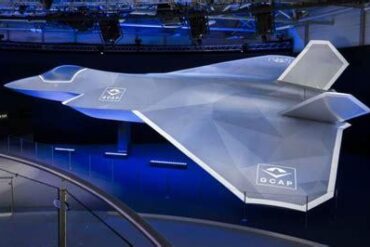
To survive in contested airspace, future AEW&C designs must reduce radar cross section and emission signatures. Concept studies envision flying‑wing platforms with embedded L‑band and AESA arrays along leading edges, enabling intermittent, low‑probability‑of‑intercept scanning. While full stealth remains a long‑term goal, selective radar activation and advanced emission control techniques can significantly lower detectability during critical mission phases.
AEW&C Limitations and Complementary Solutions
Despite their command‑and‑control prowess, AEW&C aircraft remain vulnerable to standoff missile strikes, electronic jamming, and curvature‑limited coverage. Space‑based radars and satellites offer complementary advantages: persistent, hemispheric surveillance; resistance to kinetic attack; SAR and thermal imaging; and AI‑driven data triage to minimize bandwidth needs. As a transitional measure, advanced AEW&C platforms will bridge capability gaps until dedicated spaceborne radars achieve full operational maturity.
Secure Military Space Data‑Links
Tactical Data Links (TDLs) such as Link 16 and Link 22 facilitate encrypted, low‑latency exchange of voice, text, imagery, and targeting data among air, sea, and ground units. Emerging laser communication systems—like Airbus’s Space Data Highway—and the Wideband Global SATCOM (WGS) constellation further enhance throughput and jamming resilience, enabling uninterrupted command and control in peer‑contested environments.
Multi‑Sensor Cooperative Kill Chain
The integration of space, air, and ground sensors with networked shooters creates a seamless kill chain. From a satellite tracking a high-value target to an airborne or ground‑launched missile receiving continuous midcourse guidance, the entire engagement can unfold across domains. At the terminal phase—inside the missile’s no‑escape zone—its own passive and active seekers ensure precise target destruction, closing the loop on multi‑domain lethality.
Conclusion: Forging the Future of Air Superiority
The shift toward aerial denial, driven by long‑range missiles and AI‑augmented satellite ISR, demands a radical rethink of traditional AEW&C doctrine. High-value airborne platforms remain indispensable for dynamic battlespace management, but they must be complemented—and in some cases supplanted—by resilient, space‑based sensors and secure data networks. As China and Russia continue to field ever-longer-range missiles and satellites, Indo-Pacific nations must accelerate investments in their own AEW&C upgrades, layered air defenses, and indigenous space commands. Only by integrating air and space capabilities into a unified, networked architecture can the next generation of air superiority be won.