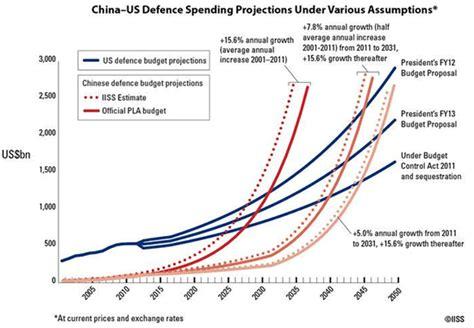
The strategic environment confronting the United States has entered a period of profound transformation. Technological advantage, once assumed as a permanent feature of American power, is now openly contested by near-peer rivals that have invested relentlessly in advanced weapons, digital warfare, and space-based capabilities. We are witnessing the erosion of comfortable margins that once defined U.S. military dominance, replaced by a competitive landscape in which speed, integration, and technological maturity decide outcomes.
In response, Washington has chosen escalation not through rhetoric, but through resources. The FY2026 National Defense Authorization Act represents one of the most consequential commitments in modern U.S. defense history. With nearly $1 trillion authorized, the legislation is not simply a funding bill; it is a declaration that the United States intends to reclaim decision superiority, outpace adversaries in emerging technologies, and restructure its warfighting architecture for an era defined by artificial intelligence, hypersonics, and contested space.
This moment is not driven by abstract theory. Russian operational use of hypersonic missiles, China’s vast missile inventories and counter-space programs, and rapid advances in AI-enabled command systems have exposed uncomfortable realities. We no longer face opponents who merely imitate American systems. We face competitors that innovate differently, deploy faster, and accept risk in ways that challenge traditional U.S. acquisition and doctrinal models.
The FY2026 NDAA is therefore both a reckoning and a pivot. It acknowledges that time has become a weapon, and that bureaucratic inertia is now a strategic liability. Through unprecedented investment and aggressive reform, the United States is betting that it can convert innovation into battlefield advantage faster than China or Russia can consolidate theirs.
Reframing American Power Through the FY2026 NDAA
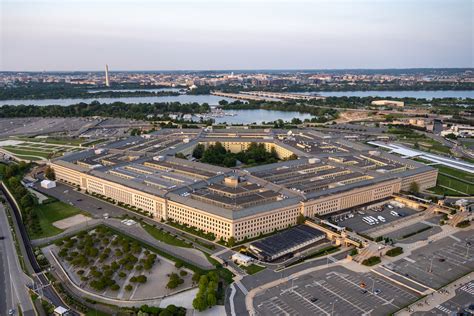
The FY2026 National Defense Authorization Act stands as the 65th consecutive approval of a legislative framework that has survived wars, political realignments, and technological revolutions. Yet this iteration is distinct in scale and intent. Signed into law on December 18, 2025, the Act authorizes $900.6 billion across the Department of War, nuclear security programs within the Department of Energy, and a constellation of national security initiatives that collectively redefine how America prepares for conflict.
What distinguishes this legislation is not merely the magnitude of funding, but its explicit prioritization of technological dominance. We see a deliberate shift away from platform-centric thinking toward systems that emphasize integration, autonomy, and rapid decision-making. The Act channels $38 billion into aircraft procurement, $26 billion into shipbuilding, $25 billion into munitions, and billions more into space systems, hypersonics, and artificial intelligence.
This is not a continuation of past spending patterns. It is a reorientation of American military power toward domains where China and Russia have narrowed or, in some cases, surpassed U.S. capabilities. The NDAA recognizes that superiority is no longer guaranteed by numerical advantage or legacy platforms alone. It must be earned through technological coherence, resilient supply chains, and accelerated fielding.
Artificial Intelligence as the Core of Decision Superiority
At the heart of the FY2026 NDAA lies a clear conviction: wars will be won by the side that decides faster and better. Artificial intelligence is no longer treated as an experimental add-on, but as an operational necessity embedded across planning, logistics, intelligence, and combat execution.
The Department of War’s focus on Applied Artificial Intelligence (AAI) reflects a strategic ambition to integrate AI as a trusted teammate rather than a passive tool. These systems are designed to assist commanders in evaluating complex battlefields, predicting adversary behavior, and optimizing resource allocation under extreme time pressure. Accountability and traceability are emphasized to ensure that AI-assisted decisions remain auditable and aligned with command intent.
This investment acknowledges a reality long understood by Chinese and Russian planners: human cognition alone cannot dominate data-saturated battlefields. By embedding AI into the command loop, the United States aims to compress decision cycles, reduce friction, and deny adversaries the opportunity to exploit hesitation.

Hypersonics and the Race for Strategic Tempo
Few technologies symbolize the shifting balance of power more starkly than hypersonic weapons. Russia’s operational deployment of Kinzhal and Zircon missiles, alongside China’s DF-17, has demonstrated that hypersonics are no longer theoretical constructs. They are battlefield realities capable of evading existing missile defenses and compressing response times to near zero.
The FY2026 NDAA allocates over $2.6 billion specifically to hypersonic programs, with additional funding embedded across research, testing, and procurement lines. The emphasis is not merely on weapon development, but on materials science, prototyping, and test infrastructure that can sustain long-term innovation. Multiyear procurement authority for low-cost hypersonic strike systems signals a commitment to scale, not just experimentation.
This approach reflects an understanding that hypersonics alter crisis dynamics. They complicate deterrence calculations, increase escalation risks, and reward first movers. By accelerating development and fielding, the United States seeks to restore strategic tempo and deny adversaries the psychological and operational leverage that hypersonic asymmetry provides.
Missile Defense and the Golden Dome Imperative
Missile defense emerges as another central pillar of the NDAA’s technological vision. The legislation enforces the Golden Dome policy, mandating the deployment of a next-generation missile defense shield capable of countering ballistic, hypersonic, and cruise missile threats simultaneously.
Unlike previous approaches that flirted with privatization or subscription models, the Act draws a firm line. Missile defense systems must be owned and operated by the armed forces, ensuring sovereign control over one of the most sensitive elements of national defense. Every major weapon system is now required to have a designated product support manager, embedding sustainment and readiness into the acquisition process from inception.
The Act also reinforces cooperation with Israel, authorizing funding for Iron Dome, David’s Sling, and Arrow-3 programs with explicit requirements for U.S. co-production. This not only strengthens missile defense capabilities but deepens industrial integration with a trusted ally experienced in real-world missile interception.

Space as a Contested Warfighting Domain
Space has transitioned from a benign enabler to a contested domain where superiority is actively challenged. The FY2026 NDAA reflects this shift through substantial investments in missile-warning satellites, next-generation intelligence platforms, and resilient constellations designed to survive hostile action.
The Space Force receives expanded authority to accelerate satellite development through streamlined acquisition pathways, particularly within the Proliferated Warfighter Space Architecture. Rapid prototyping and tranche-based deployment aim to outpace adversaries that have invested heavily in counter-space weapons, including anti-satellite missiles and orbital swarms.
Beyond defense, the Act acknowledges the strategic implications of space power. Concepts such as deploying nuclear reactors on the Moon underscore a willingness to explore permanent space infrastructure as a foundation for long-term dominance. At the same time, NASA faces fiscal pressure, highlighting a tension between civilian exploration and military imperatives in an increasingly militarized orbital environment.
Rebuilding the Defense Industrial Base Through Acceleration
Technology alone does not confer superiority if it cannot be produced, sustained, and replaced at scale. The NDAA’s acquisition reforms aim to dismantle processes that prioritize lowest cost over best value, recognizing that speed and adaptability now outweigh marginal savings.
Centralizing program management, embedding sustainment planning, and enforcing digital inventories of weapon-system data are designed to eliminate readiness gaps that have plagued past programs. The Act mandates harmonized cybersecurity standards across the defense industrial base by June 2026, addressing vulnerabilities that adversaries have actively exploited.
Crucially, the Administration signals openness to new suppliers and private capital, breaking long-standing barriers that favored entrenched contractors. This reflects an understanding that innovation increasingly originates outside traditional defense primes, and that resilience requires diversity within the industrial ecosystem.

Advanced Manufacturing and Strategic Materials Security
The FY2026 NDAA places advanced manufacturing at the center of defense resilience. Demonstration and prototyping programs are required to incorporate facilities capable of rapidly producing parts near operational theaters, reducing dependence on fragile global supply chains.
A dedicated working group on the advanced manufacturing workforce addresses chronic shortages in critical skill sets, while pilot programs explore construction technologies such as 3D printing on military installations. These initiatives are designed to convert commercial capacity into defense output during crises, blurring the line between civilian and military production.
The establishment of a Stockpile Manager and expansion of the Strategic Materials Recovery and Reuse Program underscore growing concern over critical mineral dependencies. By recycling and reusing materials from defense systems, the United States seeks to reduce reliance on adversary-controlled supply chains and secure long-term access to essential inputs.
Supply Chains as a Strategic Battleground
Supply chains have emerged as a decisive front in modern conflict. The NDAA strengthens resilience by prioritizing critical readiness items with long lead times, accelerating qualification of secondary suppliers, and reducing overreliance on single sources.
The Act explicitly targets dependence on adversary nations for materials such as optical glass, mandating elimination of certain foreign-sourced components by 2030. Molybdenum, gallium, and germanium are added to restricted strategic materials lists, reflecting awareness of China’s dominance in critical mineral processing.
A voluntary online registry of compliant suppliers introduces procurement preference for trusted domestic and allied partners, incentivizing alignment with U.S. sourcing laws while reshaping global defense supply networks.

Air Power Modernization Without Abandonment
Air power remains central to U.S. military strategy, but the NDAA reflects a nuanced approach that balances modernization with retention of proven platforms. Air Force procurement rises to $28.1 billion, supporting aircraft such as the C-40 Clipper, LC-130 Skibird, and expanded inventories of Joint Strike and standoff missiles.
Research and development funding approaches $54 billion, with major investments in the Sentinel intercontinental ballistic missile and the E-7 Wedgetail airborne early warning aircraft. The gradual replacement of aging E-3 AWACS platforms with E-7s signals a shift toward distributed battle management supported by space-based sensors and naval assets.
Congressional resistance to aggressive divestment underscores skepticism toward assumptions that manned platforms are obsolete. By blocking retirement of A-10s, F-15Es, and other assets, lawmakers reinforce a belief that manned and unmanned systems must coexist, each compensating for the other’s limitations.

Drones, Counter-Drones, and the New Airspace Reality
Uncrewed systems have transformed modern warfare, but their proliferation has also exposed vulnerabilities. The NDAA advances counter-UAS capabilities through expanded testing infrastructure, task forces, and interagency coordination designed to protect military and civilian assets alike.
The Act integrates drone defense into homeland security frameworks, extending protections to critical infrastructure, nuclear facilities, and intelligence installations. Naval directives emphasize drone-based inspection and maintenance, reflecting confidence in unmanned systems as force multipliers beyond combat roles.
By extending U.S.-Israel cooperation to address unmanned threats across all domains, the NDAA acknowledges that drone warfare is not a niche concern but a pervasive challenge reshaping every battlespace.
Munitions, Automation, and Sustained Conflict Readiness
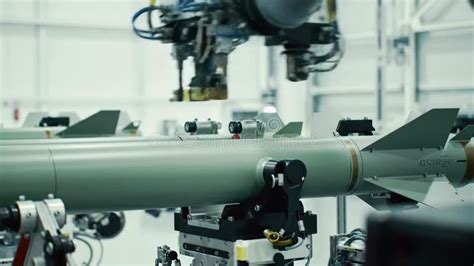
The authorization of more than $25 billion for munitions marks recognition that high-intensity conflict consumes weapons at rates unseen in recent decades. The NDAA mandates multiyear procurement authority for key missile systems, enabling long-term contracts that stabilize production and encourage industrial investment.
Robotic automation in manufacturing is expanded to improve safety, efficiency, and workforce training, aligning production capacity with the demands of simultaneous conflicts. Regular reporting requirements ensure transparency around delays and challenges, embedding accountability into an area historically plagued by bottlenecks.
Shipbuilding and Maritime Power in an Indo-Pacific Era
Naval power receives more than $26 billion in shipbuilding funds, supporting submarines, destroyers, aircraft carriers, and amphibious assets critical to Indo-Pacific operations. The NDAA recognizes that maritime superiority hinges on industrial capacity as much as fleet composition.
Pilot programs in automated shipbuilding aim to cut construction timelines and ease workforce strain, while governance mechanisms for small uncrewed maritime systems prepare the Navy for distributed operations. Joint training initiatives with partners such as Taiwan reflect the geopolitical focus of U.S. maritime strategy.
The Strategic Meaning of a Trillion-Dollar Commitment
The FY2026 NDAA is more than a budgetary milestone. It is an admission that strategic complacency is no longer affordable. China’s scale, Russia’s specialized capabilities, and the accelerating pace of technological change have converged to challenge assumptions that once underpinned American security.
By betting nearly $1 trillion on acceleration, integration, and resilience, the United States signals that it understands the nature of the competition. Victory will not belong to the nation with the most platforms, but to the one that turns ideas into capabilities fastest.
This legislation does not guarantee success. Technology invites counter-technology, and dominance remains fleeting. Yet the NDAA establishes a framework in which innovation is not merely encouraged but enforced through structure, funding, and urgency.
In the emerging era of AI-driven warfare, contested space, and hypersonic speed, we are reminded that power is not static. It must be rebuilt, reaffirmed, and relentlessly defended. The FY2026 NDAA is Washington’s wager that America can still do exactly that.