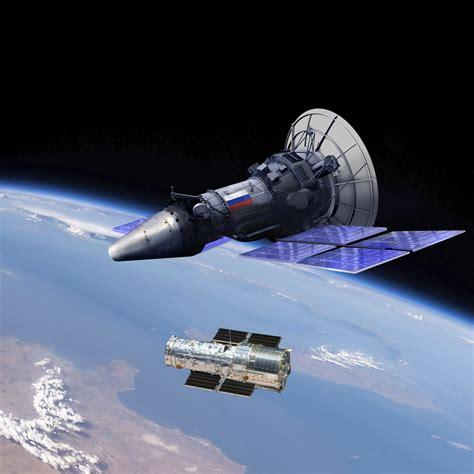
China’s space program has just marked a significant milestone that sets it ahead of both the United States and Russia. On July 2, 2025, China successfully completed a historic satellite refueling mission in geosynchronous orbit (GEO) at a staggering 35,786 kilometers (22,236 miles) above Earth. This achievement has propelled China to the forefront of space innovation, signaling its intent to become the world’s leading space power. In a move that underscores China’s technological prowess, the mission involved two Chinese satellites — Shijian 21 and Shijian 25 — conducting a satellite-to-satellite refueling operation, a feat no other nation has achieved.
The Historic Refueling Operation
The Shijian 21 and Shijian 25 satellites were tasked with docking in GEO to perform the first-ever high-altitude satellite refueling. The mission not only highlights China’s expanding capabilities in space but also marks a critical advancement in extending satellite lifespans, which is vital for both military and commercial applications. As satellites age, refueling can prolong their operational life without the need to launch replacements, thereby reducing costs and improving sustainability in space operations.
The refueling took place in geosynchronous orbit, where satellites orbit at the same speed as the Earth’s rotation, ensuring they remain stationary over a specific point on the Earth’s surface. This orbit is particularly important for communication and weather satellites, which require constant, uninterrupted coverage. According to reports from COMSPO, a U.S.-based space situational awareness company, the two satellites conducted rendezvous and proximity operations, demonstrating the advanced maneuvering and docking techniques required for refueling in space.
The Role of the Shijian Satellites
The Shijian 21 and Shijian 25 satellites were specifically developed for this mission. Launched as part of China’s ongoing space exploration and satellite longevity programs, Shijian 21 was originally sent into orbit in October 2021 for the purpose of testing space debris mitigation technologies. Its previous mission included hauling a defunct BeiDou satellite to a higher, “graveyard” orbit, utilizing much of its fuel. This made the satellite an ideal candidate for the refueling mission, as it was nearing the end of its operational life.
Shijian 25, on the other hand, was launched earlier in January 2025, specifically designed for satellite fuel replenishment and life extension technology. The satellite’s development by the Shanghai Academy of Spaceflight Technology (SAST) was aimed at proving the feasibility of refueling satellites in orbit, which could revolutionize the way space missions are conducted in the future.
The Technological Challenges
Performing satellite refueling at such a high altitude is a monumental challenge. The technical hurdles include the need for precise docking mechanisms, accurate fuel transfer in microgravity conditions, and overcoming the difficulties of maneuvering in such a distant and hostile environment. The docking process itself is fraught with risk, as it requires the satellites to come within very close range of one another without colliding. Moreover, fuel transfer between uncrewed spacecraft in geosynchronous orbit presents its own set of unique challenges, such as ensuring stability and proper alignment during the process.
However, China’s ability to complete this mission has been described as a “game-changer” for satellite technology. If successful, it would pave the way for the development of a network of orbital refueling stations, which could support a wide array of satellites in GEO and extend the operational lifespan of these crucial space assets.
China’s Growing Space Power
This refueling achievement is not an isolated event in China’s space program. In recent years, China has made rapid progress in its space exploration capabilities, challenging the dominance of the United States and Russia. While the United States and Russia have long led the way in space exploration, China’s space ambitions are now on the rise. The Chinese government has set its sights on becoming the global leader in space exploration, with a series of ambitious projects that range from deep-space missions to lunar exploration.
This refueling mission is also a part of China’s broader strategy to enhance space sustainability. Reducing space debris and extending the life of existing satellites will allow China to consolidate its space capabilities and reduce the high costs associated with launching new satellites. Furthermore, the ability to conduct such operations without human intervention demonstrates China’s growing mastery of autonomous systems and robotic space technology.
The Strategic Implications
The U.S. and Russia have long dominated the field of space exploration, but China’s new accomplishment could disrupt the established order. Experts suggest that satellite refueling technologies could enhance China’s military satellite capabilities, enabling longer reconnaissance missions and improving the country’s ability to monitor adversaries. There are also concerns that this technology could be used for anti-satellite warfare, which could target vital satellites that support communication, missile warning, and navigation systems.
The U.S. government has expressed concern over China’s growing space capabilities, especially as it relates to dual-use technology. Refueling satellites could allow China to maintain operational satellites in orbit for extended periods, thus strengthening its space infrastructure. In response, the U.S. has also been exploring the development of its own in-space refueling technologies to extend satellite lifespans and enhance space maneuverability.
However, the U.S. has been slow to prioritize this area. Despite some funding for commercial refueling experiments through the U.S. Space Force, there has been a lack of urgency in fully committing to refueling capabilities in geosynchronous orbit. In fact, the U.S. military’s budget for space access, mobility, and logistics, which includes refueling technologies, has been reduced by nearly 50% for fiscal year 2026, indicating that the U.S. may be lagging in this critical area of space technology.
Looking to the Future
The success of China’s satellite refueling mission could have profound implications for the future of space operations. By demonstrating the feasibility of in-orbit refueling, China has taken a significant step toward transforming how satellites are serviced and maintained. This technology could enable China to establish a more robust and sustainable space presence, while reducing the costs associated with building and launching new satellites.
Furthermore, as China continues to push the boundaries of space exploration, it is expected that other countries, including the U.S., will ramp up their efforts to develop comparable technologies. In the coming years, we may see more nations compete to establish orbital refueling stations and other space infrastructure that could change the way we operate in space.
The mission also signals a new era of space sustainability, where space debris reduction and satellite longevity will become crucial factors in determining the success of space programs. With the ability to refuel satellites, countries will be able to maximize their investments in space assets, reducing the need for frequent launches and minimizing the environmental impact of space exploration.
China’s satellite refueling mission is a clear demonstration of the nation’s rapidly advancing space capabilities. The successful execution of this mission could help China secure its place as the world’s leading space power, overshadowing both the U.S. and Russia. As space technology continues to evolve, it will be exciting to see how China’s ambitions unfold and whether the rest of the world can keep pace.