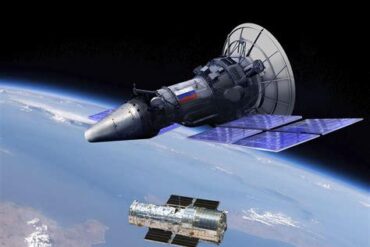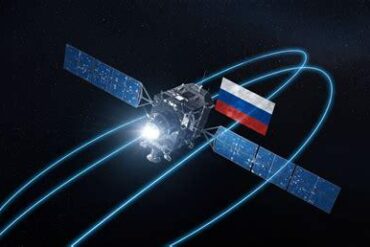
The global space industry was jolted by a filing that sounds almost unreal. China has applied to deploy nearly 200,000 satellites, a figure that dwarfs the entire number of active spacecraft currently orbiting Earth. The application, submitted to the International Telecommunication Union (ITU), outlines two vast satellite constellations, each consisting of 96,714 satellites, instantly redefining what “mega-constellation” means in practical and political terms.
At first glance, the proposal feels less like a technical roadmap and more like a declaration of intent. Low Earth orbit is becoming the new geopolitical frontier, and China’s move signals that future dominance may depend not only on rockets and engineering, but on who secures orbital positions and radio spectrum first. In space, as on Earth, early claims can shape decades of competition.
The filing originates from the Institute of Radio Spectrum Utilisation and Technological Innovation, a Chinese research body tasked with exploring how electromagnetic spectrum can be exploited on a national scale. By routing the application through the ITU, China is seeking priority access to specific frequency bands and orbital slots, ensuring that any future satellites operating there gain international legal protection from signal interference. This is not just about satellites; it is about locking in strategic options.
China’s Launch Capacity Versus Its Lofty Proposal
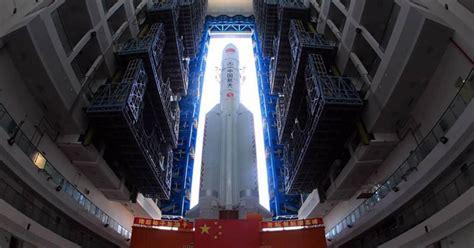
The sheer scale of the proposal raises immediate questions about feasibility. China set a national record with 92 launches in a single year, an impressive achievement by any standard, yet still far behind SpaceX, which launched 165 rockets in the same period. Even more striking is the comparison with Starlink, currently the largest operational satellite constellation, which has placed roughly 10,000 satellites in orbit after years of relentless launches.
Under ITU rules, approval would come with strict deployment milestones. China would have 14 years to complete the full constellation, beginning with symbolic launches within seven years, escalating to tens of thousands of satellites in the following decade. The timeline alone suggests that this filing may not be a literal promise, but rather a strategic ceiling—permission to deploy up to that number if circumstances, technology, and funding allow.
A Spectrum Land Grab in Earth Orbit
Behind the eye-catching numbers lies a more subtle motive. Radio spectrum and orbital lanes are finite resources, and once they are assigned, they become difficult for rivals to challenge. By applying for such an enormous constellation, China may be reserving vast swaths of communications spectrum long before it needs them. Even if only a fraction of the satellites ever fly, the regulatory advantage would remain intact.
This tactic mirrors historical land claims on Earth, except the terrain is invisible and governed by international bureaucracy. Whether such a maneuver can genuinely block competitors remains unclear, but it undoubtedly forces regulators and rival space powers to take notice.

Lessons From Rwanda’s Even Bigger Claim
China is not the first nation to test the boundaries of orbital claims. In 2021, Rwanda stunned the space world by applying for more than 327,000 satellites. The outcome was revealing: the approval process moved forward, but the real-world impact was minimal. Few satellites were actually launched, and global space activity continued largely unchanged.
This precedent suggests that headline-grabbing applications do not automatically translate into dominance. Instead, they function as strategic signals, probing how international systems respond and how much room there is to maneuver within existing rules.
The Future of an Increasingly Crowded Sky
What is undeniable is that Earth orbit is filling up faster than ever before. Commercial networks, national defense systems, and experimental platforms are all competing for space above the atmosphere. As filings grow bolder and constellations multiply, the night sky itself is changing, increasingly threaded with moving points of artificial light.
China’s 200,000-satellite application may never materialize in full, but its significance is already clear. It marks a turning point where orbital strategy rivals technological capability, and where paperwork filed today can shape the balance of power in space for decades to come.