For decades, airline loyalty programs were marketed as a reward for frequent travel. The concept was simple: fly often, accumulate miles, and enjoy perks that made future trips more comfortable and affordable. In the early years of frequent flyer programs, passengers who spent countless hours in the air were the primary beneficiaries. Elite status reflected loyalty measured in flights taken and miles flown.
That reality has changed dramatically.
In 2026, elite status at America’s largest airlines increasingly resembles a premium spending club rather than a reward system for travelers. While the language of loyalty remains, the mechanics behind earning meaningful status now revolve around one factor above all others: how much money flows through an airline’s ecosystem. Whether that spending occurs through airfare purchases or co-branded credit cards, the result is the same. The traveler who spends heavily is rewarded, while the traveler who simply flies frequently is becoming less relevant.
The transformation did not happen overnight. Instead, it emerged gradually through years of revenue-based earning systems, mileage devaluations, tighter qualification standards, and increasingly aggressive credit card partnerships. By 2026, the shift has become impossible to ignore.

The End of the Traditional Frequent Flyer Era
The original frequent flyer model rewarded distance. A traveler flying 5,000 miles earned significantly more than someone flying 500 miles. The logic was straightforward because loyalty was measured by actual travel activity.
Over time, airlines began questioning whether distance was the best measure of customer value. A passenger buying a last-minute business-class ticket generated far more revenue than someone purchasing deeply discounted economy fares. As airlines searched for higher profitability, they started redesigning loyalty programs to reward spending rather than flying.
Delta Air Lines took a major step in this direction when it adopted a revenue-based model in 2015. United Airlines followed the same year, while American Airlines completed the transition in 2016. What initially appeared to be a subtle adjustment ultimately reshaped the entire loyalty landscape.
Today, earning elite status depends far less on how often a passenger flies and far more on how much they spend. The practical effect is that airline loyalty programs increasingly favor affluent travelers, corporate road warriors with large expense accounts, and consumers capable of channeling massive amounts of spending through airline-affiliated credit cards.
Elite Status Is Now Built Around Spending Metrics
Each member of the US airline industry’s “Big Three” has developed its own terminology for elite qualification, but the underlying philosophy is identical.
American Airlines uses Loyalty Points.
Delta Air Lines uses Medallion Qualifying Dollars (MQDs).
United Airlines uses Premier Qualifying Points (PQPs).
Despite the different names, all three systems are fundamentally measuring spending.
Passengers earn qualifying credits through ticket purchases, ancillary purchases, partner activity, and increasingly through co-branded credit card spending. In fact, it is now possible at American Airlines and Delta Air Lines to achieve elite status without stepping onto an aircraft at all.
That reality would have seemed absurd during the early years of frequent flyer programs. Yet it perfectly illustrates how loyalty has evolved from rewarding travelers to rewarding spenders.
United still requires a minimum amount of actual flying for qualification, but even its system heavily favors customers who engage deeply with MileagePlus credit cards and other spending opportunities.
The message from the airlines is unmistakable: travel matters, but spending matters more.
Why the Most Valuable Customers Aren’t Flyers Anymore
One of the biggest misconceptions among consumers is that airlines make most of their money selling airplane tickets.
While ticket sales generate enormous revenue, loyalty programs have evolved into some of the most profitable businesses within the aviation industry. The economics behind these programs explain why airlines continue moving toward spend-based qualification systems.
Airlines sell billions of miles every year to banks and credit card issuers. Those institutions purchase miles in bulk and use them as incentives for sign-up bonuses, spending rewards, and customer retention programs.
For airlines, these transactions are extraordinarily profitable.
Issuing miles costs relatively little compared to operating flights. Every mile sold generates high-margin revenue. Even better from the airline’s perspective, a portion of those miles are never redeemed. Expired points and unredeemed balances effectively become pure profit.
As a result, the customer spending heavily on a co-branded credit card may be more financially valuable than a traveler who flies dozens of economy flights annually.
This fundamental economic reality has transformed how loyalty programs are designed.
The $15,000 Threshold Where Benefits Become Meaningful
Entry-level elite status remains relatively accessible. Airlines maintain lower qualification thresholds because they need a large population of engaged members participating in their programs.
However, the benefits associated with entry-level status are increasingly modest.
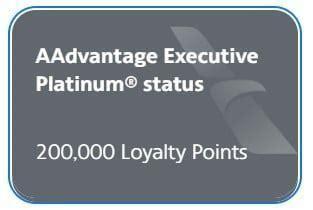
American Airlines requires 40,000 Loyalty Points for AAdvantage Gold.
Delta requires $5,000 MQDs for Silver Medallion.
United requires either a combination of flights and qualifying points or 6,000 PQPs for Premier Silver.
While these thresholds appear achievable, they deliver limited advantages compared to higher tiers.
The real value emerges at mid-tier and upper-tier levels.
American’s Platinum Pro requires 125,000 Loyalty Points.
Delta’s Platinum Medallion requires $15,000 MQDs.
United’s Premier Platinum requires 15,000 PQPs alongside flight requirements or 18,000 PQPs through spending alone.
At these levels, travelers begin receiving benefits that materially improve the travel experience. Priority boarding becomes more consistent. Upgrade opportunities improve significantly. Complimentary preferred seating becomes easier to access. Checked baggage allowances expand. Mileage bonuses become more substantial.
In practical terms, meaningful elite status increasingly begins around the $15,000 annual spending mark.
That threshold has effectively become the dividing line between casual participants and genuinely recognized elite members.
Credit Cards Have Become More Important Than Airplanes
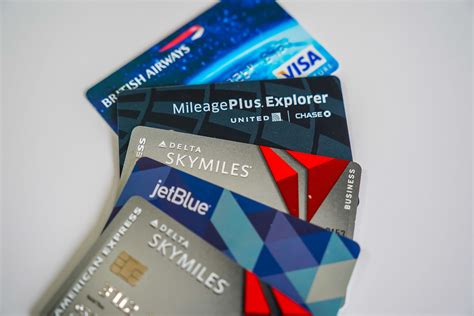
Perhaps the most remarkable development in airline loyalty programs is the growing influence of co-branded credit cards.
Historically, credit cards supplemented airline activity. Today, they often drive it.
Many elite members accumulate qualification metrics through everyday spending rather than through travel itself. Large purchases, business expenses, and household spending can generate enormous amounts of qualifying activity.
This dynamic aligns perfectly with airline economics. Every transaction processed through a co-branded credit card generates revenue opportunities through banking partnerships, mile sales, and customer engagement.
As a result, airlines increasingly reserve their most attractive incentives for cardholders.
In many cases, the loyalty program now functions as an extension of the credit card business rather than the other way around.
United Airlines Made the Industry’s Intentions Explicit
The clearest example of this trend emerged in February 2026 when United Airlines announced major changes to MileagePlus earning rates.
Rather than merely rewarding cardholders more generously, United began actively penalizing members who chose not to carry a co-branded credit card.
The revised earning structure created a noticeable divide between cardholders and non-cardholders.
General members previously earned five miles per dollar spent. Under the new structure, non-cardholders earn only three miles per dollar while cardholders earn six.
Elite members experienced similar changes across all status levels.
The adjustment effectively created two parallel loyalty programs operating under one brand. Customers holding United credit cards enjoy superior earning rates, enhanced redemption opportunities, and access to benefits unavailable to other members.
Basic economy travelers without elite status face even harsher restrictions. Many now earn no miles on certain fares unless they possess a MileagePlus credit card.
The significance of this change extends beyond United itself. It signals where airline loyalty programs are likely heading in the coming years.
Elite Status Alone No Longer Unlocks Everything
Another major shift in airline loyalty strategy involves separating premium benefits from elite qualification.
Historically, top-tier status often delivered access to a wide range of privileges, including lounge access, priority services, upgrades, and premium travel experiences.
Today, airlines increasingly reserve some of their most desirable benefits for premium credit card holders.
Airport lounge access frequently requires specific card products.
Additional award availability often depends on card ownership.
Discounted redemptions may only be available to cardholders.
Exclusive promotional offers increasingly target banking customers rather than elite travelers.
This creates a layered system where status alone is no longer sufficient. Travelers must combine elite qualification with credit card participation to unlock the full range of available benefits.
The result is a loyalty ecosystem designed to maximize financial engagement rather than travel engagement.
Mileage Devaluations Have Reduced the Value Proposition
Compounding the challenge for consumers is the steady decline in mileage value.
Over the past decade, airlines have repeatedly adjusted redemption pricing, making awards more expensive and reducing the purchasing power of accumulated miles.
Delta SkyMiles represents one of the most notable examples. Industry estimates frequently place SkyMiles values near 1.1 cents per mile.
United MileagePlus miles generally hover around 1.2 cents per mile.
American AAdvantage miles often retain slightly stronger value, but even they have experienced pressure from changing redemption dynamics.
For travelers, this means earning miles has become harder while extracting maximum value has become more complicated.
The traditional dream of flying frequently, accumulating miles, and enjoying generous free travel has steadily become less attainable.
Instead, members often find themselves accumulating enormous balances only to discover that premium award availability remains limited or redemption costs continue rising.
The Growing Divide Between High Spenders and Everyone Else
The modern airline loyalty landscape increasingly reflects broader economic trends.
Affluent consumers willing to spend heavily on premium travel, luxury experiences, and high-volume credit card activity receive the strongest rewards. Meanwhile, occasional travelers receive fewer meaningful incentives despite maintaining loyalty to a particular carrier.
This divergence has created frustration among many longtime frequent flyers.
Passengers who once qualified through sheer travel volume now find themselves competing against cardholders generating vast amounts of spending without flying nearly as often.
The system no longer prioritizes commitment measured in miles traveled. It prioritizes profitability measured in dollars spent.
From a business perspective, the strategy makes perfect sense. Airlines are directing resources toward their most lucrative customers.
From a consumer perspective, however, loyalty increasingly resembles a financial transaction rather than a travel relationship.
Could Travelers Be Better Off Ignoring Airline Loyalty?
As qualification thresholds rise and rewards become more dependent on spending, some travelers are reconsidering their approach.
Instead of concentrating all travel with a single airline, many consumers now prioritize fare prices, schedules, onboard products, and route convenience.
Flexible travel rewards cards have also gained popularity because they provide transferable points that can be used across multiple airline programs rather than locking customers into a single ecosystem.
For travelers who cannot realistically spend $15,000 or more annually within one airline’s ecosystem, chasing elite status may no longer deliver the return it once did.
The opportunity cost of loyalty has become increasingly difficult to justify.
The Future of Airline Loyalty in America
The trajectory appears clear. Airline loyalty programs are evolving into sophisticated spending ecosystems built around credit cards, banking partnerships, and premium consumer behavior.
The traditional frequent flyer remains part of the equation, but no longer occupies center stage.
In 2026, elite status at American Airlines, Delta Air Lines, and United Airlines is less about how often someone flies and more about how much financial value they generate. Meaningful benefits increasingly emerge only after substantial annual spending, with the most attractive perks often reserved for customers deeply integrated into airline credit card ecosystems.
The era when elite status rewarded miles flown has largely passed. In its place stands a new reality: airline loyalty has become a high-spending membership club where the path to recognition runs through wallets and credit cards as much as airport terminals and boarding gates.