The meaning of airline loyalty has shifted dramatically over the past two decades, but few programs illustrate that transformation more clearly than the elite tier structure of American Airlines. What once depended almost entirely on how often someone flew has evolved into a hybrid ecosystem where spending, partnerships, and everyday consumer behavior matter just as much as time spent in the air. In 2026, Executive Platinum status no longer represents just the traditional “frequent flyer.” It represents a broader class of high-value customers shaped by a modern loyalty economy.
The AAdvantage program, once a simple mileage-based system built for road warriors, now operates as a multi-channel engagement engine. Members accumulate value not only through flights but also through credit cards, shopping portals, dining programs, hotel partners, and travel bundles. This evolution has fundamentally reshaped who rises to the top tier—and why.
What makes this shift especially significant is that it has decoupled elite status from physical travel frequency. Instead of rewarding only those who spend the most time in the air, the system now recognizes overall financial contribution to the airline’s ecosystem. That means Executive Platinum is no longer a purely aviation-driven achievement. It is increasingly a reflection of economic participation across a wide consumer network.
The Evolution of AAdvantage and the Reinvention of Loyalty Value
When AAdvantage launched in 1981, it marked the beginning of the modern airline loyalty era. At the time, the concept was simple: fly more, earn more. Over the decades, however, the airline industry realized that loyalty was not just about distance traveled but also about customer behavior, brand preference, and long-term spending potential.
As competition intensified and profit margins fluctuated, airlines began expanding their programs beyond the aircraft cabin. Partnerships with hotels, car rental companies, and financial institutions slowly became just as important as flight activity. By the time the industry reached the 2010s, loyalty programs had already begun shifting toward revenue-based structures, rewarding passengers not for miles flown but for dollars contributed.
The most significant transformation arrived in the early 2020s when American Airlines fully transitioned AAdvantage into a Loyalty Points system. This shift replaced traditional mileage and segment-based qualification metrics with a unified currency earned across a wide range of activities. Today, members can earn status through flights, shopping portals, dining programs, vacation packages, and, most importantly, co-branded credit card spending.
This change did more than modernize the system—it redefined the identity of elite status itself. Executive Platinum is no longer reserved for ultra-frequent travelers alone. It now reflects a broader ecosystem of high-value customers who engage with the airline across multiple financial touchpoints.
How Executive Platinum Status Is Earned in 2026
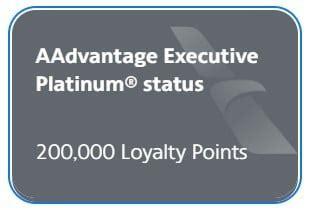
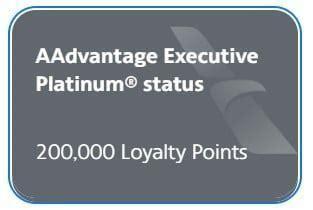
In 2026, reaching Executive Platinum status requires 200,000 Loyalty Points within a qualification year. Unlike legacy systems that required specific flight thresholds, this model introduces flexibility that fundamentally changes who can realistically achieve top-tier status.
Under this structure, every qualifying activity contributes toward a single unified goal. Flights with American Airlines and partner carriers still play a role, but they are no longer the sole driver. Credit card spending, retail transactions through shopping portals, dining rewards, and vacation packages now contribute equally within the broader framework.
The result is a system that allows for multiple earning strategies. Some members still pursue traditional road-warrior patterns, flying frequently for business or international travel. Others, however, achieve the same status through high credit card usage and everyday spending routed through airline-linked financial products.
The most notable implication of this shift is that flying is no longer mandatory for elite qualification. A member could, in theory, achieve Executive Platinum without stepping on a plane, provided their spending activity generates sufficient Loyalty Points.
This is not an edge case—it reflects the airline’s intentional strategy to diversify revenue streams and deepen customer engagement beyond aviation alone.
The New Profile of Executive Platinum Members in 2026
The modern Executive Platinum member is no longer defined by a single behavioral pattern. Instead, they fall into several distinct groups shaped by how they interact with the loyalty ecosystem.
One major group still consists of traditional high-frequency travelers. These are consultants, executives, and global professionals who continue to fly extensively for business. Their Loyalty Points accumulate primarily through airfare spending and partner airline networks. For them, status remains a natural extension of their travel lifestyle.
A second and increasingly important group consists of credit card-driven earners. These individuals may not fly frequently at all but generate substantial Loyalty Points through co-branded credit card usage. Their everyday spending—groceries, dining, subscriptions, and retail purchases—flows through airline-linked financial products, converting routine consumption into elite status progression.
A third category includes hybrid earners who combine moderate travel with strategic engagement across shopping portals, dining programs, and seasonal travel bookings. These members represent the “optimized loyalty users” who deliberately route spending through AAdvantage-linked channels to maximize return.
Finally, there is a smaller but growing segment of high-net-worth consumers who achieve status primarily through large-scale financial activity rather than travel behavior. Their qualification is driven less by travel necessity and more by ecosystem participation.
This diversification reflects a broader truth: airline loyalty is no longer a travel-only system. It is a financial engagement platform that rewards integrated consumer behavior.
Why Credit Card Spending Has Become the Fastest Path to Status
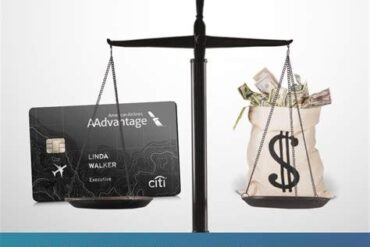
One of the most influential forces behind this transformation is the expansion of co-branded credit card partnerships. For American Airlines, these partnerships represent a critical revenue stream that now rivals operational income in importance.
Through these cards, members earn Loyalty Points for everyday spending, effectively converting routine financial activity into elite qualification progress. This mechanism has dramatically accelerated status accumulation for certain user groups, particularly those with high monthly expenditures but limited travel frequency.
The implications are significant. Under previous systems, achieving Executive Platinum required extensive flight activity. Today, a disciplined credit card strategy can replace much of that requirement. This shift has created a new archetype of elite member: the “non-flying frequent flyer,” whose loyalty is measured not in miles traveled but in dollars spent within the ecosystem.
From the airline’s perspective, this model is highly effective. It transforms fixed consumer spending into recurring revenue while strengthening customer retention. From the passenger’s perspective, it lowers the barrier to elite status while expanding accessibility to premium travel benefits.
However, it also raises questions about the evolving meaning of loyalty. When status is decoupled from physical travel, it becomes more closely tied to financial behavior than aviation engagement.
What Executive Platinum Actually Delivers Today
Despite the changes in qualification structure, Executive Platinum status remains the highest published tier within AAdvantage and continues to offer substantial tangible benefits.
Members receive top priority for complimentary upgrades on eligible flights, including domestic routes and select international segments. Upgrade priority extends to companions on the same reservation, reinforcing the value of shared travel experiences. In addition, Executive Platinum members enjoy a significant mileage bonus on eligible flights, increasing the value of every trip taken.
Operational benefits remain equally important. Priority check-in, Group 1 boarding, and expedited security access where available streamline the travel experience from ground to gate. For frequent travelers, these conveniences can dramatically reduce friction across busy travel schedules.
The status also includes access to premium lounge environments on qualifying itineraries, including Flagship Lounges and partner oneworld facilities. These spaces offer elevated dining, privacy, and comfort that distinguish long-haul travel from standard economy or business class experiences.
Additional flexibility benefits such as complimentary same-day flight changes and preferred seat access further enhance the program’s value. Collectively, these features maintain Executive Platinum as one of the most comprehensive elite offerings in the airline industry.
The Business Engine Behind Modern Loyalty Programs
Behind the passenger-facing benefits lies a much larger economic engine. Loyalty programs have evolved into multi-billion-dollar business units that often outperform core airline operations in profitability. For carriers like American Airlines, this transformation has made AAdvantage a central pillar of corporate strategy.
Industry estimates suggest that airline loyalty programs contribute a significant portion of total airline revenue, driven primarily by co-branded financial partnerships and partner redemptions. The value of AAdvantage itself has been estimated in the tens of billions, reflecting not just customer engagement but also long-term financial stability.
This financial strength is reinforced by predictable revenue flows from credit card issuers, retail partners, and travel ecosystems. Unlike ticket sales, which fluctuate with demand cycles, loyalty revenue provides consistency and scalability.
As a result, Executive Platinum status exists within a system that is no longer purely about rewarding travel behavior. It is part of a sophisticated commercial structure that blends aviation, finance, and consumer marketing into a unified ecosystem.
Conclusion: Executive Platinum as a Financial and Behavioral Identity
In 2026, Executive Platinum status is no longer a simple badge for frequent flyers. It is a representation of integrated consumer value within a complex loyalty network. Some members earn it through extensive travel, others through strategic financial behavior, and many through a combination of both.
What defines the modern elite tier is not how far someone flies, but how deeply they engage with the broader ecosystem surrounding American Airlines. The program has evolved into a system that rewards participation across multiple dimensions of modern consumption.
Ultimately, Executive Platinum has become less about distance and more about influence—less about miles in the air and more about presence within a powerful economic network that continues to reshape how loyalty is defined in the airline industry.