Germany has taken a decisive step toward industrial-scale air defense by expanding domestic production of TYTAN counter-drone interceptors, aiming to reach 3,000 units per month by the end of the year. The move reflects a hard-learned lesson from modern battlefields: unmanned aerial threats are cheap, numerous, and relentless, while traditional air defense missiles are neither expendable nor affordable in the quantities now required. By shifting from prototype tempo to factory rhythm, Germany is signaling that counter-UAS defense has become a matter of manufacturing capacity as much as military doctrine.
The expansion centers on TYTAN Technologies, which has opened a new production facility in Bavaria and consolidated development, system integration, quality assurance, and scaling under one roof. This industrial reorganization is not cosmetic. It is designed to compress design-to-deployment cycles and allow combat feedback—particularly from Ukraine—to be folded into production batches at speed. In an era where drone tactics evolve monthly, that feedback loop is operationally decisive.
At the strategic level, the decision underscores a broader European recalibration. Air defense planners are grappling with an uncomfortable arithmetic: a reconnaissance UAV or loitering munition may cost tens of thousands of euros, while a traditional interceptor missile can cost hundreds of thousands or more. Firing premium interceptors at disposable drones is economically unsustainable. Attritable interceptors, produced in large numbers and optimized for cost-per-kill, are becoming the rational alternative.
From Prototype to Industrial Tempo
TYTAN Technologies’ new Bavarian facility represents a deliberate shift from boutique aerospace manufacturing to something closer to ammunition production logic. The company has stated that its goal is not merely higher output, but predictable, repeatable quality at scale, enabling militaries to plan inventories around months of high-tempo operations rather than symbolic stockpiles.
This matters because counter-UAS warfare is defined by saturation. Defenders rarely face a single drone; they face dozens launched across multiple vectors, often in poor weather, at night, and under heavy electronic warfare pressure. A defense system that works once is insufficient. A system that can be fired hundreds of times per week without exhausting budgets or inventories is transformative.
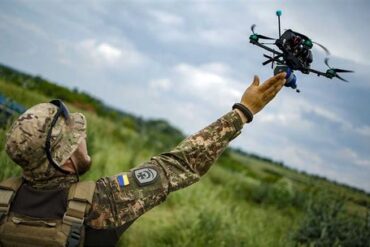
TYTAN’s approach reflects lessons drawn from Ukraine, where electronic warfare has degraded GPS and communications links, forcing both attackers and defenders to rely more heavily on autonomous systems. In this environment, interceptors must function independently once launched, without constant human control or fragile datalinks.
Technical Profile of the TYTAN Interceptor
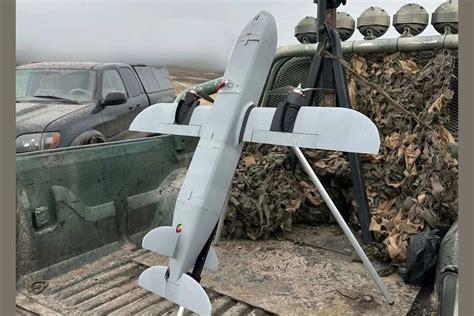
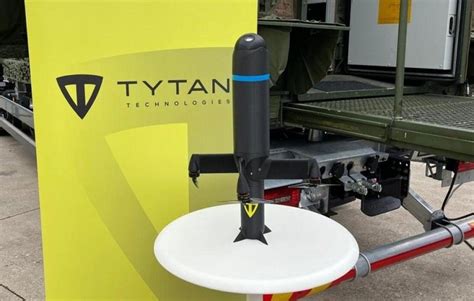
The TYTAN Interceptor is positioned as a compact, high-speed, autonomous kinetic effector. It is advertised with a top speed exceeding 250 km/h and an engagement range beyond 15 kilometers, placing it squarely in the zone needed to intercept reconnaissance UAVs and many one-way attack drones before they reach defended assets. With a launch weight of roughly 5 kilograms and a payload near 1 kilogram, the interceptor is optimized for rapid deployment rather than endurance.
Crucially, the system relies on computer-vision guidance and a hit-to-kill kinetic mechanism, avoiding dependence on GPS during the terminal phase. This design choice reflects battlefield reality. In heavily contested electromagnetic environments, navigation signals are unreliable, and jamming can defeat remote guidance. Autonomous perception, combined with a collision-based endgame, ensures that the interceptor remains lethal even when the spectrum is hostile.
The company also promotes an automated launcher system, a detail that carries more operational weight than it might appear. In swarm scenarios, the launcher—not the interceptor—often becomes the bottleneck. Automated reload and cueing can dramatically reduce the time between engagements, allowing a single battery to defeat multiple waves of incoming drones.
Restoring the Cost-Per-Kill Balance
The strategic logic behind mass-produced interceptors is fundamentally economic. Air defense is a contest of ratios: cost per interceptor versus cost per attacker, and number of shots available versus number of threats. By emphasizing low-cost, attritable effectors, Germany is seeking to restore a favorable balance against adversaries that rely on volume rather than sophistication.
This logic does not eliminate high-end air defense systems; it complements them. Expensive missile interceptors remain essential against fast jets, cruise missiles, and ballistic threats. However, using them against slow, disposable drones is analogous to using a precision rifle to swat mosquitoes. TYTAN-class interceptors allow commanders to reserve premium weapons for premium threats while handling the drone flood with systems designed for repetition.
The stated production target of 3,000 interceptors per month is therefore not arbitrary. At that scale, defenders can stockpile for prolonged crises, rotate inventories across multiple sites, and absorb losses without compromising coverage. It also introduces an element of deterrence by denial: if an attacker knows that drone waves will be met by equally numerous interceptors, the tactical payoff of saturation attacks diminishes.
HENSOLDT Partnership and the Kill Chain Question
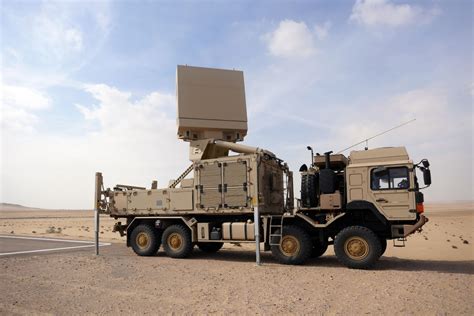
Equally significant is TYTAN’s Memorandum of Understanding with HENSOLDT, Germany’s leading sensor and defense electronics company. Counter-UAS effectiveness is determined less by the interceptor itself than by the kill chain—detection, tracking, identification, command-and-control, and engagement. A brilliant interceptor paired with inadequate sensors is operationally irrelevant.
By aligning with HENSOLDT, TYTAN is anchoring its interceptor within sensor and C2 architectures already familiar to European forces. The agreement, signed during the opening of TYTAN’s Munich headquarters by TYTAN CEO Balázs Nagy and HENSOLDT CEO Oliver Dörre, aims to deliver a fully integrated, deployable European counter-drone solution rather than a collection of standalone components.
This integration is strategically attractive for European customers. It reduces integration risk, shortens deployment timelines, and ensures compatibility with existing air defense networks. It also strengthens European industrial autonomy at a time when supply chain resilience and export controls are shaping procurement decisions.
Operational Testing and Bundeswehr Trajectory
TYTAN Technologies has emphasized that its systems have undergone operational testing in Ukraine, a claim that carries weight in defense procurement circles. Ukraine has become a live laboratory for drone warfare, where systems are validated—or discarded—under real combat conditions. Exposure to that environment suggests that the TYTAN interceptor has been stress-tested against modern tactics rather than idealized test scenarios.
In Germany, reporting indicates that the Bundeswehr procurement agency BAAINBw has signed a contract valued in the hundreds of millions of euros with TYTAN Technologies to develop interceptor drones for protection against unmanned aerial systems. While detailed quantities and timelines have not been publicly disclosed, the scale of the reported contract aligns with the company’s production ambitions.
Beyond Germany, export prospects appear structurally strong. Many European states face similar drone threats but lack the industrial base to develop indigenous solutions at scale. A German-produced, NATO-compatible interceptor integrated with established sensor systems presents a compelling option, particularly for countries seeking rapid fielding without deep development risk.
A Manufacturing Signal With Strategic Weight
Germany’s push to scale TYTAN interceptor production is ultimately a signal about how future conflicts will be fought and supplied. Air defense is no longer just about exquisite platforms; it is about industrial throughput, adaptability, and the ability to out-produce the threat. By committing to mass production of attritable interceptors, Germany is aligning its defense posture with the realities of drone-dominated warfare.
If the target of 3,000 interceptors per month is met, the impact will extend beyond national borders. It will demonstrate that Europe can translate battlefield lessons into manufacturing outcomes at speed, reshaping the economics of air defense and narrowing the advantage of adversaries who rely on cheap, expendable drones. In the emerging arithmetic of modern warfare, production capacity is becoming as decisive as firepower, and Germany is positioning itself accordingly.