As Western military aid becomes increasingly uncertain, Kyiv is intensifying its domestic drone production, signaling a strategic shift in Ukraine’s defense posture. The bold move comes amid ongoing conflict with Russia, with drones now playing a decisive role in shaping battlefield dynamics. Ukraine’s new approach is not only about surviving the war—it’s about creating a long-term defense industrial base that could support allies across Europe.
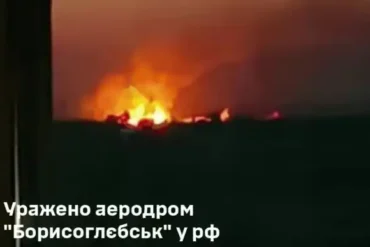
The Ministry of Defense has confirmed that drone strikes have become the centerpiece of Ukraine’s offensive capabilities, with more than 77,000 drone operations recorded in March alone. Current data suggests drones account for approximately 70% of battlefield casualties on both the Ukrainian and Russian sides, underscoring the pivotal role unmanned aerial systems (UAS) now play in modern warfare.
Ukraine’s Industrial Drone Revolution: Scaling for War and Beyond
Driven by battlefield necessity, Ukraine is now aggressively scaling up its drone production capabilities. In 2023, the nation produced over 2 million drones, and current projections aim to increase that figure to 5 million annually. This is not merely a quantitative escalation—it represents a qualitative evolution in both military tactics and technological self-reliance.
Alexi Giulenski, Chief Technology Officer at one of Kyiv’s key drone manufacturing companies, described Ukraine’s warzones as a dynamic testing ground for drone innovation. “We contact soldiers daily,” Giulenski stated, “to get direct feedback, improve performance, and resolve frontline issues quickly.” These continuous field adjustments feed back into production lines that are increasingly automated and adaptive.
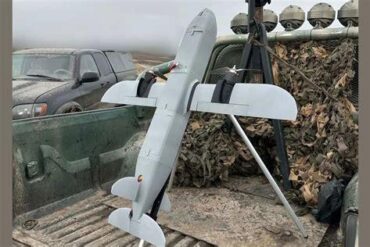
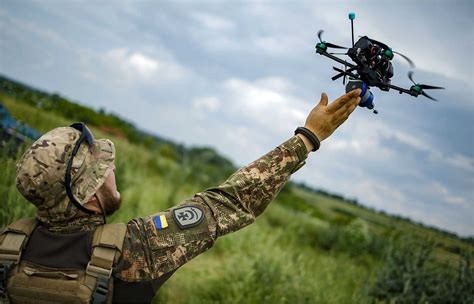
Factories are now operating around the clock, utilizing 3D printing and modular assembly lines to manufacture up to 3,000 FPV (First-Person View) drones per month. These agile, explosive-laden drones are proving especially effective against Russian armor and fortifications.
Government Investment: $2.66 Billion in Tactical Drone Procurement
To finance this surge in production, the Ukrainian government has earmarked $2.66 billion specifically for FPV drone procurement in 2024. This unprecedented investment marks a clear policy shift: Kyiv is no longer willing to depend solely on external military aid.
However, the ambitious domestic production agenda is not without challenges. Supply chain vulnerabilities, particularly related to raw materials sourced from China, threaten to slow progress. As international geopolitical tensions rise, Ukraine finds itself navigating economic warfare as well as military conflict.
A Strategic Pivot from Dependence to Export Ambitions
Since the full-scale Russian invasion began, Ukraine has relied heavily on allied military support, particularly from the United States and NATO countries. But with U.S. aid becoming less predictable due to domestic political gridlock, Kyiv is accelerating the development of an independent military-industrial complex.
Ukraine now envisions not only self-sufficiency but export potential for its battlefield-tested drone systems. Inquiries from European countries—especially those bordering Russia—are increasing rapidly. Giulenski emphasized this growing interest, noting, “European companies are scared of Russian aggression and want access to our drones.”
This could position Ukraine as a cornerstone of European defense manufacturing, especially as the continent works to reinforce its defense architecture under the European Commission’s Rearm Europe plan. This initiative promises up to $800 billion in collective defense investment, creating new opportunities for Ukrainian collaboration.
European Defense Integration: Ukraine as a Technological Partner
While Kyiv does not aim to displace existing European defense manufacturers, it does seek to become a strategic partner. Mahrebinuk, head of Ukraine’s defense R&D export division, said, “We don’t want to substitute European developers—we want to co-develop and co-defend Europe.”
Ukraine’s battlefield innovations are being closely observed by EU member states aiming to modernize their own defense capabilities. The potential for joint ventures, licensing deals, and cross-border R&D could further integrate Ukraine into the EU’s military supply chains.
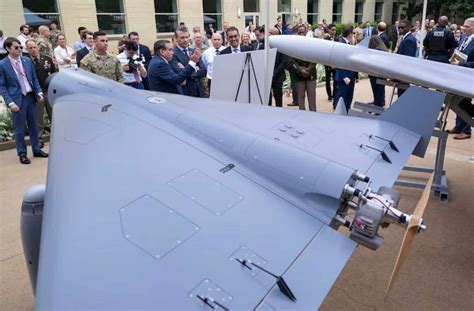
The Frontline Feedback Loop: Innovation Fueled by Combat
Ukraine’s drone evolution is driven by direct operational needs from the battlefield. This real-time feedback loop between combat units and engineering teams allows for constant iteration and tactical refinement.
Most of these drones start as modified commercial platforms, adapted with improvised warheads and upgraded communication systems. The combat zone becomes a laboratory, where each mission reveals new data points for improvement.
This system creates a high-velocity development cycle rarely seen in traditional defense procurement. Unlike legacy contractors in the West that operate on multiyear timelines, Ukraine’s startup-like defense firms iterate in weeks or even days.
Drone Warfare and the Shifting Nature of Combat
What we are witnessing is a transformation not only in how wars are fought, but in who builds the tools of war. Ukraine’s drone-centric doctrine signals a paradigm shift toward decentralized, technology-driven warfare.
This has profound implications for global military strategy. The efficacy of low-cost, mass-produced drones to disrupt conventional forces may redefine how nations prepare for future conflicts. No longer will billion-dollar jets or tanks dominate the battlefield unchallenged; the age of swarm warfare has arrived.
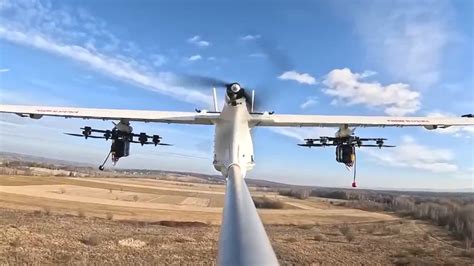
International Collaboration and the Road Ahead
Despite resource constraints, Ukraine’s determination to become a net contributor to European security is unwavering. Ongoing conversations with partners in Poland, the Baltic states, and Nordic countries point to a developing network of drone cooperation.
This includes discussions around shared production facilities, logistics chains, and potentially unified battlefield management software. Such integration could help mitigate supply chain vulnerabilities and reduce reliance on Chinese components.
Furthermore, Ukraine’s demonstrated capacity to innovate under fire has earned it credibility with both defense policymakers and private investors. Several NATO-aligned venture funds are already eyeing Ukrainian firms for potential investment.
Conclusion: From Battlefield Necessity to Defense Powerhouse
Ukraine’s push to escalate drone manufacturing is more than a tactical necessity—it is a long-term vision for strategic autonomy and regional influence. While obstacles remain, especially in financing and material sourcing, the trajectory is unmistakably upward.
Kyiv’s battlefield-forged drones are no longer just tools of resistance; they are rapidly becoming symbols of industrial resilience and geopolitical relevance. If current momentum holds, Ukraine may soon transition from a recipient of defense aid to a formidable exporter of next-generation warfare technology.
In a Europe increasingly focused on rearmament and self-reliance, Ukraine’s drones may become one of its most unexpected but invaluable assets.