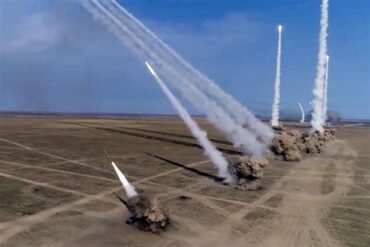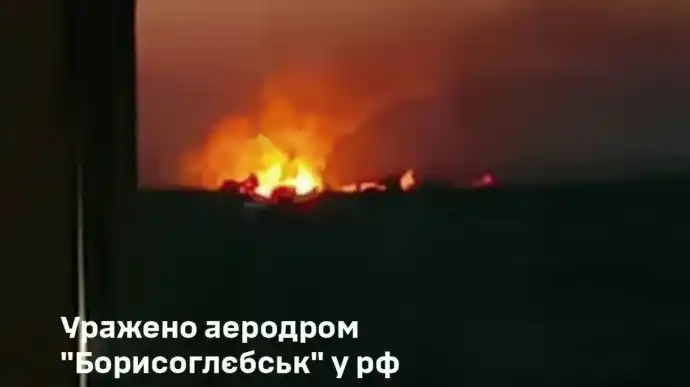
Ukrainian forces have launched a bold and symbolic strike deep into Russian territory, targeting the Borisoglebsk air base in the Voronezh region—a strategic hub for Russian aerial operations. The Ukrainian military described the attack as a direct blow to Russia’s airborne military power, stating that it struck a depot containing glide bombs, a training aircraft, and possibly other valuable aerial assets. This escalation comes as Moscow launched an unprecedented drone assault on Ukrainian territory, saturating Kyiv and surrounding regions with hundreds of explosive drones and decoys overnight.
Ukraine’s Deep Strike Strategy Targets Russian Air Superiority
According to Ukraine’s General Staff, the Borisoglebsk air base is home to some of Russia’s most advanced combat aircraft, including the Su-34, Su-35S, and Su-30SM fighter jets. The airbase has long served as a critical launchpad for Russian air operations over Ukrainian airspace. By striking this facility, Ukrainian forces aim to erode Moscow’s aerial dominance and disrupt future missions.
The attack follows a growing pattern in Ukraine’s evolving military doctrine, which increasingly favors long-range precision strikes against high-value Russian military infrastructure. In a similarly bold operation just weeks prior, Ukraine claimed to have destroyed over 40 Russian aircraft at multiple airfields inside Russia, including strategic bomber bases.
These strikes not only aim to reduce Russia’s offensive capabilities but also send a clear message: no location in Russia is beyond the reach of Ukraine’s drone and missile technologies.
Record Drone Barrage: Russia’s Retaliation Unleashed on Kyiv
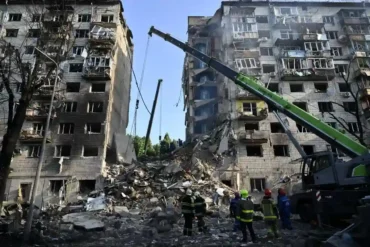
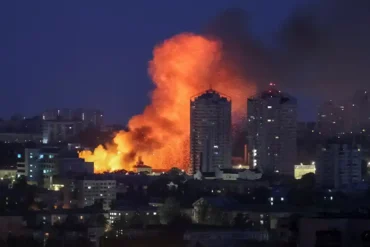
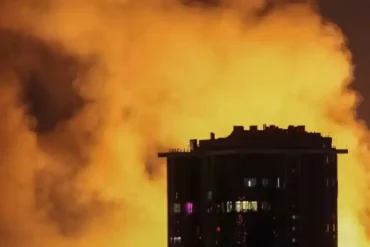
In what appears to be a massive retaliatory campaign, Russia launched a staggering 322 drones and decoys toward Ukraine in a single night, a figure the Ukrainian air force described as the largest aerial assault since the beginning of the full-scale invasion. Ukrainian officials reported that 157 of these drones were shot down, while 135 more failed to reach their targets, most likely disrupted by electronic warfare measures.
The western Khmelnytskyi region bore the brunt of the bombardment. However, regional governor Serhii Tyurin confirmed that no fatalities or injuries occurred, suggesting that Ukraine’s air defense grid held firm despite the overwhelming volume of incoming threats. Meanwhile, Kyiv experienced devastating strikes that killed two civilians and injured 31 others, according to Mayor Vitali Klitschko.
This sustained campaign of drone and missile warfare has become Russia’s primary tactic, especially as its ground offensives remain stalled or repelled in several sectors of the frontline. Analysts suggest the goal is twofold: to exhaust Ukrainian air defenses and to generate psychological pressure on urban populations.
Ukraine Bolsters Air Defense After Trump-Zelensky Call
Coinciding with this intense phase of warfare, Ukrainian President Volodymyr Zelensky held a “very important and productive” phone conversation with former U.S. President Donald Trump on Friday. The discussion reportedly focused on three key areas:
- Strengthening Ukrainian air defense capabilities
- Launching potential joint U.S.-Ukraine weapons production
- Exploring avenues for a broader U.S.-led initiative to negotiate an end to the war
Zelensky’s office emphasized the need for rapid delivery of air defense systems, especially amid reports that the U.S. had paused some military shipments, including crucial missile interceptors. Trump, when asked about the call, simply said: “We had a very good call, I think.”
While Trump remained non-committal about brokering a ceasefire—stating, “I don’t know. I can’t tell you whether or not that’s going to happen”—Zelensky reiterated his commitment to enhancing Ukraine’s domestic arms industry to reduce reliance on international aid over the long term.
Moscow, Engels, and the Electronic Battlefield
In Russia, the fallout from Ukraine’s expanding drone campaign was also palpable. The Russian Defense Ministry claimed to have shot down 94 Ukrainian drones overnight, followed by 45 additional drones during the morning and early afternoon. In the Saratov region, Ukrainian drones reportedly damaged 25 apartment units in the city of Engels, a known location for Russia’s Tu-95 strategic bombers.
In Moscow, four Ukrainian drones were intercepted while approaching the city’s outskirts. Air traffic was temporarily suspended at Sheremetyevo International Airport, Russia’s second busiest airport, as a precautionary measure. Moscow Mayor Sergei Sobyanin confirmed the incidents, adding that no casualties had been reported.
These developments illustrate the intensifying electronic warfare environment now defining the conflict. Ukraine’s increasing reliance on EW-jamming drones—many of them low-cost and mass-produced—has begun to alter the calculus of aerial combat. Russia, for its part, is leveraging layered air defense systems, but the scale and persistence of Ukraine’s raids are starting to wear them thin.
Evolving Doctrine: From Battlefield to Homeland Strikes
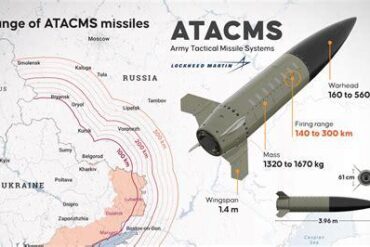
The shifting trajectory of the war has seen Ukraine move from defensive operations to a targeted offensive posture. The use of long-range drones, Storm Shadow missiles, and glide munitions is now central to Kyiv’s counterstrategy. This change reflects not just desperation, but also adaptation, as Ukraine seeks to deny Russia sanctuary within its own borders.
Unlike in 2022 and 2023, when most attacks occurred along the frontline or in Russian-occupied Ukrainian territories, 2024 and beyond are seeing more direct strikes on Russian military assets in its own sovereign territory. These are no longer isolated incidents but part of a growing trend that includes strikes on:
- Fuel depots in Belgorod and Kursk
- Radar stations in Bryansk
- Airfields in Voronezh and Saratov
Implications for Air Dominance and War Termination Scenarios
Military analysts caution that although Ukraine’s deep strikes are symbolically powerful and tactically significant, they will likely not shift the broader balance unless paired with strategic gains on the ground. Nonetheless, damaging airfields like Borisoglebsk and degrading Russia’s fighter jet fleets can create localized air superiority, allowing Ukrainian forces to maneuver with less threat from above.
For Russia, the increasingly bold Ukrainian operations expose vulnerabilities within its homeland defense systems and suggest that the war’s frontlines are no longer limited to Donetsk, Luhansk, or Zaporizhzhia, but now stretch across thousands of kilometers.
This geographical expansion of warfare may also pressure the Kremlin into reconsidering its strategy, especially as domestic unrest over the war’s prolonged duration and rising casualties gains traction. At the same time, Ukrainian officials remain skeptical of any negotiations unless territorial integrity and security guarantees are part of the outcome.
The Way Forward: Recalibrating Power in a Stalemated Conflict
As both countries settle into attritional warfare, the pressure is mounting for external actors—particularly NATO and the United States—to reassess their levels of military support. With U.S. aid faltering and Europe stretched thin, Ukraine’s push toward independent weapons production could be a game-changer, but experts agree that scaling such capabilities may take years, not months.
Until then, Ukraine’s combination of deep strike tactics, international diplomacy, and resilient defense remains its best hope of countering Russian aggression. In the meantime, every drone launched and every airfield hit reverberates far beyond the battlefield—reshaping military doctrine, foreign policy, and the enduring quest for sovereignty.
Despite the death and destruction inflicted by recent strikes, both Kyiv and Moscow appear far from seeking peace. What began as a territorial conflict has now evolved into a high-tech battle for dominance in cyberwarfare, electronic jamming, and drone supremacy—signaling that the war’s next phase may be even more complex than the last.