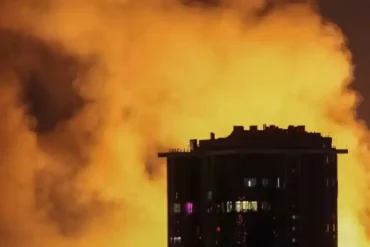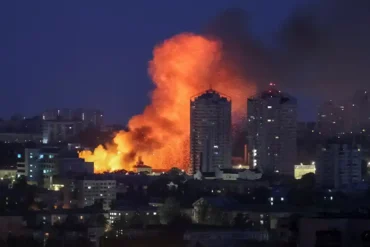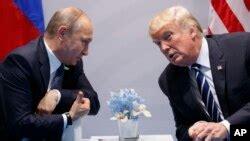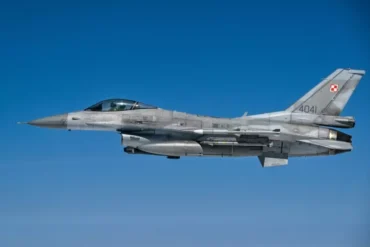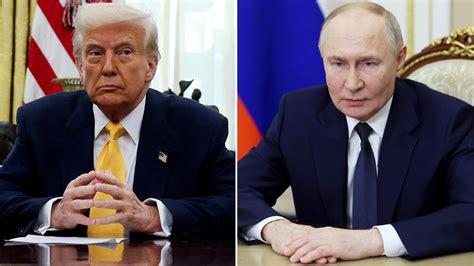
In the immediate aftermath of an unproductive phone call between US President Donald Trump and Russian President Vladimir Putin, Russia unleashed its largest drone and missile barrage on Ukraine since the start of the full-scale invasion in February 2022. The coordinated overnight strike shook cities across Ukraine, sending millions into shelters and leaving a trail of destruction that Ukrainian residents described as unprecedented in scale and intensity.
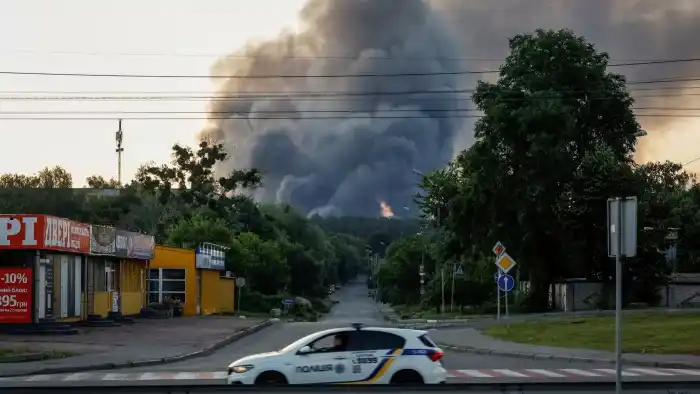
Largest Attack Since the Invasion: 539 Drones and 11 Missiles Unleashed
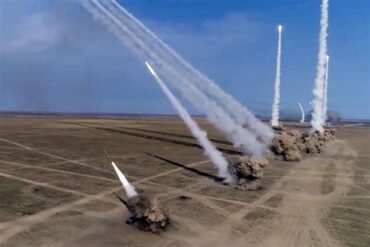
According to Ukraine’s Air Force, the massive aerial offensive involved a staggering 539 Shahed-style kamikaze drones alongside 11 long-range cruise and ballistic missiles, targeting both civilian infrastructure and strategic defense sites. President Volodymyr Zelensky confirmed that at least 23 people were wounded in the barrage, though early reports indicate the toll could rise as rescue efforts continue.
“This was unlike anything we’ve ever seen,” said Tymur, a Kyiv resident and survivor of previous air raids. “It was just endless explosions—nonstop. There’s nothing left to compare it to.”
Hours After Trump-Putin Call: Geopolitical Signals of Aggression
The timing of the attack sent an unambiguous geopolitical message. Coming just hours after the Trump-Putin call, during which no diplomatic breakthrough was achieved, the strike is widely interpreted as Putin’s defiant response to renewed Western overtures for peace.
“The Kremlin made it clear after the call that it will continue to pursue its so-called ‘special military operation’ goals,” noted Ukrainian Foreign Minister Andriy Sybiga, who described the attack as a demonstration of Russia’s total disregard for global diplomatic efforts and U.S. authority.
President Trump, whose tone has become increasingly critical of Putin in recent weeks, was reportedly frustrated by the outcome of the conversation. Unlike his earlier calls that often ended with cautiously optimistic statements, this one concluded with grim silence from Washington, followed swiftly by a Russian act of aerial terror.
Air Raid Sirens Across Ukraine: “Nothing Like This Ever Happened”
As air raid sirens echoed from Lviv to Kharkiv, residents scrambled to shelters. Kyiv’s metro stations once again became makeshift bunkers for hundreds of civilians. Yuliia Golovnina, a regular shelterer during such strikes, described the psychological toll of living under constant threat.
“You hear one explosion, and then you wonder—is that it, or is the next one going to hit here? You just freeze. Every second feels like your last,” she said.
The Ukrainian Air Force, despite claiming partial success in intercepting some of the incoming drones and missiles, was overwhelmed by the scale of the assault. Infrastructure damage reports are still emerging, with critical energy substations, transport nodes, and communication relays hit across several oblasts.
Diplomacy in Ruins: Europe Reacts as Tensions Surge
The international response was swift and furious. Germany’s foreign ministry condemned the attack, calling it “a clear demonstration that Moscow relies solely on brute force.”
Poland’s Foreign Minister Radoslaw Sikorski revealed that a Polish embassy building in Ukraine sustained damage during the attack, though thankfully no staff were injured. In a pointed rebuke to the United States, Sikorski posted: “President Trump: Putin is mocking your peace efforts.”
Ursula von der Leyen, President of the European Commission, stressed the urgency for the EU to increase military support to Kyiv, especially as U.S. aid is under reconsideration in Washington.
Pressure on the United States: Zelensky Calls for Decisive Action
Ukrainian President Zelensky did not mince words in his appeal to Western allies. Posting shortly after the airstrikes began, he said:
“Yet again, Russia is showing it has no intention of ending the war and terror. Without truly large-scale pressure, Moscow will not change its dumb, destructive behavior.”
He emphasized the need for the U.S. to reinforce—not reduce—military and financial aid to Ukraine. Zelensky is reportedly scheduled to speak with Trump in the wake of the attack, a conversation many see as pivotal to determining the direction of U.S.-Ukraine policy in the coming months.
Tensions in Kyiv are rising as Congressional debates in Washington continue over the future of Ukraine aid. The latest package saw partial reductions, raising fears that Ukraine could be left vulnerable at a critical point in the war.
Escalating Russian Hostility: June’s Record Tally Followed by July’s Shock
This attack caps off a trend of intensifying Russian air assaults. June 2025 recorded the highest number of drone and missile strikes since the invasion began, and the July 4 offensive appears to have shattered even that record.
Observers point to a direct correlation between failed diplomacy and Russian escalation. As talks between Kyiv and Moscow faltered last month, attacks on Ukrainian soil increased. Analysts suggest Putin is leveraging these assaults to gain battlefield leverage ahead of any potential negotiations.
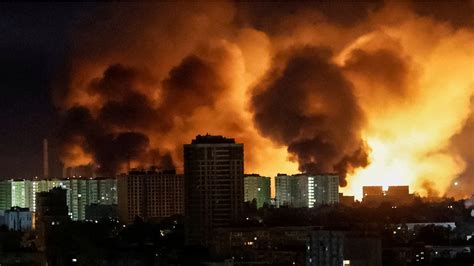
Ukraine Strikes Back: Retaliatory Drone Hits Russian Soil
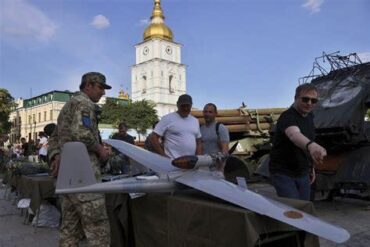
While Russia’s barrage dominated headlines, Ukraine has also intensified its long-range drone campaigns into Russian territory. In Rostov, a woman was reportedly killed when a Ukrainian drone crashed into a residential apartment block, according to the acting regional governor.
This tit-for-tat exchange reflects the evolving nature of modern warfare, where both sides now possess significant drone capabilities. However, the disproportionate impact of Russia’s latest assault—measured in the sheer number of drones and missiles—marks a significant turning point in the conflict.
Civilian Toll and Strategic Intent: What’s Putin Signaling?
Military experts believe the July 4 strike was not purely tactical. With its timing aligned immediately after the Trump call, and the scale designed for maximum shock value, the attack seems aimed at achieving psychological and diplomatic objectives as much as strategic ones.
“This is Putin’s answer to diplomacy,” said a Western intelligence source. “He’s telling the world: Don’t expect compromise. Expect escalation.”
The bombardment also comes amid mounting speculation over Russia’s stockpile health and domestic drone production, suggesting that Moscow may be shifting towards mass-production tactics that rely on volume over precision.
Global Implications: What Comes Next?
As NATO leaders prepare for an emergency summit, the question remains: Will this attack galvanize Western unity—or deepen divisions? With U.S. policy increasingly uncertain, and European nations split between hawkish and cautious approaches, Ukraine’s fate hangs in the balance.
Meanwhile, Ukrainian civilians are bracing for more.
“We’ve stopped asking ‘if’ another attack will come,” said Yuliia in Kyiv. “Now we just ask—when.”
The situation on the ground is volatile, but one thing is clear: this was not just another night in Kyiv. It was a message, delivered with fire and steel, from a Kremlin determined to rewrite the rules of war—and diplomacy—on its own terms.