Delta Air Lines Flight DL791 returned to New York-JFK on Thursday morning after its pilots reported a cabin pressurization problem shortly after departure, bringing another operational incident involving the carrier’s veteran Boeing 757-200 fleet into focus. The aircraft had been scheduled to fly from John F. Kennedy International Airport to Phoenix Sky Harbor International Airport with 155 passengers and six crew members aboard.
The Boeing 757-200 departed JFK shortly before 8:00 a.m. for the roughly five-hour journey to Phoenix. During the flight, the crew identified a problem involving cabin pressurization and declared an emergency, allowing air traffic controllers to give the aircraft priority handling as it returned toward New York. The aircraft subsequently landed safely at JFK shortly after 10:20 a.m., and no injuries were reported among the passengers or crew.
Delta said the pilots followed standard procedures after detecting the issue and elected to return to JFK rather than continue the flight. After landing, the 757-200 was handed over to Delta’s maintenance teams for evaluation. The Federal Aviation Administration also said it would investigate the incident, although there was no immediate indication that the aircraft had suffered a serious structural or mechanical failure.
“The flight crew of Delta Flight 791 from New York-JFK to Phoenix followed standard procedures and returned to JFK following a cabin pressurization issue,” Delta said in a statement. “The flight landed safely, and we apologize to our customers for the delay in their travels.” The decision to declare an emergency was therefore a precautionary operational measure designed to ensure the aircraft could receive appropriate priority while returning to its departure airport.
Delta DL791 Pressurization Issue Comes Days After Another Incident
The JFK incident occurred only four days after another Delta aircraft experienced a significant pressurization problem. On September 6, Delta Flight DL2311 was operating from Los Angeles International Airport to Salt Lake City when oxygen masks deployed inside a Boeing 737-900ER. The aircraft descended rapidly from 36,000 feet to 9,000 feet in less than ten minutes before diverting safely to Las Vegas.
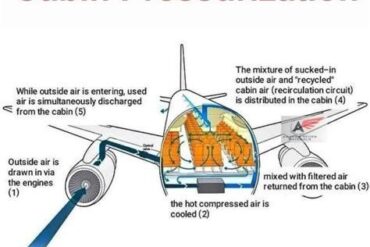
That aircraft was carrying 174 passengers and six crew members. Although the two events involved different aircraft types and occurred under different circumstances, their close timing naturally draws attention to the importance of cabin pressurization systems. Such systems are critical on high-altitude commercial flights because they maintain an environment suitable for passengers and crew while the aircraft operates at altitudes where the outside air is far too thin to support normal breathing.
Pressurization problems are not exclusive to older aircraft, and the recent 737-900ER incident demonstrates that age alone cannot explain such events. Delta’s 737-900ER fleet averages approximately 10.5 years, while its 757-200s average more than 28 years. The difference does, however, highlight the increasingly advanced age of one of Delta’s most recognizable aircraft families.

Delta Still Operates 75 Boeing 757-200s
As of June 30, Delta operated 75 Boeing 757-200s alongside 16 larger 757-300s, giving the airline a total 757 fleet of 91 aircraft. The average age of the -200 fleet was approximately 28.2 years, while the 757-300s averaged 23.4 years.
That makes the 757-200 one of the oldest major aircraft types remaining in Delta’s mainline fleet. Some individual aircraft are substantially older still. In 2024, for example, a 32-year-old Delta 757-200 attracted attention after its nose wheel separated while the aircraft was preparing for departure at Hartsfield-Jackson Atlanta International Airport.
Thursday’s event also follows several other technical incidents involving Delta’s 757 aircraft during the past two years. Those events have included engine problems, suspected flap issues, cockpit smoke, rejected takeoffs and previous pressurization problems. In September 2025, DL179, a Boeing 757-200 flying from Keflavik to Detroit, experienced a pressurization problem that resulted in an emergency descent and diversion to Montreal.
In April 2025, DL1030 returned to Orlando after experiencing a pressurization issue, while DL1329 returned to Jacksonville after a potential flap problem. More recently, DL2204 returned to Atlanta after smoke was reported in the cockpit, while 757-300 service has also experienced technical disruptions.
These incidents should not be treated as evidence that Delta’s 757 fleet is unsafe. There is no evidence that the age of the DL791 aircraft caused Thursday’s problem, and individual technical events can have very different causes. Commercial aircraft are also subject to extensive inspection and maintenance requirements throughout their operating lives.
Why Delta Has Kept the 757 for So Long
The longevity of Delta’s Boeing 757 fleet is closely connected to the aircraft’s unusual combination of characteristics. The 757 offers considerably more capacity and range than many conventional narrowbodies while retaining strong runway performance. That makes it useful on routes where a smaller aircraft would lack sufficient capacity but a widebody would be excessive.
Delta has consequently used its 757s across a broad range of missions, including domestic trunk routes, Hawaii services and selected international flights. Some aircraft are equipped with premium cabins featuring Delta One lie-flat seats, giving the type capabilities that remain difficult to replicate with a conventional narrowbody.
The aircraft’s versatility also explains why replacing the 757 has been more complicated than simply selecting one successor and retiring the entire fleet. Different 757 routes have different capacity, range and premium-cabin requirements, meaning several newer aircraft are gradually taking over the jobs once concentrated in one design.

Airbus A321neo Is Replacing Delta’s Aging 757s
Delta has increasingly turned to the Airbus A321neo as the principal next-generation replacement for the 757-200. The change is already visible in the airline’s fleet statistics. Delta had 100 757-200s in June 2022, but that number had fallen to 80 by June 2025 and 75 by June 2026.
Over the same period, the A321neo fleet expanded dramatically. Delta operated only three A321neos in June 2022. By June 2025, the number had reached 76, and by June 2026, it stood at 99 aircraft. The carrier now has more than 100 A321neos in operation and additional aircraft on firm order, accelerating the long-term transition away from older narrowbodies.
Delta has previously estimated that replacing a 757-200 with an A321neo could produce approximately 10% lower seat costs, while providing additional premium seating and potentially generating millions of dollars in additional annual contribution per aircraft. Those economics are increasingly important as airlines seek lower fuel consumption and operating costs from newer-generation aircraft.
The A321neo will not completely replace every role currently performed by the 757. Delta also has commitments for 100 Boeing 737 MAX 10s, with options for another 30, giving the airline another high-capacity narrowbody option for future domestic operations.
The Boeing 757’s Delta Career Is Entering Its Final Chapter
Delta’s decision to retire the 757 gradually rather than immediately reflects how difficult it is to replace an aircraft with such a distinctive combination of range, capacity and performance. For decades, the 757-200 has occupied a particularly valuable position within the airline’s network, operating flights that sit between the capabilities of smaller narrowbodies and larger widebody aircraft.
Even Delta’s specialized charter operation is moving toward newer equipment. The airline has begun introducing specially configured A321neos intended to replace aging 757-200s used for NBA and other charter missions. This transition demonstrates that the replacement process extends beyond ordinary scheduled passenger routes.
For DL791, the immediate priority is determining what caused the pressurization problem and ensuring the aircraft is properly inspected before returning to service. For Delta’s broader fleet strategy, however, the incident arrives during a much larger transformation. The 757-200 remains a capable and highly useful aircraft, but with an average age exceeding 28 years, its future at Delta is becoming increasingly limited.
Thursday’s safe return to JFK therefore represents two different realities at once: the effectiveness of established procedures and maintenance when a technical problem occurs, and the gradual end of an era for one of the most important aircraft types in Delta’s history. As more A321neos and other new-generation narrowbodies enter the fleet, the Boeing 757-200 is steadily moving from everyday workhorse toward retirement.