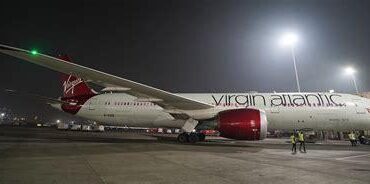
Virgin Atlantic is making a striking change to its incoming Airbus A330-900neo fleet, deliberately giving up 30 seats on each aircraft to create a substantially larger premium cabin. At first glance, removing seats from a widebody jet might seem like an unusual strategy for an airline that needs to maximize revenue from every flight. But the decision reveals a much bigger shift in how the carrier intends to compete on its most important long-haul routes: fewer passengers, more premium space, and greater revenue potential from every square foot of cabin real estate.
The redesigned aircraft will carry just 232 passengers instead of 262, with the biggest reduction coming from standard Economy. Virgin Atlantic will remove 56 Economy seats, shrinking the main cabin from 184 seats to 128. At the same time, Upper Class will grow from 32 to 48 suites, while Premium Economy rises from 46 to 56 seats. The result is a widebody aircraft that sacrifices passenger volume in exchange for a significantly heavier concentration of premium products.
The strategy is particularly important because these aircraft are intended for Virgin Atlantic’s network from London Heathrow, where airport capacity is exceptionally constrained and every takeoff and landing opportunity is valuable. Rather than treating each slot as an opportunity to move the largest possible number of travelers, Virgin Atlantic is attempting to extract more revenue from each departure. That approach is closely connected to a $745 million financing agreement with Apollo Global Management, secured against 27 Heathrow slots.

Virgin Atlantic A330-900neo Seat Reduction Explained
The scale of the A330-900neo redesign becomes clearer when the individual cabin changes are examined. The aircraft’s total capacity falls by 30 seats, but the headline number does not tell the whole story. Virgin Atlantic is effectively removing a large portion of its lowest-yielding cabin while replacing some of that floor space with seats designed to command considerably higher fares.
Economy drops from 184 seats to only 128, representing a reduction of 56 seats. That is a substantial 30% contraction in the main cabin. However, the airline adds 16 Upper Class suites, taking the premium flagship cabin from 32 to 48 seats, while Premium Economy gains another 10 seats. The mathematics means that the lost Economy capacity is being converted into a combination of additional lie-flat suites and higher-value Premium Economy seating.
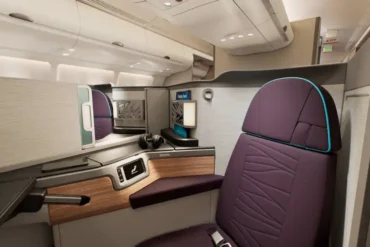
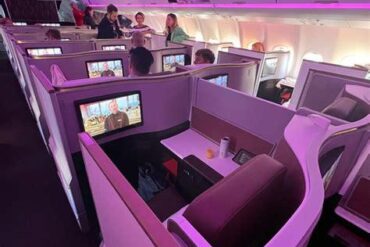
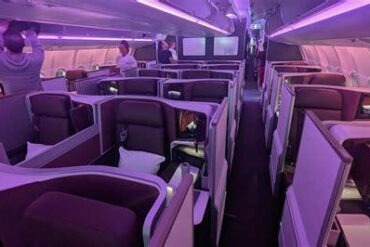
This is not simply a matter of installing more seats at the front. The additional floor space allows Virgin Atlantic to rethink how its Upper Class cabin occupies the aircraft. The expanded configuration extends Upper Class beyond the second set of exit doors and creates a secondary four-row mini-cabin, allowing the airline to devote three former Economy rows to its premium strategy.
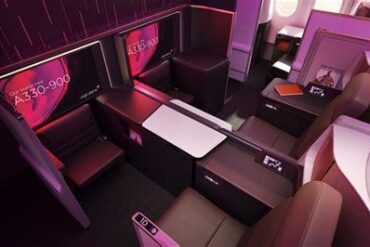
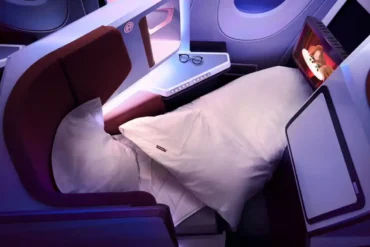
One of the most notable changes involves the Retreat Suites. Virgin Atlantic plans to increase the number from two to six on each A330-900neo. These are positioned as an especially distinctive part of the Upper Class experience, with solo window suites as well as central arrangements capable of creating a more social dining environment for groups of travelers.
The change illustrates an important principle in modern premium aviation. A conventional Economy seat primarily sells transportation, while a premium suite sells transportation plus privacy, space, dining, sleeping and a differentiated onboard experience. Virgin Atlantic is therefore treating cabin floor area less like a fixed seating grid and more like a piece of commercial real estate.
Why Virgin Atlantic Is Betting on Premium Passengers
The financial logic behind the redesign rests on the economics of premium transatlantic travel. Routes between Heathrow and major North American business centers such as New York and Boston can generate particularly valuable corporate traffic. Business travelers are often less sensitive to fares than leisure passengers, particularly when schedules, flexibility, loyalty benefits and direct connectivity are important.
An Upper Class suite also occupies substantially more physical space than an Economy seat. That normally creates a problem for airlines because fewer seats mean fewer potential passengers. Virgin Atlantic is betting that the additional revenue generated by each premium passenger will compensate for the lost volume.
A lie-flat Upper Class product can command several times the price of a standard Economy ticket on a long-haul flight. Premium Economy occupies the middle ground, offering travelers additional space and comfort without requiring the enormous footprint of a full suite. This makes the combination of 48 Upper Class suites and 56 Premium Economy seats particularly significant.
The strategy is also supported by Virgin Atlantic’s relationship with Delta Air Lines. The two carriers operate within a transatlantic joint venture, creating an extensive network connecting the United Kingdom with North America. More Upper Class capacity can help Virgin Atlantic support corporate contracts that require a reliable supply of premium seats at attractive departure times.

For corporate customers, availability can be almost as important as price. A company negotiating a travel agreement does not simply want a low fare; it wants employees to be able to obtain premium seats when they actually need to travel. Increasing Upper Class from 32 to 48 seats therefore gives Virgin Atlantic a larger inventory with which to support high-value corporate demand.
Heathrow Slots Make Every Virgin Atlantic Flight More Valuable
The aircraft redesign cannot be separated from Virgin Atlantic’s wider financial strategy. The airline has secured $745 million in financing from Apollo Global Management, using 27 highly valuable London Heathrow slots as collateral.
Approximately $180 million of the proceeds is allocated toward repaying debt from an earlier slot-backed credit facility dating from 2015. The remaining liquidity provides financial support for fleet investment, cabin restructuring and technology upgrades.
Heathrow slots are among the most valuable assets in commercial aviation because airlines cannot simply create more peak-period departure and arrival opportunities. Airport capacity is tightly restricted, making an existing slot pair potentially worth an enormous amount to a carrier with an established long-haul network.
Virgin Atlantic is therefore effectively using one of its most strategically important assets to support a broader transformation. The objective is not merely to buy new aircraft. It is to create a fleet capable of generating more revenue from each scarce Heathrow departure.
The risk is equally clear. Using valuable airport slots as collateral creates financial obligations that must be serviced regardless of whether premium demand remains strong. The redesigned A330-900neo consequently represents more than a cabin decision. It is part of a larger commercial bet on the future of premium aviation.
The Virgin Atlantic A330-900neo Will Become a Premium-Density Aircraft
The new configuration represents a major philosophical shift from the traditional widebody model. Airlines historically used large Economy cabins to spread fixed costs across as many passengers as possible. Virgin Atlantic’s redesigned A330-900neo instead prioritizes the quality and revenue contribution of those passengers.
The aircraft will retain only 128 Economy seats, meaning that more than half of its 232 seats will be located in Upper Class or Premium Economy. That is a remarkable cabin balance for a long-haul aircraft and reinforces Virgin Atlantic’s identity as a premium-focused carrier.
The A330-900neo itself is well suited to this approach because its modern cabin environment and efficient engines provide Virgin Atlantic with a platform for long-haul operations while leaving substantial flexibility in interior design. Instead of squeezing the maximum possible number of passengers into the fuselage, Virgin Atlantic is using the aircraft’s available space to differentiate its product.
The redesign also pushes the airline toward greater consistency across its fleet. The same broad philosophy will eventually be applied to its Boeing 787-9 aircraft, with a redesigned cabin planned from 2028.
Virgin Atlantic Is Also Redesigning Its Boeing 787-9 Fleet
The A330-900neo is only the beginning. Virgin Atlantic intends to apply a similar premium-heavy philosophy to its Boeing 787-9 fleet, replacing the existing herringbone Upper Class arrangement with newer suites featuring direct aisle access and sliding privacy doors.
The 787-9 configuration will fall from 258 seats to 227. Economy capacity will decline by 65 seats, from 192 to 127, while Premium Economy increases from 35 to 56 seats. Upper Class rises from 31 to 44 suites.
The traditional onboard bar will also disappear in the redesigned 787-9 cabin. The space will instead be used for additional premium accommodation, including eight Retreat Suites at the front of the aircraft.
Those suites are designed around an approximately 80-inch, or 203-centimeter, lie-flat bed and larger surfaces that allow travelers to socialize or dine together. The decision to remove the bar demonstrates how aggressively Virgin Atlantic is prioritizing monetizable cabin space.

This fleet-wide approach should also make the Virgin Atlantic long-haul product easier for customers to understand. Instead of having radically different premium experiences depending on the aircraft type, the airline is moving toward a more consistent suite-based proposition.
Starlink Adds Another Layer to Virgin Atlantic’s Premium Strategy
The cabin transformation is being accompanied by a significant technology upgrade. Virgin Atlantic has begun installing SpaceX Starlink connectivity across its long-haul fleet, including the Airbus A350, A330neo and Boeing 787-9.
The low-Earth-orbit satellite system is designed to provide low-latency connectivity capable of supporting streaming-quality WiFi. Virgin Atlantic has also indicated that Flying Club members will receive complimentary access across multiple devices from gate to gate.
For premium travelers, reliable connectivity has become increasingly important. A modern business traveler may spend much of a transatlantic flight working rather than sleeping, meaning that WiFi can directly influence the perceived value of a premium cabin.
Combining new suites with high-speed connectivity therefore gives Virgin Atlantic two separate premium selling points: physical space and digital productivity. The airline is effectively trying to make its most expensive seats more attractive not only for leisure travelers seeking comfort, but also for corporate customers who need to remain connected.
The Risk of Removing 56 Economy Seats
There is, however, a substantial downside to this strategy. Premium-heavy aircraft perform extremely well when premium demand is strong, but they can become vulnerable when economic conditions deteriorate.
Corporate travel is not immune to recessions. Companies can reduce travel budgets, require employees to fly Economy or Premium Economy, or eliminate unnecessary international trips altogether. When that happens, Virgin Atlantic could find itself with 48 expensive Upper Class suites that are difficult to fill at profitable fares.
The 56-seat reduction in Economy removes some of the volume buffer that a conventional widebody provides. Economy passengers generally pay less, but they also represent a large pool of potential travelers who can help fill an aircraft during periods when premium demand weakens.
There is another problem: Virgin Atlantic’s new configuration is relatively inflexible. A 232-seat A330-900neo cannot instantly become a higher-capacity aircraft when leisure demand surges. Meanwhile, competitors with different aircraft configurations can potentially shift capacity between routes and seasons more easily.
British Airways Creates a Major Competitive Challenge
This matters particularly at Heathrow, where Virgin Atlantic faces formidable competition from British Airways. The larger carrier operates a broad long-haul fleet that includes Airbus A380s and multiple Boeing 777 configurations, giving it greater flexibility when demand patterns change.
Virgin Atlantic’s smaller premium-heavy aircraft can be an advantage on business-focused routes, but that advantage becomes less certain when demand shifts toward leisure traffic. During peak vacation periods, an airline with more Economy capacity can potentially capture travelers who would otherwise be priced out of Virgin Atlantic’s smaller main cabin.
The result is a strategic trade-off. Virgin Atlantic is sacrificing some flexibility and passenger volume in exchange for a much stronger premium proposition.
Virgin Atlantic’s 2030 Fleet Strategy Depends on Premium Demand
The A330-900neo redesign fits into Virgin Atlantic’s broader plan to increase premium seating across its fleet by 30% by 2030. That target shows that the airline does not view the 232-seat A330 configuration as an isolated experiment.
Instead, Virgin Atlantic is attempting to reshape the economics of its entire long-haul operation. More premium seats, better suites, stronger connectivity and greater consistency are all designed to increase the revenue generated by the limited aircraft and Heathrow slots available to the airline.
The ultimate test will be whether premium demand remains strong enough to justify the capacity sacrifice. If corporate and affluent leisure travelers continue to value privacy, lie-flat beds, direct aisle access and connectivity, the strategy could prove highly effective.
But if premium demand weakens sharply, the same configuration could become a liability.
Virgin Atlantic is therefore making a remarkably clear statement with its Airbus A330-900neo. The airline would rather carry fewer passengers and earn more from each one than maximize the number of seats available on every departure. By cutting 30 seats overall, eliminating 56 Economy seats and adding 16 Upper Class suites, Virgin Atlantic is turning its widebody aircraft into a more concentrated premium product.
The decision is ultimately about revenue per square foot rather than passengers per flight. With scarce Heathrow slots, a major financing obligation and an increasingly premium-focused fleet strategy, Virgin Atlantic is betting that the future of transatlantic aviation belongs to airlines that can monetize cabin space more intelligently. If that bet succeeds, the new 232-seat A330-900neo could become one of the clearest examples of how airlines are redesigning widebodies around high-value travelers rather than sheer passenger volume.