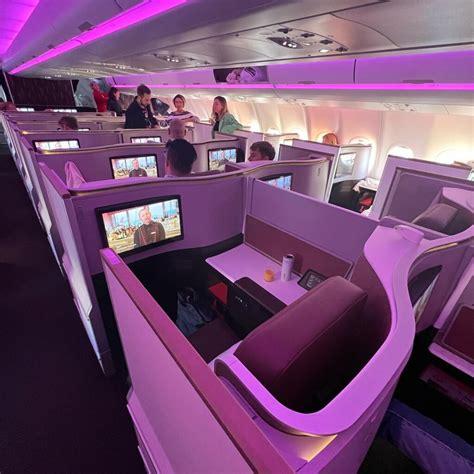
The idea of business class has traditionally been rooted in privacy, space, and efficiency. Virgin Atlantic’s Upper Class, however, treats those as a starting point rather than a destination. What elevates Upper Class above competing premium cabins is not a single signature feature, but a carefully engineered blend of design, service psychology, social freedom, and end-to-end experience that feels less like transportation and more like participation in a refined lifestyle. In an industry where many airlines chase quiet luxury and restrained formality, Virgin Atlantic deliberately chooses confidence, warmth, and personality.
Upper Class succeeds because it understands something fundamental about long-haul travel: comfort alone is not memorable. Memory is created through human interaction, emotional ease, and small moments of delight that accumulate over time. Virgin Atlantic doesn’t attempt to out-luxury everyone else in a conventional sense. Instead, it reshapes what luxury feels like at 35,000 feet, replacing stiffness with fluency and isolation with optional connection.
This philosophy runs through every layer of the experience, from curbside arrival to cabin lighting, from crew tone of voice to the freedom passengers are given to design their own rhythm in the sky. Upper Class feels intentional, coherent, and confidently different, which is why it remains one of the most talked-about business class products in global aviation.
A Cabin Designed Around Human Behavior, Not Just Space
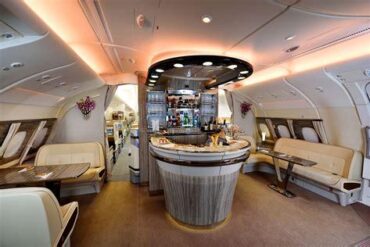
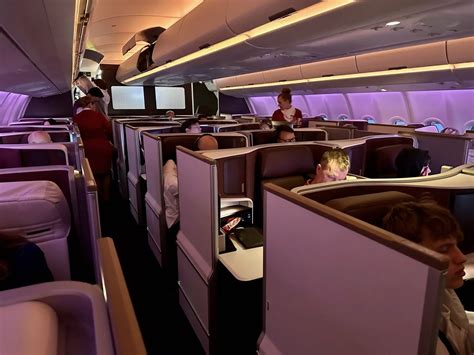
Virgin Atlantic’s Upper Class cabin does not treat passengers as static objects meant to sit still for hours. Instead, it acknowledges that movement, choice, and spatial variety improve long-haul comfort. This is where Upper Class immediately distinguishes itself. The presence of communal areas like The Loft on the Airbus A350 and A330neo, or the onboard bar on the Boeing 787, fundamentally alters how the cabin functions. These spaces invite passengers to stand, stretch, talk, work, or simply exist outside their seat without feeling intrusive or awkward.
Most business class cabins maximize seat density and discourage movement. Virgin Atlantic deliberately does the opposite. By sacrificing potential seat count in favor of shared environments, Upper Class creates an atmosphere that feels open and psychologically spacious. The effect is subtle but powerful. Passengers report feeling less confined, less fatigued, and more socially at ease, even on ultra-long-haul flights.
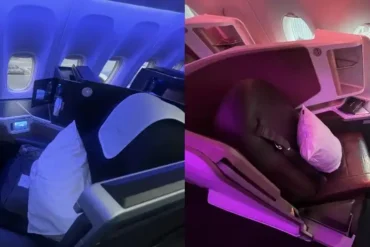
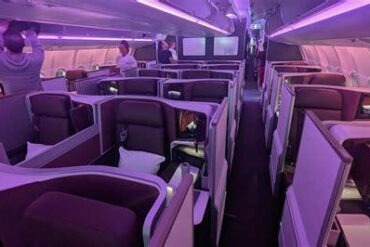
The design language reinforces this philosophy. Magenta mood lighting, textured surfaces, and contemporary finishes avoid the sterile minimalism common in premium cabins. The space feels modern, energetic, and unmistakably Virgin. It communicates identity rather than anonymity, making the cabin feel curated instead of generic.
Service That Feels Personal Without Being Performative
What truly anchors the Upper Class experience is its crew culture, often described by industry analysts as Virgin Atlantic’s “secret sauce.” The service style is relaxed, personable, and conversational, without ever sacrificing professionalism. Cabin crew greet passengers by name, maintain genuine eye contact, and engage in real dialogue rather than scripted exchanges. This creates a sense of mutual respect rather than hierarchy.
Unlike more traditional carriers, where service can feel formal or distant, Virgin Atlantic encourages its crew to bring personality into their work. The result is service that feels human rather than ceremonial. Passengers are not treated as VIPs to be tiptoed around, but as guests whose comfort and mood genuinely matter.
This tone extends to every interaction, from meal service to casual conversations at the bar. Crew members are notably attentive without hovering, friendly without familiarity crossing boundaries. That balance is difficult to achieve and even harder to maintain consistently, which is why it stands out so clearly in reviews and passenger feedback.
Sleep, Privacy, and the Evolution of the Upper Class Seat
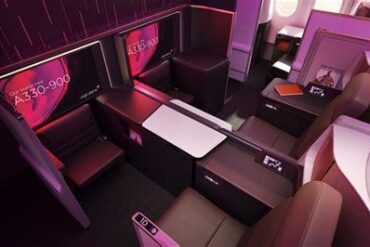
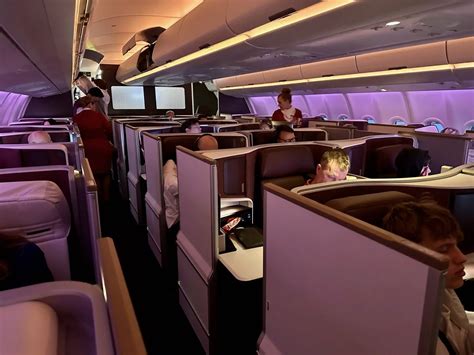
At the core of any premium cabin is the seat, and Virgin Atlantic’s Upper Class continues to evolve in meaningful ways. On its newest aircraft, including the Airbus A350-1000 and A330neo, Upper Class passengers enjoy forward-facing suites with sliding privacy doors, large high-resolution IFE screens, and thoughtfully positioned power outlets. These suites are designed to feel modern and secure without becoming claustrophobic.
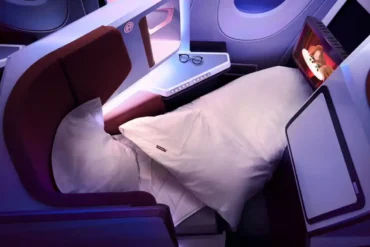
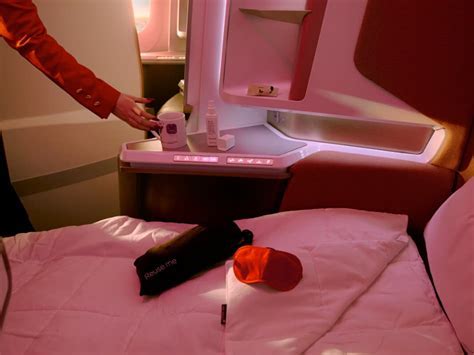
When it’s time to rest, every Upper Class seat converts into a fully flat bed up to 82 inches long, complete with a mattress topper, plush pillow, and proper duvet. The emphasis here is not novelty but sleep quality. The materials are chosen to regulate temperature, minimize pressure points, and support extended rest on overnight flights.
Older aircraft, such as the Airbus A330 and Boeing 787, use a herringbone configuration that offers less privacy and requires crew to manually flip seats into bed mode. While these cabins lack the visual polish of newer jets, the sleep experience remains consistently strong due to the same bedding standards and attentive service. This continuity ensures that, regardless of aircraft age, the core promise of Upper Class comfort is preserved.
Dining That Adapts to the Passenger, Not the Clock
Virgin Atlantic approaches in-flight dining with the same flexibility that defines the rest of Upper Class. A welcome glass of sparkling wine sets the tone, followed by a four-course à la carte menu served on stylish crockery. What truly elevates the experience, however, is the dine-on-demand philosophy.
Rather than forcing passengers into a rigid meal schedule, Upper Class allows travelers to eat when it suits them. This is particularly valuable on red-eye flights, where many passengers prioritize sleep over traditional dinner service. Meals can also be pre-ordered, reducing uncertainty and ensuring preferred options are available.
The menus themselves balance comfort and creativity, offering dishes that feel indulgent without being heavy. Small details, like the iconic “Pinched from Virgin Atlantic” salt and pepper shakers, add personality without tipping into gimmickry. It’s dining designed to support the journey rather than dominate it.
Entertainment, Connectivity, and Thoughtful Amenities
Upper Class cabins are equipped with more than 300 hours of movies and television, presented on responsive touchscreens with Bluetooth audio pairing on newer aircraft. Wireless charging and well-placed power outlets make it easy to stay connected without cluttering the seat area with cables.
Amenity kits reflect Virgin Atlantic’s growing commitment to sustainability, featuring eco-conscious materials alongside practical essentials such as skincare products, socks, eye masks, and dental kits. On most overnight flights, passengers also receive pajamas, reinforcing the airline’s focus on rest and comfort rather than spectacle.
Wi-Fi availability varies by aircraft, but connectivity across the fleet continues to improve. While performance can differ, the intention is clear: Upper Class is designed to support both productivity and relaxation, allowing passengers to choose how they spend their time.

A Ground Experience That Feels Effortlessly Premium
The Upper Class experience begins long before boarding. At London Heathrow Terminal 3, Virgin Atlantic offers a private driveway and check-in area that removes passengers from the chaos of the main terminal. Luggage is handled curbside, and the transition from car to lounge can take as little as 10 to 15 minutes, redefining efficiency for premium travel.
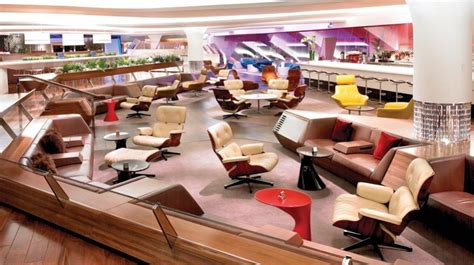
The Clubhouse lounges are destinations in their own right. Instead of crowded buffets, guests enjoy made-to-order dining, signature cocktails, and waiter service often facilitated through QR codes. Amenities such as pool tables, outdoor terraces, and stylish seating areas create an environment that feels social, relaxed, and distinctly un-corporate.
After landing, the premium treatment continues. Upper Class baggage is prioritized, minimizing wait times and reinforcing the sense of being looked after from start to finish. This seamless ground experience is a major reason why frequent flyers remain loyal to Virgin Atlantic despite intense competition.
Recognition, Rankings, and Honest Limitations
Virgin Atlantic’s Upper Class is consistently recognized by industry bodies. The airline ranks among the top business class products globally, holds APEX Five-Star Global Airline status, and has been named Best Overall Airline in Europe for multiple consecutive years. Its Heathrow lounge is frequently cited as one of the best in the world.
That said, analysts do note two recurring limitations. The disparity between newer and older Upper Class seats can lead to inconsistent expectations, and reward bookings often carry high tax surcharges. These drawbacks are real, but they rarely overshadow the overall experience, particularly for travelers who value service culture and atmosphere as much as physical hardware.
Safety, Network Reach, and the Confidence to Be Different
Virgin Atlantic maintains an exemplary safety record, supported by strong operational discipline and international certifications. This foundation of trust allows the airline to take creative risks in design and service without compromising reliability.
Upper Class is available across a wide global network connecting the UK to North America, Asia, Africa, the Middle East, and the Caribbean. As a member of the SkyTeam alliance, Virgin Atlantic integrates seamlessly with major international partners, extending the reach and flexibility of the Upper Class experience.
The Upper Class Difference, Defined
Virgin Atlantic’s Upper Class is superior not because it is the quietest, largest, or most technologically extreme business class, but because it is cohesive and emotionally intelligent. Every element, from lighting to language, is aligned around the idea that premium travel should feel liberating rather than restrictive.
Upper Class succeeds by treating passengers as people first, travelers second, and customers last. In doing so, it transforms business class from a transactional upgrade into a memorable journey that lingers long after landing.