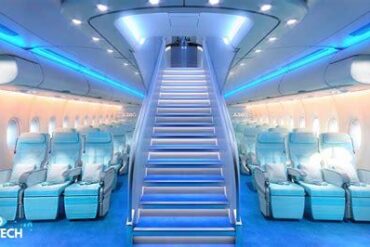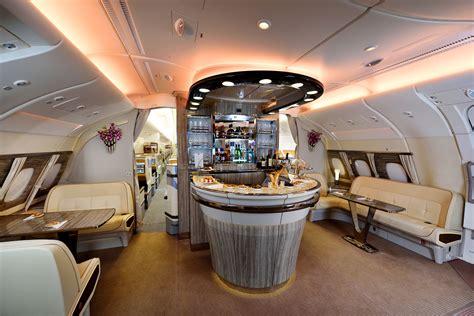
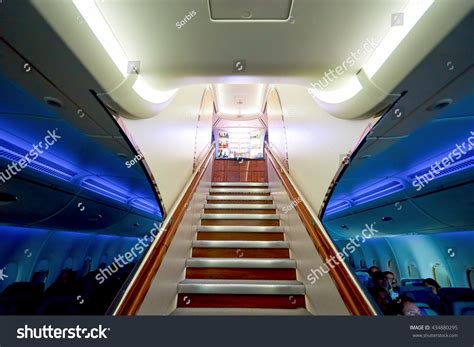
The moment passengers step aboard an Emirates Airbus A380, the aircraft makes a statement few airliners in history have ever matched. The giant staircase at the front of the cabin feels less like an entrance to a commercial jet and more like the lobby of a luxury hotel floating at 40,000 feet. That first visual cue sets the tone for everything that follows upstairs, where Emirates created one of the most recognizable premium cabin experiences in aviation history.
The airline did not simply install seats on the Airbus A380’s upper deck. It transformed the space into a flying brand showcase designed to reinforce Emirates’ image as the ultimate long-haul luxury carrier. Every design choice — from the placement of the shower suites to the onboard cocktail lounge — serves a larger strategic purpose. The upper deck is not merely transportation. It is a marketing engine, a status symbol, and arguably the single most important cabin concept introduced in commercial aviation during the last two decades.
Emirates operates the world’s largest Airbus A380 fleet, and that dominance gave the airline freedom to think differently. While other carriers treated the superjumbo as an efficiency tool, Emirates turned it into a stage for spectacle. The result is an upper deck layout so extravagant and so instantly recognizable that even travelers who have never flown Emirates can picture the glowing bar, the gold-trimmed suites, and the dramatic staircase.
Why The Airbus A380’s Upper Deck Was Perfect For Emirates
The Airbus A380 was unlike any commercial aircraft before it. Its full-length double-deck design created enormous flexibility for airlines, particularly on the upper deck. Unlike the lower deck, which is incredibly wide and optimized for dense economy seating, the upper deck is narrower and naturally better suited for premium cabins.
That distinction is central to understanding Emirates’ layout strategy.
Modern business class cabins typically require direct aisle access for every passenger. This means airlines generally use a four-abreast 1-2-1 configuration. Installing such layouts on the A380 lower deck would waste significant floor space because the cabin is wide enough for ten economy seats per row. By moving premium cabins upstairs, Emirates could preserve maximum economy density downstairs while turning the upper deck into an exclusive premium environment.
The arrangement delivers both luxury and economics simultaneously.
Economy passengers occupy the vast lower deck in a 3-4-3 layout, while first class and business class passengers enjoy an entirely separate upper-deck atmosphere. This separation creates a psychological effect that is almost as important as the physical product itself. Once passengers climb the staircase, the environment changes completely. Lighting becomes warmer, the cabin becomes quieter, and the entire upper deck feels detached from the hundreds of passengers seated below.
That sensation is deliberate.
Emirates understood early that premium travelers are not only paying for space. They are paying for emotional exclusivity.
The First Class Cabin Feels Like A Flying Hotel Suite
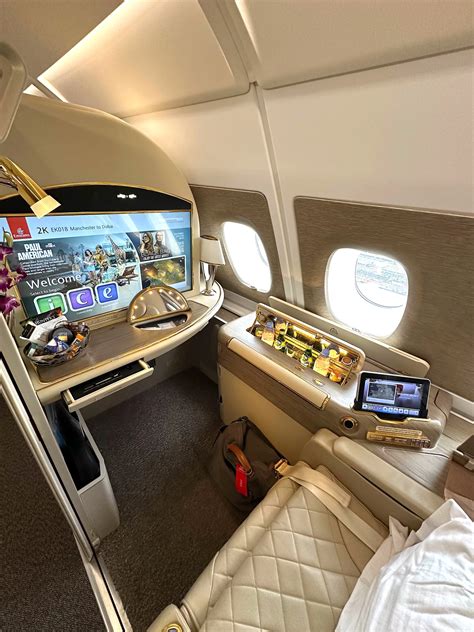
At the front of the upper deck sits Emirates’ legendary first class cabin, one of the most famous airline interiors ever created. The design is unapologetically extravagant. Gold accents, glossy wood finishes, ambient lighting, and oversized suite doors combine to create a cabin that feels theatrical in the best possible way.
Unlike minimalist luxury concepts embraced by some European and Asian airlines, Emirates leaned into visual opulence. Critics sometimes describe the aesthetic as excessive, but that excess became part of the airline’s identity. The cabin was designed to impress immediately, particularly in photographs and promotional videos.
Each suite includes:
- Motorized privacy doors
- Personal minibar
- Vanity mirror
- Large entertainment screen
- Adjustable ambient lighting
- Lie-flat bed functionality
Yet the most fascinating part of the design is how efficiently Emirates uses space. The airline fits 14 first class suites into an area where some competitors install only six or eight seats. From a pure square-foot perspective, Emirates’ first class is denser than many travelers realize.
Still, clever lighting and high walls preserve the illusion of spaciousness remarkably well.
Passengers are not buying enormous square footage. They are buying immersion in a luxury experience that feels dramatically different from ordinary commercial flying.
The Shower Suites Became One Of Aviation’s Greatest Marketing Tools
Ahead of the first class cabin lies perhaps the most iconic feature on the entire aircraft: the shower spa.
Only a handful of airlines ever experimented with onboard showers, but Emirates elevated the concept into aviation mythology. The airline transformed unused crown space at the very front of the upper deck into two fully functional shower suites complete with vanity counters, heated floors, mirrors, changing space, and luxury toiletries.
From a practical standpoint, the showers make little sense.
Very few passengers actually need a shower during a flight. The amount of water onboard is limited. Usage time is controlled. And the feature consumes valuable cabin space that could otherwise hold revenue-generating seats.
But practicality was never the point.
The shower suites exist because they create aspiration. They generate headlines, social media videos, travel reviews, and viral marketing moments. Millions of people who will never fly Emirates first class still recognize the shower spa instantly.
That level of brand awareness is extraordinarily valuable.
The showers transformed Emirates from simply another Gulf airline into a global luxury icon. They symbolized excess, innovation, and ambition — the same qualities Dubai wanted associated with itself during its rapid rise as an international tourism and business hub.
Emirates Turned The Back Of The Aircraft Into A Cocktail Lounge
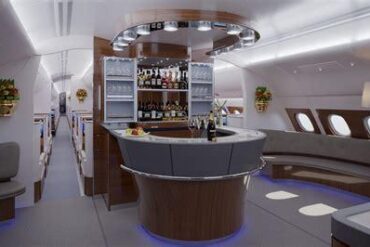
While the shower suites cater to first class passengers, the rear upper-deck bar reaches a much broader audience. Located behind the business class cabin, the lounge became one of the smartest branding decisions Emirates ever made.
The bar serves both business and first class passengers, dramatically increasing the number of travelers who can experience one of the airline’s signature amenities. Instead of confining luxury to a tiny first class cabin, Emirates created a social space accessible to dozens of premium travelers every flight.
That matters enormously from a marketing perspective.
Passengers photograph cocktails at the bar. They post videos walking through the lounge. Travel influencers record cabin tours there constantly. The space became free advertising for Emirates across social media long before airlines fully understood the marketing power of onboard experiences.
The lounge also changes passenger behavior in a way traditional cabins do not. Instead of remaining isolated in seats for fourteen-hour flights, travelers can stand, socialize, snack, and interact with cabin crew in a relaxed environment.
The effect is surprisingly powerful psychologically. The aircraft feels less restrictive and more like a premium hospitality environment.
The Upper Deck Feels Like A Private Jet Because Of Cabin Exclusivity
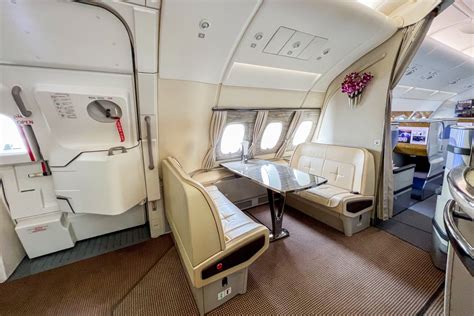
One reason the Emirates A380 upper deck feels so different from most commercial aircraft is because the entire space is reserved for premium cabins. There are no economy rows interrupting the atmosphere upstairs. Every passenger on the deck is either in business class or first class.
That consistency matters.
On most widebody aircraft, premium cabins exist as isolated sections separated by curtains from economy seating. On the Emirates A380, the upper deck functions as an entirely separate world. Cabin crew service feels calmer. Noise levels are lower. Passenger movement is reduced. Even the curved sidewalls contribute to a more intimate atmosphere.
The A380’s architecture enhances this effect beautifully.
The upper deck windows sit beside deep storage bins integrated into the fuselage walls, giving passengers additional personal space. The ceiling feels lower and cozier than the cavernous lower deck. Combined with warm lighting and wood finishes, the aircraft achieves an ambiance more associated with luxury rail travel or private aviation than commercial airline cabins.
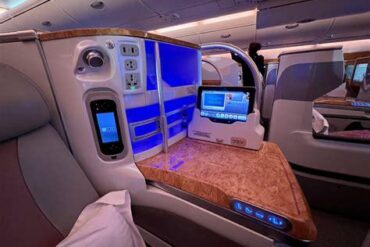
This environment helped Emirates compensate for areas where its hard product was not always industry-leading.
For years, Emirates operated many Boeing 777 business class cabins in a dense seven-abreast configuration that lagged behind competitors. Even on the A380, the Safran SkyLounge business seats eventually became less advanced than newer suites offered by airlines like Qatar Airways or Singapore Airlines.
Yet passengers continued perceiving Emirates as one of the world’s most luxurious airlines.
That demonstrates the immense power of branding and environmental design.
Emirates Used The A380 To Build A Global Luxury Identity
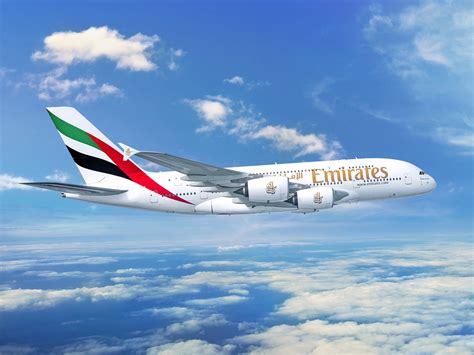
The relationship between Emirates and the Airbus A380 became so strong that the aircraft effectively turned into a flying national symbol for Dubai itself.
Emirates ordered 123 A380s out of the 251 ever sold, making the airline inseparable from the superjumbo’s identity. No other carrier committed to the aircraft at such scale. That commitment allowed Emirates to standardize and refine the onboard experience across much of its long-haul network.
The airline leveraged the A380 aggressively in advertising campaigns. Commercials emphasized onboard bars, shower spas, mood lighting, and glamorous interiors. Even travelers who never boarded the aircraft associated Emirates with innovation and luxury because the airline consistently showcased those features publicly.
This branding strategy benefited Dubai directly.
As a state-owned airline, Emirates plays a major role in projecting Dubai’s image internationally. The city’s transformation into a tourism, finance, and transit powerhouse relied heavily on perception. Emirates helped communicate an image of ambition, wealth, sophistication, and modernity.
The A380 upper deck became one of the most visible manifestations of that strategy.
Why Other Airlines Never Replicated Emirates’ A380 Formula
Several airlines operated Airbus A380s, but none matched Emirates’ commitment to spectacle.
Singapore Airlines focused on understated elegance. Lufthansa emphasized efficiency. Qantas prioritized practicality. Etihad introduced luxury apartments and showers but never operated enough A380s to make them central to its brand identity.
Emirates approached the aircraft differently because its business model supported the gamble.
Dubai functions as a massive global connecting hub, feeding enormous passenger volumes through long-haul routes. The airline could consistently fill large premium cabins while maintaining high economy density downstairs. The scale of Emirates’ operation also spread development costs across more aircraft.
Crucially, Emirates understood that memorable experiences create disproportionate marketing value.
An onboard shower might replace several revenue seats, but the publicity generated by that shower could influence millions of future booking decisions. The onboard lounge occupied valuable cabin space, yet its visibility strengthened the airline’s premium reputation worldwide.
Few airlines possessed the scale, branding strategy, or financial backing necessary to justify those tradeoffs.
What Happens When Emirates Eventually Retires The A380?
The greatest challenge facing Emirates today is preserving its luxury identity after the A380 era ends.
Airbus stopped producing the A380 in 2021, meaning every existing aircraft will eventually retire. Emirates plans to operate the type into the 2040s, but replacement aircraft are already arriving gradually.
The Boeing 777-9 will become the airline’s future flagship, featuring upgraded first class suites and newer business class products with privacy doors. Technologically, these cabins may surpass the aging A380 interiors.
But recreating the emotional impact of the A380 upper deck will be extraordinarily difficult.
The 777-9 is fundamentally smaller. It lacks the vast unused crown space necessary for shower suites. Installing a large social lounge would require sacrificing proportionally more seating capacity. The sense of separation created by a dedicated premium upper deck disappears entirely.
That creates a fascinating branding problem.
For nearly two decades, the Emirates A380 represented the pinnacle of glamorous long-haul travel. The aircraft itself became part of the product. Replacing the seats is easy. Replacing the aura surrounding the superjumbo is much harder.
Even travelers who never flew Emirates understood what the A380 symbolized: scale, luxury, spectacle, and ambition without compromise.
That is why the upper deck layout matters so much. It was never simply about fitting seats efficiently into an aircraft cabin. Emirates used the A380’s unique architecture to create an unforgettable experience that blurred the line between transportation and theater.
And in doing so, the airline built one of the most powerful brand identities commercial aviation has ever seen.