The Airbus A350 represents a decisive shift in how modern aircraft are designed, built, and maintained, and nowhere is that transformation more tangible than in its avionics bay. Hidden beneath the cockpit floor, this compartment is not merely a storage space for electronics—it is a highly engineered nerve center that powers nearly every digital function of the aircraft. While passengers experience quiet cabins and smooth long-haul flights, this unseen environment operates continuously, processing immense volumes of data and ensuring every system performs with precision.
Unlike older aircraft, where avionics components were scattered and often difficult to access, the A350 consolidates much of its computing architecture into a dedicated, stand-up technical workspace. The result is a compartment that resembles a compact data center, filled with modular racks, organized wiring, and clearly structured access points. This design reflects a broader evolution in aviation, where aircraft are no longer just mechanical machines but deeply integrated digital platforms.
The avionics bay also reveals something fundamental about modern aerospace priorities: performance alone is no longer enough. Today’s aircraft must be efficient, maintainable, and resilient. The A350 achieves this by embedding redundancy, accessibility, and system intelligence directly into its architecture, making the avionics bay one of the most strategically important spaces onboard.
The Airbus A350: A Digital-First Long-Haul Aircraft
To fully appreciate the avionics bay, it helps to understand the aircraft it supports. The Airbus A350 is not just another widebody jet—it is a next-generation long-haul platform designed from the ground up with digital integration in mind. Developed to compete at the highest level of the twin-engine market, the A350 combines extended range, fuel efficiency, and advanced onboard systems into a single cohesive design.
Airbus introduced the A350 with a clear objective: to redefine long-haul travel using cutting-edge aerodynamics, lightweight composite materials, and powerful Rolls-Royce Trent XWB engines. The aircraft’s two main variants, the A350-900 and A350-1000, serve different capacity needs while maintaining exceptional range capabilities that place them firmly in the ultra-long-haul category.
What distinguishes the A350 most is its reliance on digital architecture. From flight controls to maintenance diagnostics, nearly every function is mediated through advanced computing systems. This reliance makes the avionics bay not just important, but absolutely central to the aircraft’s identity.

Understanding Avionics: The Aircraft’s Central Nervous System
Modern avionics systems function much like a biological nervous system, constantly gathering, processing, and distributing information. Sensors throughout the aircraft measure variables such as altitude, airspeed, engine performance, cabin pressure, and structural conditions. These data streams flow into onboard computers, where they are analyzed in real time and translated into actionable insights for pilots and automated systems.
In the A350, this process is handled through Integrated Modular Avionics (IMA), a sophisticated framework that replaces traditional standalone systems with shared computing resources. Instead of relying on dozens of isolated “black boxes,” the aircraft uses interconnected modules that communicate seamlessly across a digital network.
This architecture offers several critical advantages:
- Faster data processing and communication between systems
- Improved reliability through redundancy and cross-checking
- Greater flexibility for software updates and system upgrades
- Enhanced monitoring capabilities for predictive maintenance
The result is an aircraft that is not only smarter but also more adaptable. Pilots interact with streamlined displays and automated systems, while engineers benefit from detailed diagnostics that can identify potential issues before they escalate.
Inside the Avionics Bay: A Compact High-Tech Command Center
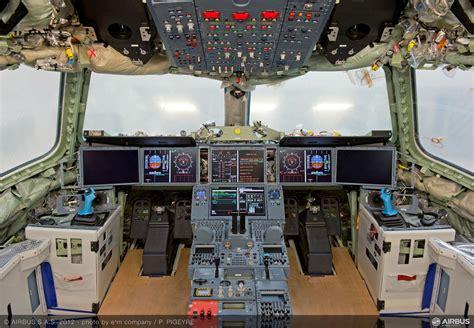
Stepping into the Airbus A350’s avionics bay feels less like entering part of an airplane and more like walking into a miniaturized server room. The space is carefully organized, with vertical racks housing critical computing modules, power distribution units, and communication interfaces. Every component is positioned for maximum accessibility and efficiency, reflecting the practical needs of maintenance crews.
The bay’s location—directly beneath the cockpit—is no coincidence. This placement minimizes cable lengths, reduces signal latency, and keeps critical systems close to the flight deck. Access is provided through a cockpit floor hatch, allowing technicians to enter the compartment without dismantling surrounding structures.
Within this space, one can observe the physical manifestation of the A350’s digital backbone. Wiring looms are neatly routed, cooling systems maintain optimal operating temperatures, and modular units can be quickly removed or replaced as needed. It is a working environment, not just a storage area, designed to support rapid troubleshooting and efficient system management.

Integrated Modular Avionics: The Architecture Behind the Innovation
At the heart of the A350’s avionics bay lies its Integrated Modular Avionics system, a concept that fundamentally changes how aircraft electronics are structured. Traditional avionics relied on dedicated hardware for each function, leading to complexity, weight, and limited scalability. The A350 replaces this model with a shared computing environment, where multiple applications run on common hardware platforms.
This shift enables a level of system integration that was previously unattainable. Flight management, navigation, communications, and aircraft monitoring systems all operate within a unified framework, exchanging data in real time. The benefits extend beyond performance to include simplified maintenance and reduced lifecycle costs.
From a technical perspective, IMA introduces partitioned software environments, ensuring that critical systems remain isolated even while sharing hardware resources. This design enhances safety while maintaining efficiency, a balance that is essential in modern aviation.
Redundancy and Fault Tolerance: Engineering for Reliability
Reliability is not optional in aviation—it is engineered into every system. The A350’s avionics bay exemplifies this principle through its multi-layered redundancy architecture. Critical systems are duplicated or even triplicated, with independent data sources and power supplies ensuring continuous operation even in the event of failures.
This approach addresses one of the most important challenges in aviation: fault tolerance. If a sensor provides incorrect data or a computer module fails, other systems immediately cross-check and compensate. Faulty components can be isolated without compromising overall aircraft performance.
Such redundancy is especially crucial in fly-by-wire systems, where pilot inputs are transmitted electronically rather than mechanically. The avionics bay houses the hardware that interprets these inputs, making its reliability directly tied to flight safety.
Maintenance Accessibility: Designed for Real-World Operations
One of the most practical advantages of the A350’s avionics bay is its maintenance-friendly design. Airlines operate in environments where time is money, and minimizing aircraft downtime is critical. The avionics bay addresses this need by providing direct, organized access to key systems.
Technicians can enter the compartment, identify components quickly, and perform replacements or repairs without extensive disassembly. Circuit breakers, computing modules, and diagnostic interfaces are all positioned for ease of use, reducing the time required for troubleshooting.
This design supports the A350’s broader emphasis on predictive maintenance. By continuously monitoring system health, the aircraft can alert ground crews to potential issues before they become critical. The avionics bay then serves as the physical interface where these issues are addressed, bridging the gap between digital diagnostics and hands-on engineering.
Comparing Avionics Bays Across Modern Aircraft
While the A350’s avionics bay is particularly advanced, it is not entirely unique in concept. Most modern widebody aircraft feature similar compartments, often referred to as electronic and equipment (E&E) bays. These spaces serve the same fundamental purpose: housing critical electronics in a protected, accessible environment.
Airbus models like the A330 and A330neo include comparable setups, though they may lack the same level of integration found in the A350. Boeing aircraft, such as the 787 Dreamliner, also employ advanced avionics bays designed to support highly networked systems.
What sets the A350 apart is the degree of integration and modularity. Its avionics bay reflects a more mature implementation of digital architecture, where systems are not just connected but deeply interdependent. This evolution transforms the bay from a simple equipment space into a central hub of operational intelligence.
The Role of the Avionics Bay in Flight Efficiency and Performance
Beyond maintenance and system management, the avionics bay plays a direct role in enhancing the A350’s operational efficiency. By supporting real-time data processing and system optimization, it enables features such as:
- Dynamic flight planning and route optimization
- Fuel consumption monitoring and cost efficiency
- Automated system adjustments for performance optimization
These capabilities allow airlines to operate more efficiently, reducing fuel burn and improving overall profitability. For passengers, the benefits are less visible but equally important, contributing to smoother flights and more reliable schedules.
Why the Avionics Bay Remains Hidden Yet Essential
Despite its importance, the avionics bay remains one of the most unseen aspects of the Airbus A350. Passengers rarely, if ever, become aware of its existence, and even cabin crew have limited interaction with the space. Yet it is this very invisibility that underscores its role: a silent enabler of modern aviation.
The compartment embodies a broader truth about contemporary aircraft design. The most critical innovations are often those that operate behind the scenes, ensuring safety, efficiency, and reliability without drawing attention. In the case of the A350, the avionics bay is not just a supporting feature—it is a foundation upon which the entire aircraft depends.
Conclusion: The Hidden Engine of Modern Aviation Intelligence
The Airbus A350’s avionics bay offers a rare glimpse into the technological sophistication that defines modern air travel. Far from being a simple equipment compartment, it is a carefully engineered environment that integrates computing power, system management, and maintenance accessibility into a single cohesive space.
Its design reflects the priorities of contemporary aviation: digital integration, operational efficiency, and uncompromising safety. By concentrating critical systems into an organized, accessible bay, Airbus has created a structure that supports both the aircraft’s performance in the air and its reliability on the ground.
In many ways, the avionics bay is the true heart of the A350, quietly orchestrating the complex interplay of systems that make long-haul flight possible. It may remain hidden beneath the cockpit floor, but its influence extends throughout the aircraft, shaping every aspect of its operation with precision and intelligence.