The MQ-9 Reaper was never designed to be glamorous. It was not built to pull high-G maneuvers, outfight enemy jets, or dominate airshows with afterburner theatrics. Instead, the aircraft was engineered around one of the most strategically valuable capabilities in modern warfare: staying airborne for an extraordinarily long time while continuously feeding intelligence back to commanders thousands of miles away.
That design philosophy transformed the MQ-9 into one of the defining unmanned aircraft of the post-9/11 era. Its ability to remain over a target area for more than a full day fundamentally changed how the United States and allied militaries conduct surveillance, precision strikes, border monitoring, maritime patrol, and counterinsurgency operations.
The aircraft’s famous 40-hour endurance figure often attracts attention, but endurance is not simply a matter of carrying more fuel. What allows the Reaper to survive such prolonged missions is a carefully integrated system of aerodynamics, fuel efficiency, autonomous flight management, and perhaps most importantly, its triple-redundant avionics architecture.
Without that layered redundancy, a 30-to-40-hour mission would become dangerously impractical. Human pilots can tolerate fatigue. Machines cannot tolerate system failures.
The MQ-9 was designed so that critical systems can fail without bringing the aircraft down.
After decades of unmanned aircraft experimentation stretching from the original Predator to today’s advanced ISR platforms, the Reaper became the operational proof that persistent surveillance could reshape military operations across the globe.
The Strategic Importance Of Staying Airborne For 40 Hours
Long endurance is not merely a technical achievement. It is a strategic advantage.
The difference between an aircraft that can remain overhead for two hours and one that can remain overhead for thirty hours is the difference between taking snapshots and watching an entire story unfold in real time. Persistent surveillance allows military planners to monitor troop movements, identify behavioral patterns, observe smuggling routes, track insurgent activity, and maintain uninterrupted reconnaissance over massive operational areas.
This is where the MQ-9 became invaluable.
Traditional reconnaissance aircraft require frequent rotations, refueling schedules, maintenance cycles, and crew changes. Satellites, despite their immense capabilities, operate along predictable orbital paths. Adversaries know when reconnaissance satellites will pass overhead. Sensitive equipment can be hidden temporarily, moved indoors, or concealed until the satellite window closes.
The Reaper changed that equation by simply refusing to leave.
An MQ-9 orbiting above a region for over a day creates continuous surveillance pressure. Instead of isolated intelligence snapshots, operators receive uninterrupted video feeds, radar tracking data, infrared imagery, and movement analysis. That capability became particularly important during operations in Afghanistan, Iraq, Syria, Yemen, and other theaters where insurgent networks relied heavily on mobility and concealment.
The aircraft’s endurance also dramatically reduces logistical strain. Fewer launches and recoveries mean fewer maintenance demands and less operational complexity. A single Reaper can monitor an area that would otherwise require multiple aircraft rotations.
The psychological effect matters too. Persistent ISR presence creates uncertainty for adversaries who know they may be observed continuously for hours or even days.
Why Triple-Redundant Avionics Matter More Than Raw Fuel Capacity
Many discussions about the MQ-9 focus on fuel tanks and aerodynamic efficiency, but those elements alone cannot sustain ultra-long missions. The hidden enabler is reliability.
Aircraft flying for forty consecutive hours cannot depend on single-channel systems. A lone avionics failure halfway through a mission could terminate the operation or destroy the aircraft entirely. This is why the Reaper employs a triple-redundant avionics architecture.
In practical terms, the aircraft contains three independent control pathways for essential flight functions. These systems continuously monitor one another while operating simultaneously. If one component produces faulty data or experiences failure, the other two systems effectively outvote it.
That process is called majority voting logic, and it dramatically improves survivability and mission continuity.
For example, if two flight computers determine the aircraft should maintain a 12-degree bank angle while a third suddenly commands 26 degrees, the system identifies the inconsistent input as faulty and isolates it automatically. The aircraft continues flying normally without requiring immediate operator intervention.
This approach eliminates single points of failure across critical systems including:
- Flight control computers
- Navigation systems
- Autopilot functions
- Engine management systems
- Data links
- Sensor integration
- Communications architecture
The importance of redundancy increases exponentially during long-duration missions because time itself becomes a threat multiplier. Components exposed to vibration, temperature variation, electrical loads, and atmospheric conditions for nearly two days straight inevitably experience wear and stress.
Triple redundancy ensures that a single malfunction does not cascade into catastrophe.
General Atomics, the manufacturer behind the MQ-9 family, engineered the aircraft specifically to meet reliability standards typically associated with manned aviation platforms. That was essential because the aircraft often operates far from immediate recovery zones and frequently over hostile or inaccessible territory.
Autonomous Flight Stability During Extreme Mission Durations
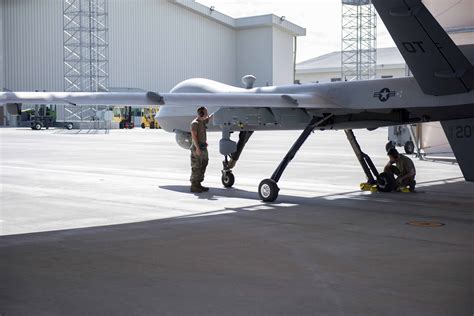
The Reaper’s avionics are not merely backups waiting for emergencies. They actively stabilize the aircraft throughout every phase of flight.
Unlike fighter jets that constantly maneuver aggressively, the MQ-9 spends much of its operational life in carefully optimized cruise conditions. Maintaining those conditions for thirty-plus hours requires highly sophisticated autonomous management.
Tiny inefficiencies compound significantly over time. A small navigation drift, inefficient throttle setting, or improper altitude adjustment can reduce endurance by several hours.
The aircraft’s avionics continuously calculate and optimize variables such as:
- Fuel burn rates
- Engine performance
- Air density
- Altitude efficiency
- Flight stability
- Sensor power distribution
- Communication loads
Because unmanned aircraft rely entirely on remote operators and onboard systems, flight stability becomes critically important. The avionics architecture constantly compensates for turbulence, weather changes, crosswinds, and aerodynamic fluctuations while preserving fuel economy.
This is particularly valuable during ISR missions where sensor clarity matters immensely. Stable flight produces sharper full-motion video, more accurate radar tracking, and improved target identification.
The system essentially turns the aircraft into a persistent aerial observation platform capable of maintaining steady surveillance patterns with minimal human intervention.
The Honeywell TPE331-10 Engine Is The Real Endurance Workhorse
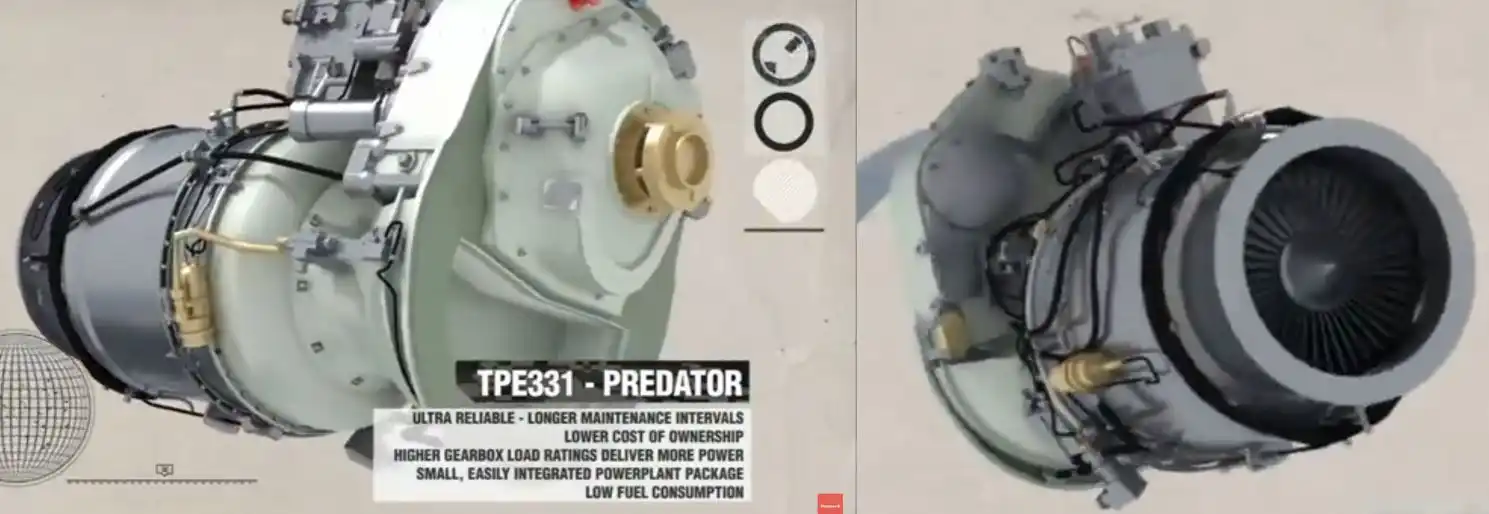
While avionics preserve operational reliability, the aircraft’s endurance would still be impossible without the Honeywell TPE331-10 turboprop engine.
The engine represents one of the most efficient propulsion systems ever integrated into a military ISR aircraft. Derived from a proven engine family dating back decades, the TPE331 series earned a reputation for durability, fuel efficiency, and low maintenance requirements long before it powered the Reaper.
Unlike high-performance fighter engines optimized for thrust and speed, the Reaper’s turboprop prioritizes efficiency above all else.
That distinction is crucial.
Jet fighters burn enormous quantities of fuel because they operate at extreme power levels and high speeds. The MQ-9 instead cruises in the relatively economical 150-to-230-knot range while maintaining moderate power settings for most of its mission profile.
The engine’s Digital Electronic Engine Control system, commonly called DEEC, further improves fuel optimization. The system continuously manages engine parameters automatically, ensuring ideal fuel-air mixtures and power settings under changing atmospheric conditions.
That electronic precision becomes invaluable during ultra-long endurance operations where even minor inefficiencies accumulate dramatically over time.
The engine also produces lower thermal stress compared to high-thrust combat aircraft engines. Reduced thermal loads improve reliability and lower mechanical wear during prolonged missions.
Combined with the aircraft’s lightweight structure and aerodynamic design, the engine enables the Reaper to remain airborne far longer than traditional combat aircraft.
Aerodynamic Design Built Entirely Around Efficiency
The MQ-9’s appearance reflects its mission priorities perfectly.
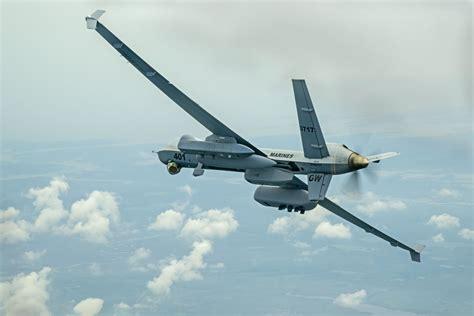
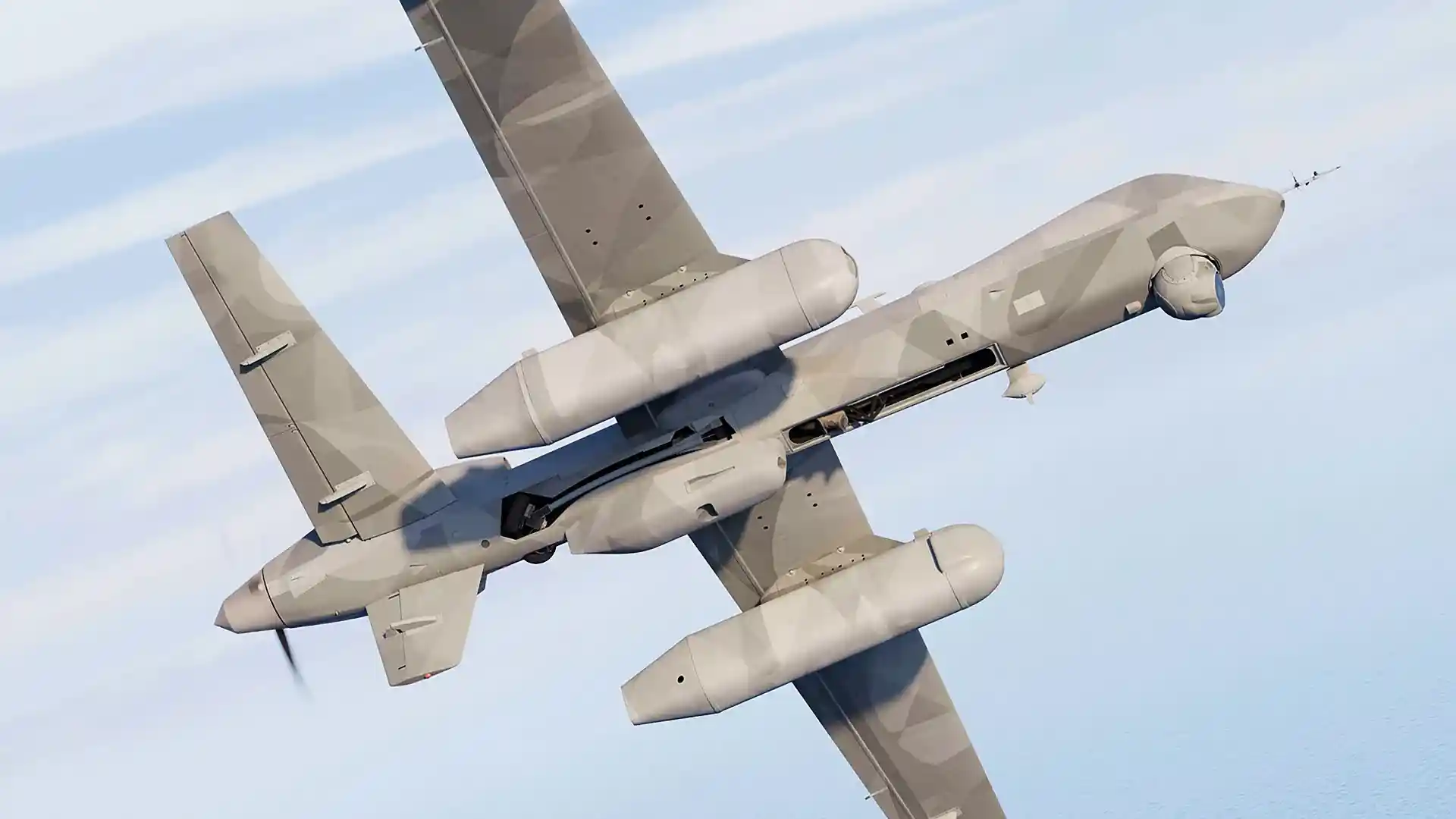
Everything about the aircraft emphasizes endurance instead of speed or agility. Its long, slender wings generate substantial lift while minimizing drag. This high-aspect-ratio wing configuration resembles glider aircraft far more than traditional combat jets.
The standard Reaper features a wingspan of approximately 66 feet, allowing it to maintain altitude efficiently with relatively low engine power requirements.
That aerodynamic efficiency directly translates into longer loiter times.
The aircraft also avoids energy-intensive maneuvering whenever possible. Sharp turns, rapid climbs, and aggressive acceleration dramatically increase fuel consumption. Reaper missions are typically planned around smooth flight paths and stable operational altitudes designed to maximize endurance.
The aircraft generally performs best within altitude ranges between 20,000 and 40,000 feet during ISR operations. At those altitudes, thinner air reduces drag while still allowing effective sensor performance.
The Extended Range variants push endurance even further through several modifications:
- Additional wing-mounted fuel pods
- Improved fuel management systems
- Four-bladed propeller upgrades
- Alcohol-water injection systems
- Reinforced landing gear
- Optional Big Wing Kit configurations
The Extended Range package increases fuel capacity significantly, pushing operational endurance beyond the standard configuration’s already impressive capabilities.
Under highly optimized conditions with minimal payloads and ideal cruising profiles, the aircraft can exceed 40 hours airborne.
In real-world combat conditions, however, endurance figures usually decline due to heavier payloads, maneuvering demands, weather conditions, and tactical flight requirements.
Why Real Combat Missions Rarely Reach Maximum Endurance
The famous “40-hour” figure often creates misconceptions about operational reality.
Aircraft endurance numbers are similar to automotive fuel economy ratings. They represent ideal conditions rather than average battlefield performance.
A Reaper carrying weapons, conducting active surveillance maneuvers, changing altitudes frequently, or operating in poor weather will consume fuel much faster than one cruising efficiently in controlled conditions.
Combat ISR missions frequently involve:
- Orbit changes
- Target tracking adjustments
- Sensor-intensive operations
- Communications loads
- Rapid repositioning
- Weather avoidance maneuvers
- Tactical altitude changes
Every one of those activities reduces endurance.
Payload weight matters substantially as well. Hellfire missiles, targeting systems, radar packages, and external fuel pods all alter aerodynamic efficiency and fuel consumption characteristics.
This is why operational endurance during realistic combat patrols commonly falls into the 30-to-34-hour range rather than consistently exceeding forty hours.
Even so, those figures remain extraordinary by military aviation standards.
Very few aircraft anywhere in the world can maintain persistent ISR coverage for such prolonged periods without refueling.
The Reaper’s Increasing Vulnerability In Modern Airspace
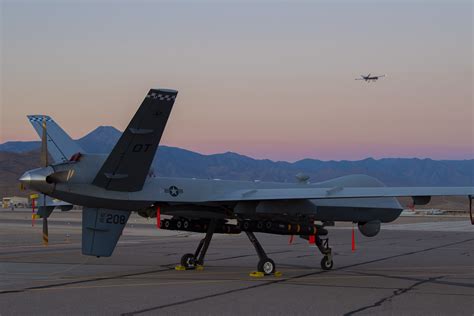
Despite its remarkable endurance, the MQ-9 faces growing survivability challenges.
The aircraft was designed primarily for operations in permissive or lightly defended environments. Against sophisticated integrated air defense systems, its slow speed and predictable flight profile become major liabilities.
This vulnerability has become increasingly visible in recent years as multiple MQ-9s were reportedly shot down during operations over Yemen and other contested regions.
The aircraft’s endurance advantage can ironically increase risk exposure. Remaining airborne longer means remaining vulnerable longer.
Modern radar systems, electronic warfare capabilities, and long-range surface-to-air missiles create dangerous operating conditions for relatively slow ISR drones. Unlike stealth aircraft such as the rumored RQ-180 or the acknowledged RQ-170 Sentinel, the MQ-9 lacks advanced survivability features necessary for penetrating heavily defended airspace.
That reality is pushing military planners toward new generations of lower-cost autonomous drones and more survivable ISR platforms.
Yet the Reaper remains valuable because most reconnaissance missions do not occur inside high-threat environments. Maritime patrols, border monitoring, counterterrorism operations, and peacetime intelligence collection still benefit enormously from long-endurance aircraft.
The same logic explains why the U-2 Dragon Lady continues flying decades after its introduction. Vulnerability alone does not eliminate usefulness.
The MQ-9’s Lasting Legacy In Persistent Surveillance
The MQ-9 Reaper occupies a fascinating transitional position in aviation history.
It emerged during an era when unmanned aircraft shifted from experimental tools into central pillars of military operations. The aircraft proved that remotely piloted systems could conduct persistent global ISR missions at scales previously impossible with traditional aviation assets.
Its greatest achievement may not be its strike capability at all.
The Reaper fundamentally demonstrated the strategic value of persistence. Modern warfare increasingly revolves around information dominance, pattern analysis, and continuous situational awareness. The aircraft’s ability to remain overhead for more than a day reshaped how commanders think about reconnaissance and surveillance operations.
At the heart of that capability sits the aircraft’s triple-redundant avionics system. Fuel efficiency alone cannot sustain forty-hour missions if reliability collapses halfway through the operation. The Reaper survives extreme endurance profiles because its systems were engineered to tolerate faults, isolate failures, and continue operating safely under punishing operational timelines.
That combination of endurance engineering, autonomous flight stability, efficient propulsion, and fault-tolerant avionics transformed the MQ-9 into one of the defining ISR platforms of the 21st century.
Even as newer stealth drones and autonomous systems begin replacing it, the Reaper’s influence on military aviation doctrine is already permanent.
It proved that sometimes the most powerful aircraft is not the fastest one.
It is the one that never leaves.