On December 29, 2025, Textron Systems, a leading U.S.-based defense technology firm, announced the signing of a pivotal contract to supply three Aerosonde Mk. 4.7 vertical takeoff and landing (VTOL) uncrewed aircraft systems (UAS) to Tantita Security Services, a prominent Nigerian private security company tasked with safeguarding the country’s vital oil and gas infrastructure. This landmark deal signifies not only an expansion of Textron’s international defense portfolio but also a shift in how high-end ISR (Intelligence, Surveillance, and Reconnaissance) capabilities are being deployed across Africa’s increasingly complex threat environments.
Strategic Leap in Infrastructure Defense for Nigeria
The Niger Delta, a region infamous for its environmental volatility and security challenges, has long suffered from illegal oil bunkering, pipeline vandalism, and sophisticated smuggling operations. With Nigeria losing billions of dollars annually to hydrocarbon-related crime, Tantita Security Services—working closely with state authorities—has emerged as a frontline actor in the fight to protect critical energy infrastructure. The acquisition of Aerosonde Mk. 4.7 drones represents a transformative leap in Tantita’s operational capabilities, enabling aerial surveillance of vast and inaccessible areas where manned patrols are costly, risky, or outright impossible.
Why the Aerosonde Mk. 4.7 is a Game-Changer
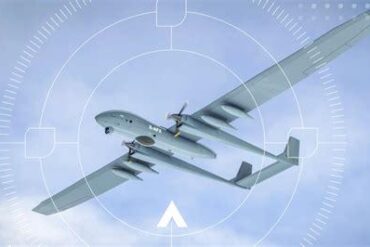
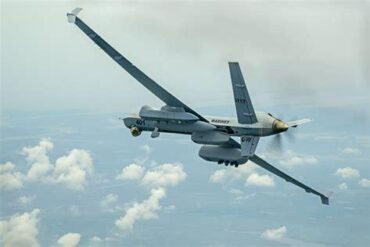
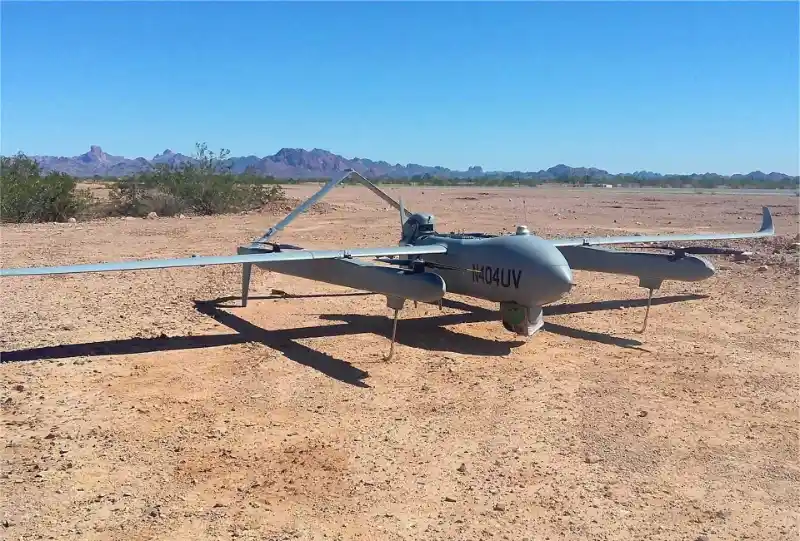
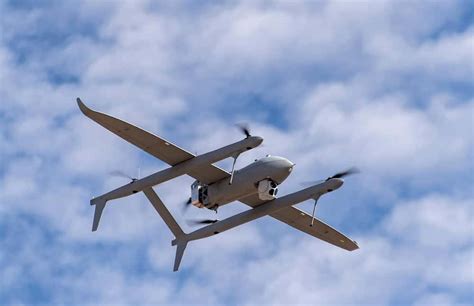
The Aerosonde Mk. 4.7 is the latest evolution of Textron’s long-serving Aerosonde UAS family, distinguished by its hybrid VTOL capability. Fusing quadrotor vertical lift with fixed-wing efficiency, this system can operate from makeshift or cluttered environments—making it ideal for Nigeria’s remote riverine and jungle regions.
Designed specifically for ITAR-free export, the variant destined for Nigeria bypasses the bureaucratic hurdles traditionally associated with U.S. Foreign Military Sales (FMS), allowing for faster deployment and greater end-user autonomy.
With a maximum takeoff weight of 45.4 kg, a wingspan of 4.1 meters, and a payload capacity of 9.1 kg, the Mk. 4.7 offers a mission endurance of over 12 hours. It operates reliably across long distances—140 km LOS and BLOS (beyond line of sight) via optional SATCOM integrations. These characteristics are crucial for patrolling the extensive network of pipelines, coastal zones, and riverine routes that define Nigeria’s southern corridor.
ISR Capabilities Tailored for Asymmetric Threats
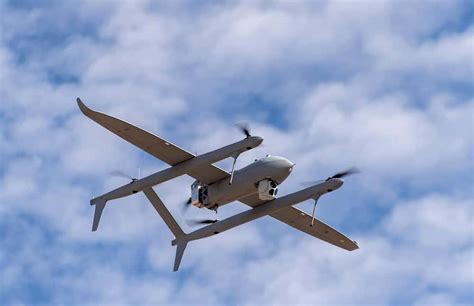
Payload modularity sits at the core of the Mk. 4.7’s design. Operators can rapidly reconfigure the drone with:
- EO/IR (Electro-Optical/Infrared) cameras for day/night surveillance
- Synthetic Aperture Radar (SAR) for wide-area detection
- SIGINT sensors to monitor communication signals
- AIS receivers for maritime domain awareness
- Comms relay packages to support remote ground teams
These systems integrate seamlessly with secure ground control stations, allowing for real-time data streaming, autonomous navigation in GPS-denied environments, and dynamic mission re-tasking.
Meeting the Needs of Private Security in a New Era
Tantita’s adoption of the Mk. 4.7 signals a broader movement toward privatized ISR solutions in regions where military forces are stretched thin or politically constrained. Unlike previous Nigerian procurements channeled through FMS pipelines, this direct commercial acquisition enables greater operational flexibility, reduced oversight latency, and more customizable integration within the client’s own security doctrine.
This agility is critical in the Niger Delta’s shifting landscape, where pipeline breaches can occur in minutes and illicit refineries can be dismantled and relocated overnight. ISR drones provide persistence, altitude, and reach, all without risking human lives in dangerous terrain.
Textron’s Strategic Shift: From State to Hybrid Clients
By stripping its platform of International Traffic in Arms Regulations (ITAR) constraints, Textron has positioned itself to serve a new wave of non-state and hybrid security actors—ranging from private military contractors to infrastructure protection firms, energy conglomerates, and border patrol agencies.
This deal with Tantita serves as a case study in how U.S. defense OEMs are navigating a post-FMS world by offering commercially licensable, high-performance platforms adapted for diverse operational contexts. It also demonstrates Textron’s recognition of West Africa as a critical theater for ISR application, especially in combating threats that defy conventional military categorization.
Proven Performance Across Terrains
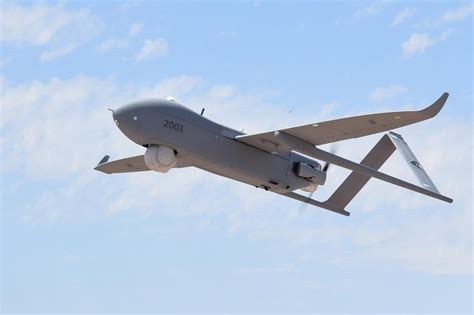
With over 700,000 flight hours logged across theaters from Middle Eastern deserts to Pacific jungles—and aboard more than 10 U.S. Navy vessels—the Aerosonde series is among the most battle-tested tactical drone systems available. Its resilience in harsh, maritime, and tropical conditions gives it an operational edge in Nigeria, where equipment failure in field conditions can carry catastrophic implications.
Textron’s decision to supply Tantita with not only the drones but also training packages and future scalability options suggests a long-term commitment to embedded support. This may eventually include localized maintenance hubs, regional operator certification programs, and integration with additional ISR nodes, such as tethered aerostats or fixed surveillance towers.
Broader Implications for U.S.-Africa Defense Relations
The Textron-Tantita agreement marks a turning point in U.S.-Africa defense industrial relations. By enabling exports without direct U.S. government involvement, it opens up pathways for African security actors to access Tier 1 ISR technology without navigating diplomatic red tape or long delivery timelines.
It also raises questions about the future of security governance in fragile states. As private security firms become increasingly equipped with state-grade ISR tools, a new balance of power is emerging—one where hybrid actors play an outsized role in national security architecture.
Conclusion: A Tactical Evolution with Strategic Impact
Textron’s supply of Aerosonde Mk. 4.7 drones to Nigeria’s Tantita Security Services is more than just a defense contract—it is a reflection of how ISR technology, privatized security, and international export dynamics are reshaping global defense postures. In a region beleaguered by asymmetric threats and economic sabotage, the deployment of high-end, export-friendly drones offers a promising tool for safeguarding national assets and stabilizing volatile zones.
As more nations and private entities seek advanced, politically unconstrained ISR solutions, Textron’s modular, battle-proven, and commercially viable platform may well become a blueprint for the future of non-traditional security operations.